
Continuing the First Session, on the morning of April 20, the National Assembly discussed in groups about the draft Resolution of the National Assembly on a number of breakthrough mechanisms and policies for Vietnamese cultural development.
Delegate Nguyen Thi Viet Nga - Deputy Head of the National Assembly Delegation of Hai Phong City - agreed with the establishment of Vietnam Culture Day 24. 11. This is a step to institutionalize the Party's policy, with great social and political significance.
However, according to the delegate, it is necessary to clearly distinguish the establishment of a commemorative day within the scope of cultural policies. The regulation on taking leave from work and receiving full salary is within the scope of the Labor Law. These two contents are not consistent in nature of adjustment, so they should not be merged into the same resolution.
Currently, the entire regime of full-time holidays and Tet holidays is regulated centrally in the 2019 Labor Code (Article 112).
If this Resolution adds one more day off, it will create an "exception" outside the Labor Code, easily leading to the risk of fragmenting the legal system, each specialized resolution may add a separate day off.
According to the delegate, the regulation of adding one day of paid leave is actually expanding the rights of employees, and at the same time arising payment obligations of employers. This is a policy with direct and widespread socio-economic impacts, requiring a full impact assessment placed in the overall balance of days off, productivity, and costs.
Therefore, the delegate said that these requirements are in line with the law amendment process, not a specialized resolution.
Regarding venture capital funds for culture, the delegate suggested that it is necessary to clarify what "risk" is in the cultural field.
If there are no specific criteria, it is very easy to lead to a situation where either the fund does not dare to take risks, choosing safe projects; or conversely, taking risks emotionally, lacking a basis for evaluation.
In particular, it is necessary to avoid turning this fund into a disguised form of budget allocation.
Venture funds must have operating principles different from traditional support funds, including: a mechanism for selecting competitive projects, transparency, clear accountability and especially investment discipline, not spread out, not average.
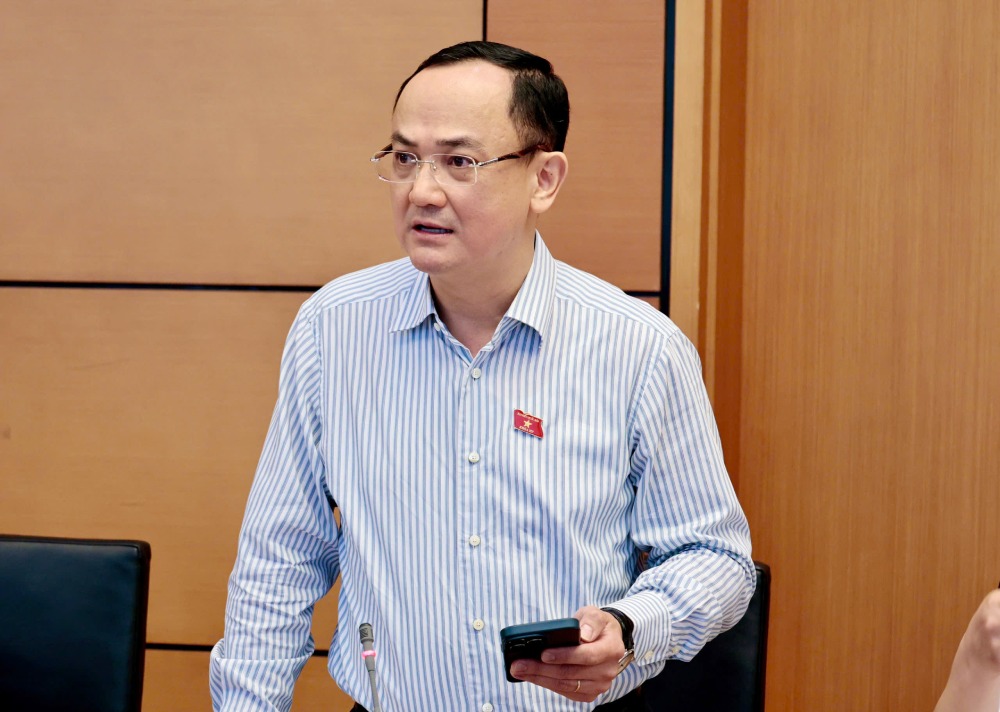
Delegate Nguyen Ngoc Son (Hai Phong Delegation) said that the current draft still reveals a major limitation: the spirit of breakthrough is there, but many regulations are not clear enough to become policies that can be implemented immediately.
The delegate also agreed with delegate Nguyen Thi Viet Nga that the regulation on holidays and salaries on Culture Day should be considered when amending the Labor Code, expected to be submitted to the National Assembly at the second session in October 2026, to ensure the consistency of the legal system.
At the same time, it is proposed that the Government clearly explain whether there has been a specific impact assessment, and how it affects the business, production, and service sectors?
Regarding resources, the delegate proposed to clarify what is the basis for setting a minimum spending level of 2% of the total state budget for culture? If the total resource needs have not been quantified, what will be used to ensure the resolution is feasible when it is implemented?
The draft stipulates that the State ensures that annual cultural spending is at least 2% of total state budget expenditure and gradually increases; and also comes with a series of other major incentive mechanisms.
Emphasizing that this is a policy group that will generate large financial resources, the delegate proposed that the drafting agency continue to analyze and comprehensively assess to ensure feasibility such as: from which sources to mobilize, what is the ratio between central and local levels, does it reduce room for other urgent areas?
The thẩm tra report also noted that these are policies that may generate large financial resources and need to be comprehensively assessed more carefully. If resources, roadmap and implementation responsibilities are not clearly quantified, the resolution is very likely to be in spirit but difficult to go into life.


