
Continuing the first non-scheduled session, on the afternoon of August 10, the National Assembly discussed in the hall the draft Law amending and supplementing a number of articles of the Law on State Compensation Liability.
Correcting false information cannot erase compensation responsibility
Participating in the discussion, delegate Duong Khac Mai (National Assembly Delegation of Lam Dong province) said that Clause 6, Article 1 amends Clause 7, Article 17 stipulating in the direction that the State compensates for the act of intentionally providing false information without correction and without providing information again.
The delegate said that this design method needs to be reviewed because when incorrect information is detected, it is necessary to promptly correct and provide the information correctly. But if the regulations are as drafted, it may lead to the understanding that the agency or person performing official duties has intentionally provided incorrect information causing actual damage that has occurred, but then just correcting it, the State is no longer responsible for compensation.
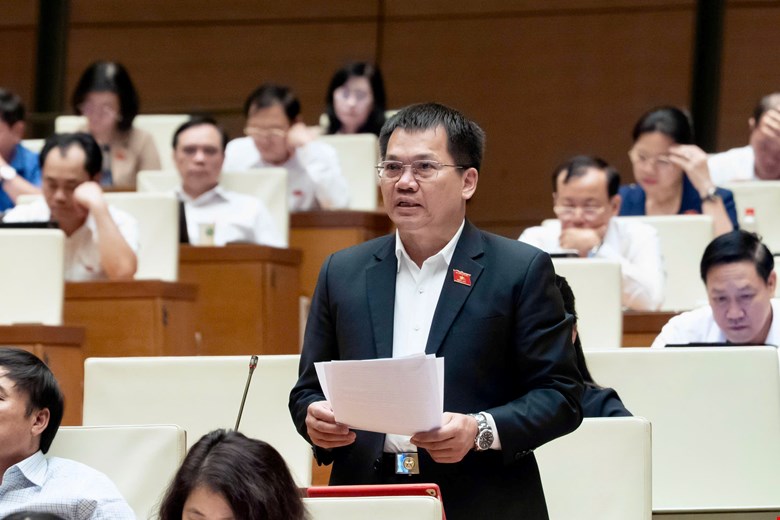
This does not reflect the true nature of State compensation responsibility when considering a damage that has arisen. The core element must be illegal acts, actual damage and causal relationship between acts and damage. Correction is a measure to remedy consequences, it can reduce damage, prevent further damage from arising but cannot cause the damage that occurred before to naturally disappear" - delegate Duong Khac Mai raised the issue.
From the above analysis, the delegate proposed to continue reviewing this regulation with the law on information access to ensure the correct identification of the content of illegal acts that give rise to compensation liability without omission but also without uncontrolled expansion.
Proposal to update asset value when the market fluctuates
Participating in the discussion, delegate Nguyen Thi Yen Nhi (Vinh Long Provincial National Assembly Delegation) mentioned the time to calculate the value of compensated damage in Clause 7, Article 1 of the draft law amending and supplementing Article 22.The draft stipulates that the value of damage is calculated at the time of accepting the compensation request dossier or the time the court determines the value of damage.
The delegate said that the above regulation is very necessary to ensure accuracy, however, for assets with large market value fluctuations such as real estate, stocks, and business goods, the time to resolve the case can be extended through many levels, with a time that can be extended for many years.
“If the time of acceptance of dossiers is rigidly applied, it may cause great losses to those who are damaged by price slippage or asset value fluctuations in the market,” the delegate stated, and at the same time proposed to supplement a mechanism to allow updating the asset value at the time of completion of negotiations or the time of first-instance trial if the market value of assets fluctuates by 20% or more.
Referring to Clause 5, Article 27 of the draft regulating mental damage in cases of health violations, the delegate said that the ceiling of 50 months of basic salary is still low for cases of severe health injuries. For example, impairment of 81% or more of working capacity or lifelong disability.
Therefore, the female delegate proposed to study and classify according to the injury rate for health damage. From 81% or more, the mental compensation ceiling can be raised from 80 - 100 months of basic salary to ensure commensurate compensation.
Regarding the reimbursement responsibility of law enforcement officers, delegate Yen Nhi also proposed raising the reimbursement ceiling to 70% of the compensation amount for serious intentional errors to increase deterrence and avoid the mentality of dependence on the state budget.
With the regulation on exemption from reimbursement for cases due to unintentional errors and encountering special circumstances such as serious illnesses, natural disasters, fires, and great achievements, delegates expressed a highly unanimous view and said that this both ensures strictness but is also full of humanity to help officials and civil servants feel secure in their work, not afraid of mistakes in the process of performing their duties when they have fulfilled their responsibilities.


