
This content is required in Decision No. 706/QD-TTg of the Prime Minister promulgating the plan to organize a preliminary review of 1 year of implementing the arrangement of administrative units at all levels and the operation of local governments at 2 levels.
According to the plan, ministries and ministerial-level agencies will send preliminary reports on the implementation of the agency to the Ministry of Home Affairs before May 10, 2026.
People's Committees of provinces and centrally-run cities organize preliminary reviews from commune to provincial levels; complete before May 10, 2026, send reports to the Ministry of Home Affairs and relevant ministries and central agencies before May 15, 2026.
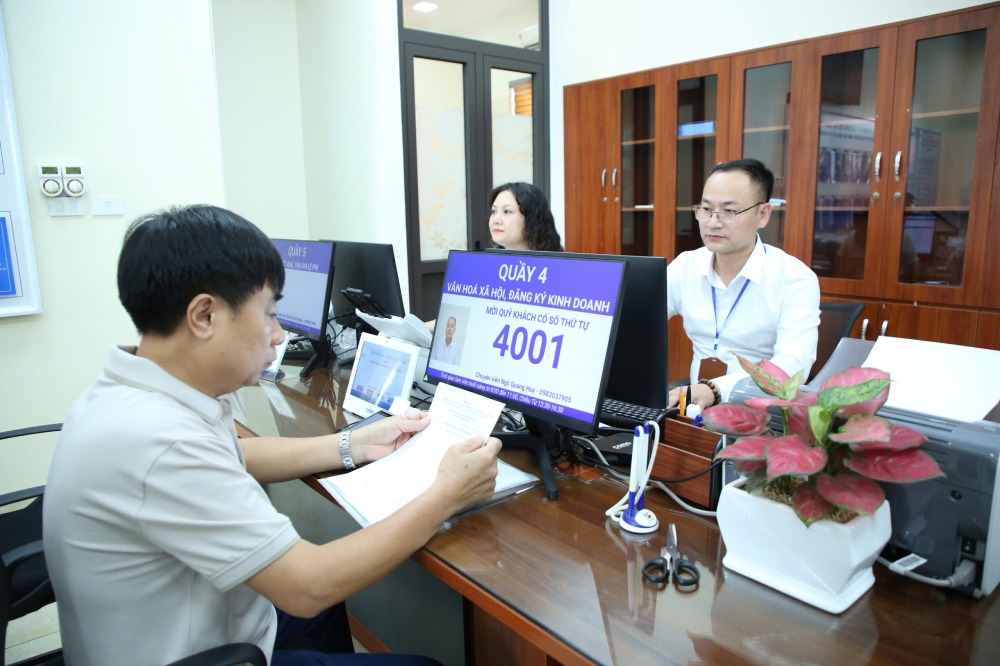
In Da Nang, on May 7, the Da Nang City Party Committee held a conference to summarize 1 year of implementing the arrangement of administrative units at all levels and the activities of local authorities at 2 levels in the city.
After the merger, the apparatus has been streamlined, operating effectively and efficiently; personnel are arranged promptly and without interruption. Administrative reform and digital transformation have been promoted; the quality of public services has been improved, towards a modern administration with the people at the center.
The decentralization and authorization mechanism has been completed, promoting the proactiveness of the grassroots level; the contingent of cadres has gradually improved quality. Institutionalization work has been drastically implemented, creating a legal basis for the new model; thereby contributing to improving the investment environment and promoting socio-economic development.
From grassroots practice, the city proposed to the Central Government to soon assign staff for the 2026-2031 period and supplement staff for specific tasks; improve the decentralization mechanism associated with ensuring resources; improve regulations on association management and regimes and policies for cadres.
In An Giang, after arrangement, the consolidation of the organizational structure according to the 2-level local government model has been implemented drastically; decentralization and delegation of power have been promoted, contributing to shortening the intermediate stage, strengthening the proactiveness and responsibility of agencies and units in solving work.
The rate of timely and online dossiers is increasing, contributing to improving the efficiency of administrative procedure resolution and transparency.
According to the quality assessment results for serving people and businesses, as of March 7, 2026, An Giang province reached 95.05 points, ranking 16/34 provinces and cities nationwide.
In Lam Dong, after nearly 1 year of implementing the 2-level local government model, the government apparatus has basically been consolidated, operating smoothly, without interrupting state management activities and serving the people.
Regarding limitations and difficulties, localities in Lam Dong mentioned 4 main aspects: wide area, dispersed population; a lot of work causing pressure on management work; limited information technology infrastructure and facilities, and a shortage of and uneven staff capacity.
To overcome difficulties and improve the efficiency of local governments at 2 levels, leaders of localities in Lam Dong proposed that higher levels synchronize the system of legal documents; allocate commune-level civil servant payroll in accordance with population size, natural area, number of organizations, enterprises and socio-economic development level; review, cut, and simplify unnecessary reporting regimes; invest in and upgrade information technology infrastructure and working equipment for the grassroots level.
In Ho Chi Minh City, the City People's Committee requested a preliminary review of 1 year of the local government at 2 levels to be serious and substantive; clarify the effectiveness, point out problems, and measure people's satisfaction.
In Phu Tho, this locality proposed that the Government and ministries and sectors soon issue criteria for assigning staff suitable to the specific characteristics of each locality, and at the same time supplement staff for areas that are still lacking such as education.


