
One of the important tasks in the second quarter of 2026 is that the Ministry of Home Affairs will complete the preliminary review of the implementation of the Central Resolution on salary and social insurance policy reform.
The salary reform roadmap is defined to include the main contents:
- Develop 5 new salary scales for different target groups;
- Completing the allowance and bonus regime;
- Regulations on salary grade promotion and funding sources for implementation;
- Manage salaries and incomes associated with work efficiency.
These are the steps identified in the process of preparing to implement comprehensive salary reform in the spirit of Resolution 27-NQ/TW.
On May 6, according to the Government Portal, the Government will review the overall regime and policies for commune-level cadres and civil servants in the salary policy reform project, submitting it to the Politburo in the second quarter of 2026. The project will be sent for comments from localities to complete and propose a general balance throughout the political system.
In the immediate future, the Government will focus on adjusting the base salary from July 1, 2026 for cadres, civil servants, public employees, armed forces and social security policy beneficiaries, social protection, people with meritorious services, pensioners, social pensioners, with an increase of 8%.
At the same time, the Ministry of Home Affairs is assigned to study and improve the salary policy, and report to the Politburo in June, in the direction of overall reform and expansion of salary relations. On that basis, it will consider adjusting allowances, including public service allowances, especially for communes.
Salary reform is a big issue, both a resource and a driving force for development, but it must ensure general correlation and the ability to balance the state budget. Therefore, adjustments need to be implemented according to a cautious roadmap, step by step, in accordance with socio-economic development conditions, gradually meeting expectations in practice.
In which, salary reform is not only applied in the public sector but also related to workers in the private sector. Reform must be implemented according to a roadmap suitable to the economic conditions, financial resources and budget capacity of the country.
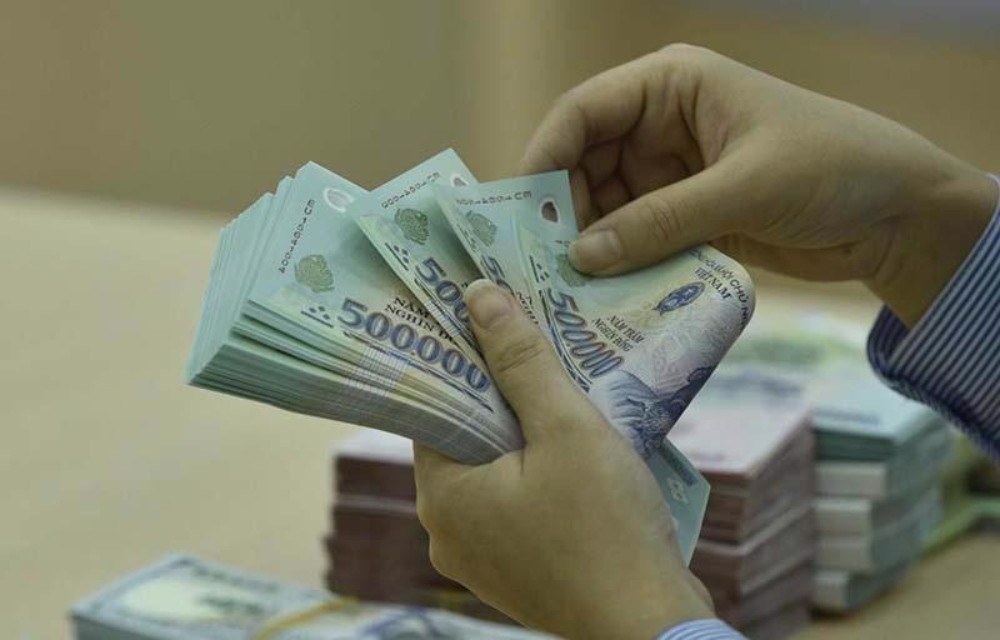
Currently, if we continue to reform and streamline the organizational structure, while innovating the growth model and promoting economic growth at a higher level, budget revenue will be improved, creating conditions for salary reform in the coming time.
Previously, after many adjustments, to date, the base salary of cadres, civil servants, public employees and armed forces has increased by about 58%. However, compared to practical requirements and the living standards of workers, this salary level is still low.
For the private sector, the minimum wage is also adjusted annually, but in general, it still does not fully meet the actual needs.
Therefore, in the coming time, functional agencies are summarizing the implementation of Resolution 27 to report to competent authorities on the roadmap for salary reform in the next phase.
At the press conference on the afternoon of April 28, Head of the Emulation - Commendation and Communication Department (Ministry of Home Affairs) Do Van Phong said that an important task that the Ministry of Home Affairs has implemented in the past time is the development of a salary policy reform project and reporting to the Deputy Prime Minister on the salary reform roadmap.
The Ministry of Home Affairs is also preparing carefully and proposing specific options for implementing salary policy reform according to the roadmap in the second quarter.


