
To concretize the current regulations on the organization of the local government apparatus, and at the same time serve as a basis for localities to consolidate their organization after arranging administrative units (ADs), localities should urgently deploy the arrangement and reorganization of professional departments under the commune-level People's Committees.
In Hai Phong City, the framework of the number of professional departments (including the Public Administration Service Center) under the commune-level People's Committee is determined to be appropriate to the scale and characteristics of each UA.
In which, 46 communes, wards, and special zones that are administrative units of commune level type 1 are arranged with 5 departments under the commune-level People's Committee: Office of the People's Council and People's Committee; Department of Construction, Agriculture and Environment (for localities with agricultural activities) or Department of Construction and Environment; Department of Economy; Department of Culture - Society and Public Administrative Service Center.
67 communes and wards are administrative units of commune level type 2 (excluding Bach Long Vi special zone) with 4 professional departments, the names and functions remain unchanged according to current legal regulations, which are the Office of the People's Council and the People's Committee; Department of Culture - Society; Department of Economy - Infrastructure - Urban (for wards) or Department of Economy (for communes) and Public Administrative Service Center.
The Department of Home Affairs is responsible for guiding and urging localities to implement the arrangement of organizational structure, staffing, and job positions; coordinating to advise the City People's Committee to adjust the number, name and function of specialized departments when necessary; ensuring that commune-level administrative units are established with 1 more specialized department to operate stably before June 30, 2026.
Previously, through review, 113 communes, wards, and special zones of Hai Phong (excluding Bach Long Vi) had 339 professional departments. According to new regulations, the city is allocated a maximum of 395 professional departments and 113 Public Administration Service Centers.
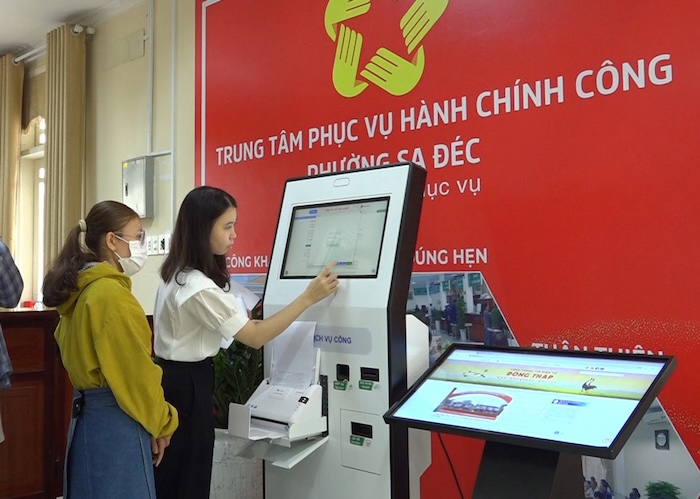
In Dong Thap, commune-level People's Committees are organized with specialized departments suitable to the scale and characteristics of each UA, ensuring the full implementation of state management functions at the grassroots level.
In which, 31 commune-level administrative units are arranged with 5 departments/communal People's Committees, while 71 commune-level administrative units are arranged with 4 departments/communal People's Committees.
Professional departments include: Office of the People's Council and People's Committee; Department of Culture - Society; Economic Department (for communes) or Department of Economy, Infrastructure and Urban Areas (for wards); Department of Science, Technology, Agriculture and Environment (applied to communes with 5 departments); Public Administration Service Center.
In Hanoi, on June 15, the City People's Council passed a Resolution stipulating the number, establishment, reorganization, dissolution of specialized agencies and other administrative organizations; the number and structure of City People's Committee members, Commune-level People's Committee members under management.
In which, for the commune level, the number of specialized agencies under the commune-level People's Committee does not exceed 5 units. The number of other administrative organizations does not exceed 2 units.
The Commune-level People's Council is allowed to decide on the establishment, reorganization, and dissolution of administrative organizations to meet the requirements of arranging the organizational structure and development tasks of the locality.
Previously, localities such as Gia Lai, Quang Ngai, and Dien Bien had issued regulations on the framework of the number, names and functions of specialized departments and equivalent units under the People's Committees of communes and wards in the province.


