
Training programs need forecasting capacity
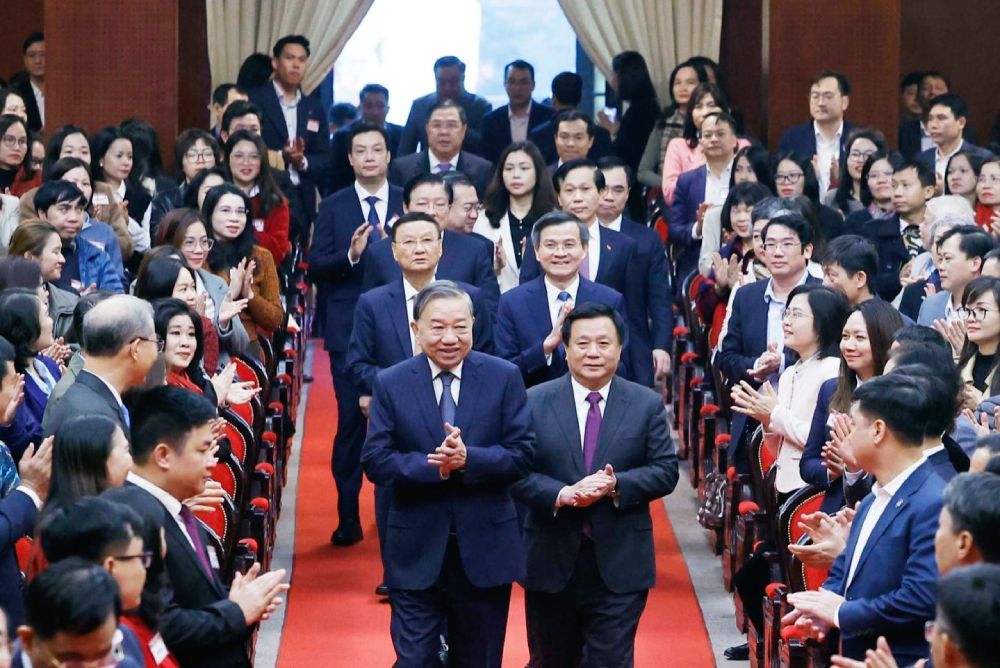
On the morning of December 30, in Hanoi, the Ho Chi Minh National Academy of Politics organized a conference to summarize the work in 2025 and deploy tasks for 2026 in the form of direct delivery at the Academy center combined with online delivery to bridge points at affiliated Academies.
General Secretary To Lam attended and delivered directing speeches at the Conference. Attending the Conference were Politburo members: Secretary of the Party Central Committee, Head of the Central Internal Affairs Commission Phan Dinh Trac; Prof. Dr. Nguyen Xuan Thang, Director of the Ho Chi Minh National Academy of Politics, Chairman of the Central Theoretical Council; Secretary of the Hanoi Party Committee Nguyen Duy Ngoc.
Speaking to direct the Conference, General Secretary To Lam clearly stated that entering 2026, the task set for the Academy is extremely heavy but also very glorious. The entire Party, the entire people, and the entire army are heading towards the 14th Party Congress with the aspiration to open a new stage of development.
In that context, the General Secretary proposed that the Academy promote its core role in implementing major projects that the 15th Central Conference has identified, which are summarizing 100 years of the Party leading the Vietnamese revolution and summarizing 40 years of implementing the 1991 Platform.
These are projects of special stature, requiring in-depth theoretical thinking, inter-sectoral methods and a long-term vision, truly becoming a source of strategic knowledge, with the value of guiding the awareness and action of the entire political system in the coming decades.
The General Secretary requested to continue fundamentally innovating cadre training and fostering work in a practical, effective, and modern direction, closely linked to the requirements of organizing the implementation of the Party's strategic decisions. The goal is not only to equip knowledge, but to form a modern management capacity complex, from policy design, inter-sectoral coordination, risk management, leading digital transformation to creating social consensus and mobilizing resources.
The training program needs to have the ability to predict and go one step ahead of reality; strongly shift from a one-way transmission model to a lecturer-student model to jointly create new knowledge and values; ensure training is not only for "knowing" but for "doing", towards public values and the interests of the people.
The Academy needs to promote digital transformation and apply artificial intelligence in a methodical and selective manner; applying technology not to replace human intelligence, but to improve productivity, quality, liberate creative capacity, enhance analytical capacity, forecasting and decision-making support; and at the same time innovate internal governance in a transparent, modern, and effective direction. Along with that, it is necessary to pay special attention to academic integrity, and promote Partyism, science and practicality in all products.
Focus on discovering and fostering young and talented cadres
The General Secretary noted that he pays special attention to the system of political schools nationwide, considering this as the foundation of training and fostering cadres at the grassroots level; strengthening linkages, sharing programs, training methods and digital infrastructure; improving the quality of lecturers, linking training with local practices and modern management requirements.
The Academy focuses on discovering and fostering a team of young officials, young experts, and talents. This is an issue of long-term strategic significance, it is necessary to build a mechanism to attract, train, use and treat appropriately; create a healthy academic environment, encourage creativity, form strong research groups, and create conditions for the young team to be trained, challenged, and grow up.
On this occasion, on behalf of the Party and State leaders, General Secretary To Lam awarded the First-class Labor Medal to the Ho Chi Minh National Academy of Politics for its outstanding achievements in implementing Resolution 18-NQ/TW "Some issues on continuing to innovate and arrange the organizational structure of the political system to be streamlined, operating effectively and efficiently".


