
The advantage of housing for core urban areas is declining
Vietnamese cities are playing a leading role in growth, contributing nearly 70% of the country's GDP. However, the traditional unipolar urban model is gradually revealing limitations.
In Hanoi, the area accounts for only about 1% but concentrates up to 9% of the country's population. Vehicle volume increases by 4-5% each year while infrastructure only expands by about 0.35%, leading to increasing traffic and environmental pressure and living costs. The city is often in the group with the most polluted air on the planet.
According to MSc. Nguyen Xuan Anh - Vietnam National Institute of Urban and Rural Planning (VIUP), extreme physical concentration no longer creates corresponding economic efficiency but becomes a burden on the urban governance system, leading to infrastructure paralysis and hindering new growth drivers. This reduces the inherent housing advantage of the core sector.
The expert pointed out that one of the important trends of the 21st century to solve this problem is the shift from a unipolar urban model to a multipolar urban network model. Instead of focusing on a single center, cities develop along traffic corridors, forming a tightly linked network.
According to MSc. Nguyen Xuan Anh, in Vietnam, the Hanoi - Hai Phong - Quang Ninh corridor is fully meeting the conditions to become a multi-center mega-urban area. And the key factor to activate this structure is high-speed connectivity infrastructure - the Hanoi - Quang Ninh high-speed railway line, which will be started on April 12.
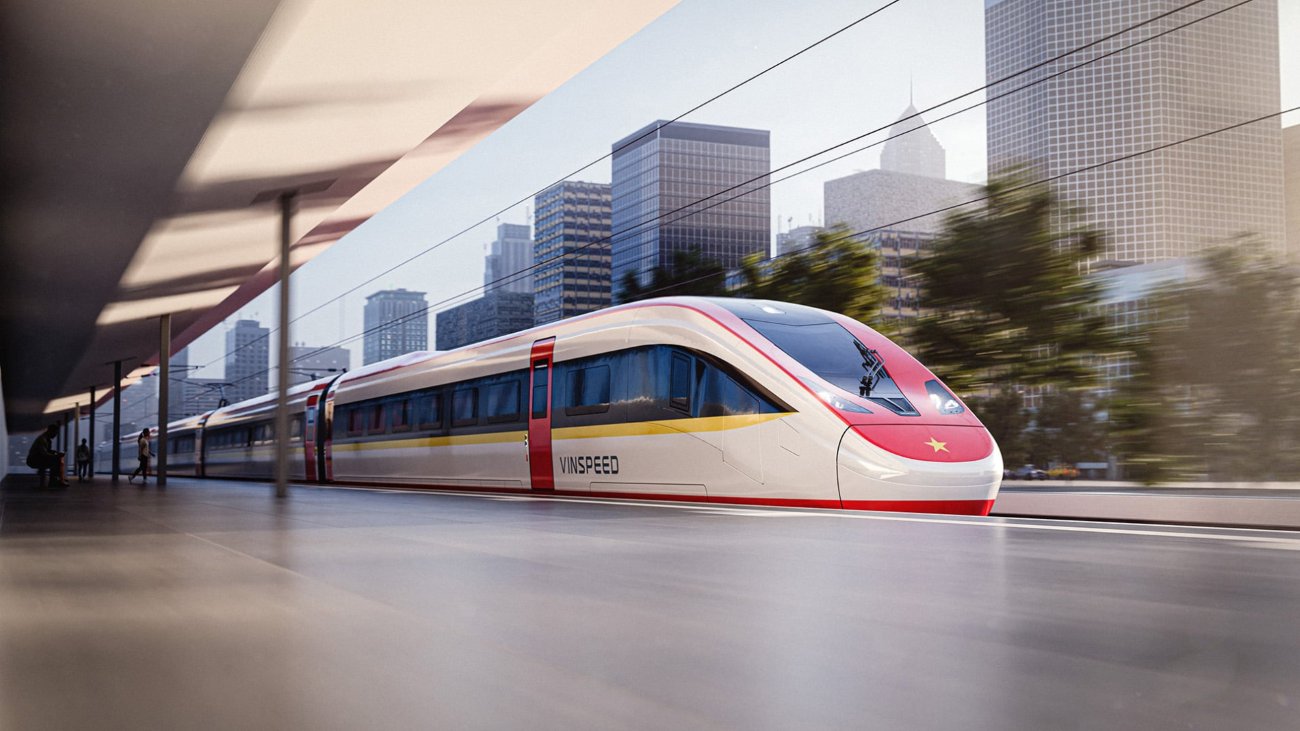
Connectivity Power" 23 minutes reveals a "new Hanoi" by the wonder bay
According to the plan, the Hanoi - Quang Ninh high-speed railway line has a length of about 120 km, a design speed of 350 km/h, with the starting point at Co Loa station (Hanoi) and the ending point in Tuan Chau area (Ha Long). When the line goes into operation, it is expected that in 2028, the travel time between Hanoi and Ha Long will be shortened to only about 23 minutes.
This change not only simply brings the two largest economic centers in the North closer together, making Ha Long an expanded part of the core of Hanoi, but also completely transforms the lifestyle of people. Hanoi and Ha Long are no longer two separate destinations but become two poles in the same expanded living space.
International experience shows that high-speed infrastructure can completely restructure the population distribution. In Japan, the Shinkansen network allows tens of thousands of people to travel every day between Tokyo and satellite cities hundreds of kilometers away.
Travel time is only counted as a few dozen minutes, even faster than moving in the inner city during rush hour. Thanks to that, Japanese people can easily choose to live in areas with more reasonable housing and living costs, a better living environment but still work daily in the center of Tokyo. The right to choose accommodation at this time is no longer limited by distance.
The Japanese model will soon be recreated in Vietnam. When the Hanoi - Ha Long journey is only 23 minutes, "living in two centers" becomes a reasonable choice, even a symbol of a new lifestyle.
At the same time, high-speed infrastructure is the key to opening up the model of a super-urban area converging the largest economic triangle in the North. In this structure, Hanoi plays the role of political and administrative center; Hai Phong is the gateway for industry, international logistics and Quang Ninh is the center of tourism, services and creative economy throughout the region.
Catching up with this trend, large-scale TOD cities are starting to appear in Ha Long. Among them, Vinhomes Global Gate Ha Long is the most prominent name when planned as a "anchor point" in the inter-regional urban network.
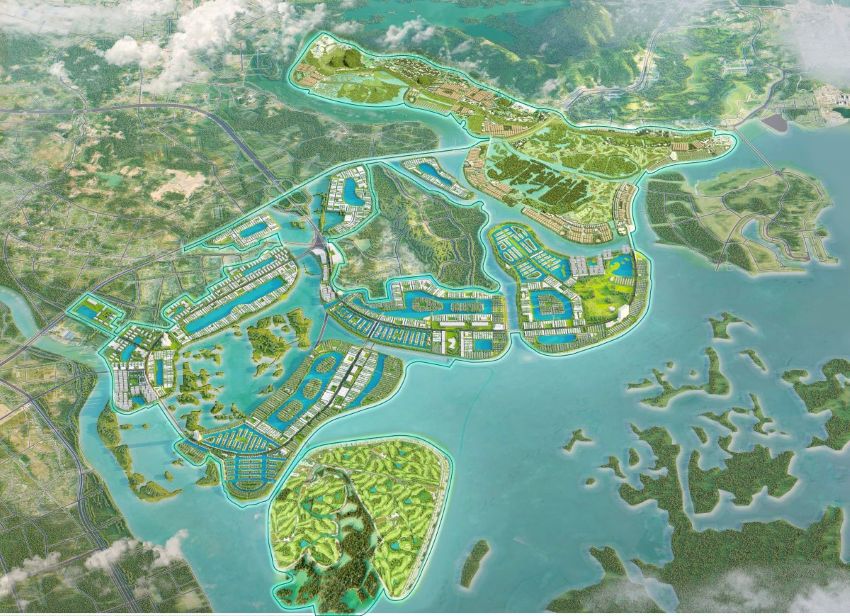
Vinhomes Global Gate Ha Long possesses a rare advantage when integrating a depot station inside the area, allowing direct connection with the high-speed railway line, helping residents quickly get to Hanoi after only 23 minutes of travel.
In addition, large-scale eco-planning with 2,500 hectares of green trees, water surface and mangrove forests creates a different living environment for the megacity. Major utilities such as 620ha forest park, 680ha Lagoon lake... contribute to shaping a green lifestyle associated with original nature. Along with that is the unique landscape of the world natural heritage Ha Long Bay.
As human time becomes increasingly valuable, the ability to shorten travel time is a factor in redefining the quality of life, even establishing a new luxury standard. If in the past, housing choices were often associated with the trade-off between work and living environment, now, high-speed infrastructure allows for both.
And when the housing map is "drawn again" in just 23 minutes of travel, real estate values are also redefined. Ha Long will not stop at a simple tourist destination, but become a "new Hanoi" with prices soon approaching the Capital.


