
From AGREENFI capital of the French Development Agency (AFD) through Agribank, the project to build an organic treatment, reuse and processing area of Dien Bien Environment Joint Stock Company is opening up a specific direction for the circular economy in the Northwest.Not only contributing to solving the urban environment problem in mountainous areas, the project also shows Agribank's role in unlocking international green capital flows into practical areas of life and production.
Green capital flows into practical projects
In the green transformation process, credit is not only limited to renewable energy projects or large-scale infrastructure projects. In Dien Bien, green capital is being put into a very specific problem of processing and reusing organic resources after classification and agricultural and forestry by-products, thereby creating products for agriculture, reducing environmental pressure and adding value to the green production chain.
The project to build an organic fertilizer treatment and reuse and processing area of Dien Bien Environment Joint Stock Company is in phase II of Dien Bien Waste Treatment Plant. This is the next development step after phase I, which went into operation in 2019, contributing to treating domestic solid waste in the area, improving the living environment, closing and restoring Noong Bua landfill on schedule.
For phase II, the project not only treats waste in the traditional way but also aims at reuse, recycling and recovering value from waste. In which, the organic fertilizer processing item is considered an important component, bringing the organic part in waste back to the production cycle in the form of fertilizer, serving sustainable agricultural development.
The project of Dien Bien Environment Joint Stock Company is one of the projects selected by AFD to be eligible for loans from the AGREENFI program through Agribank. This is a noteworthy point, because this capital flow comes with strict environmental - social criteria, requiring the project to prove its ability to reduce pollution, reuse resources, promote circular economy, control environmental risks and contribute to sustainable development in the locality.
Agribank "localizes" international green capital standards
With Agribank, participating in leading AGREENFI capital into the project in Dien Bien is both a credit activity and a process of transforming international green financial standards into local practice. From a set of environmental - social criteria, the bank must appraise on many aspects including investor capacity, project legality, processing technology, operating capacity, environmental efficiency, capital recovery cash flow and impact on the community.
Representatives of Agribank Dien Bien Branch said: "With environmental projects, efficiency is seen from capital recovery cash flow, but more importantly, it must be from long-term value for the community and locality. The organic fertilizer processing project of Dien Bien Environment Joint Stock Company is in line with Agribank's green credit orientation when contributing to reducing the pressure of waste treatment, recycling organic sources into useful products and supporting the goal of sustainable agricultural development in the area.
Also according to the branch representative, accompanying businesses in this project is a specific step to concretize Agribank's role in the locality when it does not stop at providing capital for production and business but also contributes to unlocking resources for green development models, which are spreading and suitable for the socio-economic characteristics of Dien Bien province.
This also shows an important direction in Agribank's green credit strategy, which is to bring preferential capital flows, international capital and ESG standards closer to local businesses. Through a wide network and local understanding, Agribank has conditions to access, appraise and accompany green projects not only in large cities but also in mountainous and rural areas, where the need for environmental treatment and sustainable agricultural development is increasingly clear.
From environmental treatment to multi-layered value cycle
According to the investment plan, the organic fertilizer treatment and reuse and processing area has a maximum capacity of 50 tons/day and night, with an expected usable area of 8,624 m2 out of the total area of 10.5 ha of Dien Bien Waste Treatment Plant. The project includes main items such as a waste collection and organic waste sorting house, a primary fermentation house, a secondary fermentation yard, a semi-finished organic fertilizer warehouse and a finished organic fertilizer warehouse.
The input material of the project is organic waste such as septic tank mud, food waste, and agricultural and forestry by-products. Through organic fertilizer production technology, these raw materials are converted into products with high nutritional content, serving agricultural production again.
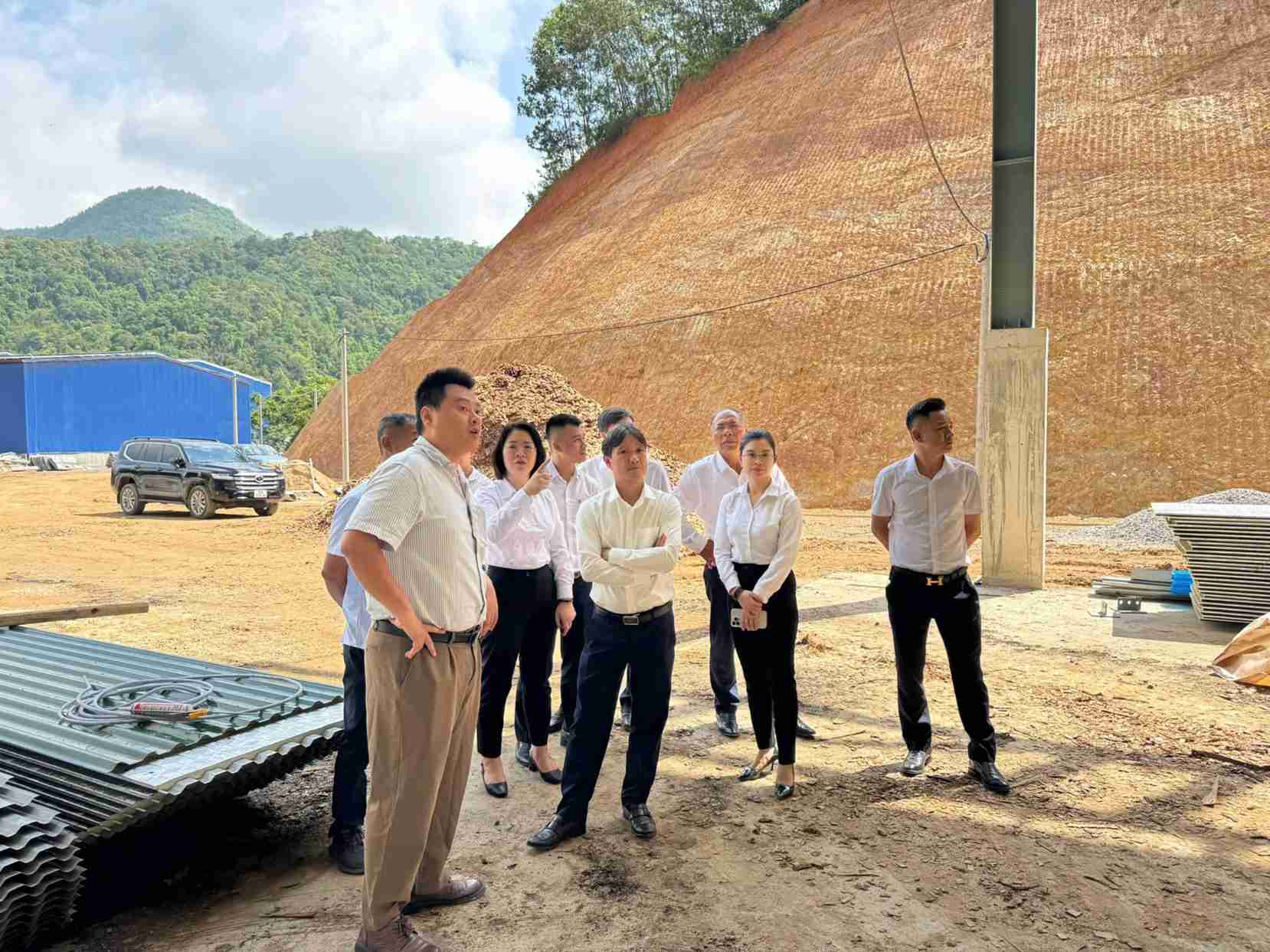
The total investment of the organic fertilizer factory item is 65 billion VND. Of which, the enterprise's counterpart capital is 25 billion VND, and the loan capital is expected to be 45 billion VND. The project has completed the site clearance phase, built basic items and is carrying out procedures to apply for a product circulation permit in the market.
Notably, the organic fertilizer item is included in the overall phase II of Dien Bien Waste Treatment Plant with a total investment of 235 billion VND. In addition to the organic fertilizer processing area, this phase also includes an agricultural and forestry product drying area taking advantage of heat and steam from the waste treatment process and a domestic waste treatment and destruction area using new generation incinerator technology, with a heat recovery system.
The connection between these components creates the circular economic logic of the project: waste is sorted; organic part is recycled into fertilizer; non-recyclable part is treated by burning technology; heat and steam generated continue to be used to dry agricultural and forestry products. From an environmental problem, the project forms a multi-layered value cycle, linking waste treatment with agricultural production and agricultural and forestry product processing.
Expanding green credit space in the Northwest
Dien Bien Environment Joint Stock Company is currently an important unit in the field of waste treatment in Dien Bien province, operating waste treatment plants, wastewater treatment and providing public utility services to many communes, wards, and units in the area. With about 500 officials and employees, most of whom are environmental sanitation workers, the enterprise not only participates in waste treatment but also creates stable jobs for local workers.
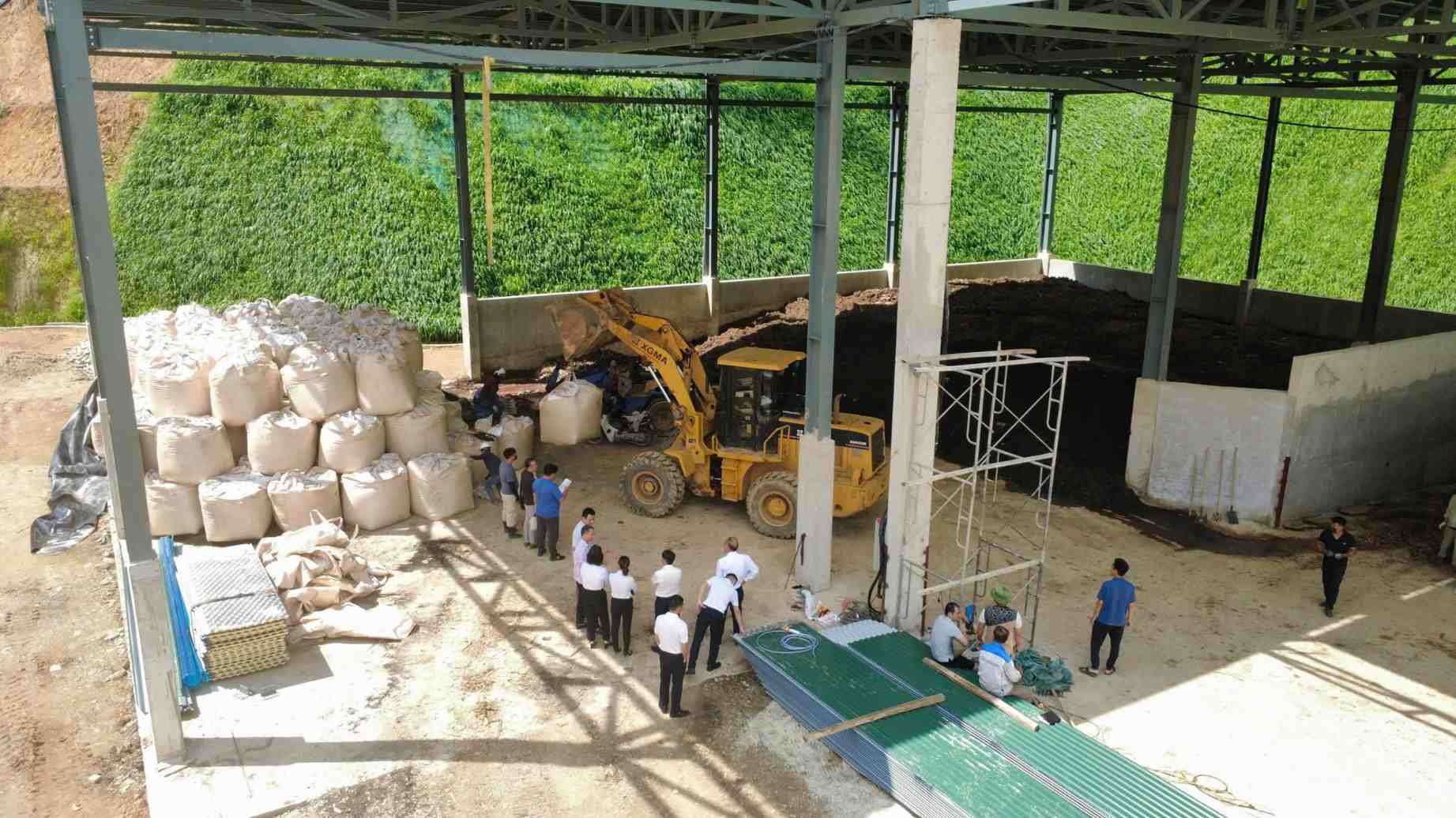
After the organic fertilizer plant project in Dien Bien, the enterprise plans to continue investing in a second organic fertilizer production plant in Moc Chau, Son La. If effectively implemented, this model can expand the circular economy approach in organic waste treatment in the Northwest region, where agriculture, forestry and ecological environment are closely related.
In the "Foreign capital chooses Agribank" journey, the project in Dien Bien adds a noteworthy slice. If Khanh Son waste power is the story of urban environmental infrastructure, Vista is the story of clean energy on factory roofs, then Dien Bien is the story of organic resources, land and sustainable agriculture.
From AGREENFI capital through Agribank, green finance is moving into specific touches of the economy: a waste treatment plant in the mountains, an organic fertilizer processing line, a resource reuse cycle. This is also proof of Agribank's role in opening the green credit door, bringing international capital to projects with real impacts on the environment, community and sustainable development in the locality.


