
Weaknesses" of the pelvic region cause urinary incontinence and constipation at the same time
At the age of 60, Ms. T. faces many uncomfortable changes in her body. She often urinates frequently, just leaving the toilet she feels sad to continue walking, accompanied by urinary leakage. The symptoms make her always in a state of anxiety, reluctant to go far, reluctant to exercise and having to be wary in daily activities.
Not only that, she also suffered from constipation and prolonged difficulty with bowel movements. Initially, she thought these were two separate problems: one belonged to the urinary tract, and the other was related to digestion. She changed her diet and used supportive medicine, but the situation did not improve. The feeling of heavyness in the lower abdomen, discomfort when going to the toilet and psychological fear kept silently lingering, clearly affecting the quality of life.
At Vinmec Da Nang International General Hospital, after a thorough examination, MSc.BSNT Nguyen Nhat Tin - Gastrointestinal Surgeon said: "When urinary and bowel disorders appear in older women, doctors need to think about the cause deeper in the pelvic support system, instead of treating each symptom individually.
To accurately determine the injury, the patient is indicated for a dynamic pelvic floor MRI. This is an imaging technique that helps doctors observe changes in the position of pelvic organs when the patient performs movements such as pushing or contracting.
The results showed that Ms. T. not only had problems in a single organ but also had multiple pelvic prolapses, including rectal prolapse, bladder prolapse and vaginal prolapse. The muscle and ligament system supporting the pelvic area was weakened, causing these organs to fall out of their normal position, compress each other and create a complex series of symptoms such as urinary incontinence, incomplete urination, constipation, difficulty with bowel movements and a feeling of weight in the lower abdomen.
BSNT Nguyen Nhat Tin said: "The difficulty of pelvic floor disease is that the symptoms usually do not lie in a single organ. Customers may come for examination due to urinary incontinence or constipation, but the real cause is the simultaneous decay of many organs. If we only look at each individual organ, we can easily only handle the tip, while the symptoms can still last or recur after treatment.
Surgery to handle three organs sagging at the same time
From the results of examination and imaging, BSNT Nguyen Nhat Tin and the team determined that the appropriate option is combined laparoscopic surgery, treating the prolapsed organs simultaneously in the same surgery. The goal is not only to improve urinary incontinence or constipation symptoms, but also to bring the pelvic structures back to a stable position, correctly resolving the cause of the disease.
The pelvic area is an area with a narrow anatomical space, concentrating many blood vessels, nerves and important organs. Therefore, surgery requires doctors to accurately assess the lesion, choose the appropriate approach and operate carefully in each step.
In this surgery, the Vinmec Da Nang team coordinated two in-depth techniques through minimally invasive endoscopy. Pectopexy technique was performed to lift and fix the pelvic structure with a medical graft, helping to bring the bladder and vagina back to the appropriate anatomical location. This is an important step to improve urinary leakage, frequent urination and the feeling of not fully urinating.
At the same time, the doctor performed the technique of NTV reconstruction rectal suction, helping to bring the rectum to a stable position, reduce rectal prolapse and release the stool drain. Thanks to this, the condition of prolonged constipation and difficulty with bowel movements was improved from the correct cause.
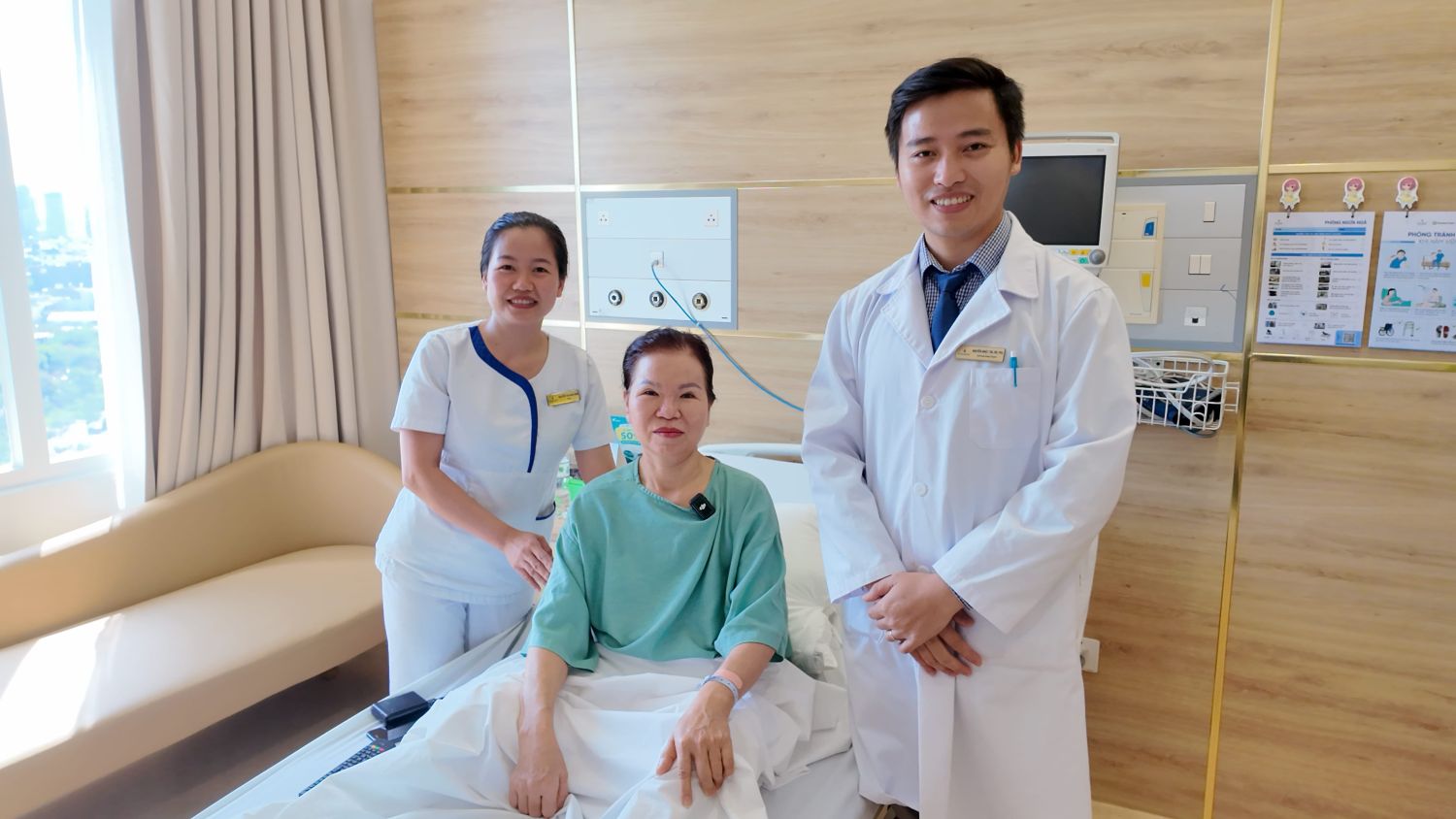
Choosing laparoscopic surgery instead of traditional open surgery helps the team access the lesions more clearly, reduces the size of the incision, limits surrounding tissue damage and supports a more favorable recovery process.
After surgery, the patient's previous symptoms improved significantly. She no longer had urinary leakage, bowel movements became easier, and the feeling of weight in the lower abdomen also disappeared. More importantly, she could relieve the psychological pressure of so long to return to more comfortable daily activities.
Pelvic prolapse is a common disease in elderly women, women who have given birth many times, heavy laborers, people with prolonged constipation or entering a stage of endocrine impairment. This is not a rare disease, but many women often silently endure it because of psychological hesitation or thinking that it is an inevitable sign of age.
Doctors recommend that women when they have signs such as urinary incontinence, frequent urination, incomplete urination, prolonged constipation, difficulty with bowel movements or a feeling of vaginal prolapse should go to reputable medical facilities for in-depth examination. Detecting the cause correctly and treating it promptly will help prevent the disease from progressing severely, and at the same time help women regain confidence and comfort in life.
With the orientation of developing in-depth specialties in pelvic floor, rectal and digestive medicine, Vinmec Da Nang continues to apply combined surgical techniques, individualized according to each pathological condition, in order to bring comprehensive and sustainable treatment effectiveness to patients.
To be consulted and examined for pelvic floor, anal, rectal and digestive diseases at Vinmec Da Nang International General Hospital, customers can contact Vinmec switchboard or book a appointment through the MyVinmec application.


