
SJC gold bar price
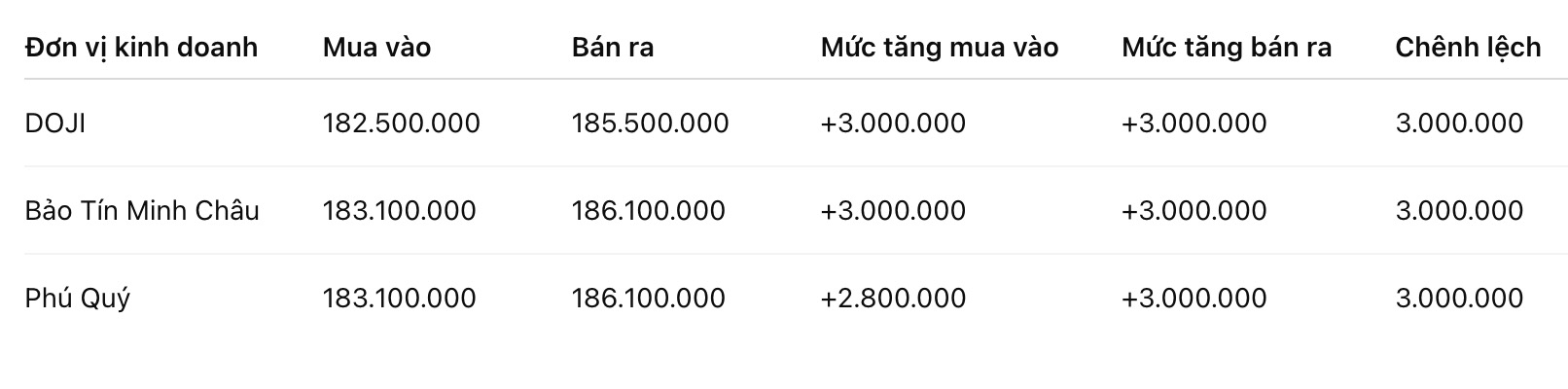
As of 10:00 AM, SJC gold bar prices were listed by DOJI Group at 182.5-185.5 million VND/tael (buying - selling), an increase of 3 million VND/tael in both buying and selling directions. The difference between buying and selling prices is at the threshold of 3 million VND/tael.
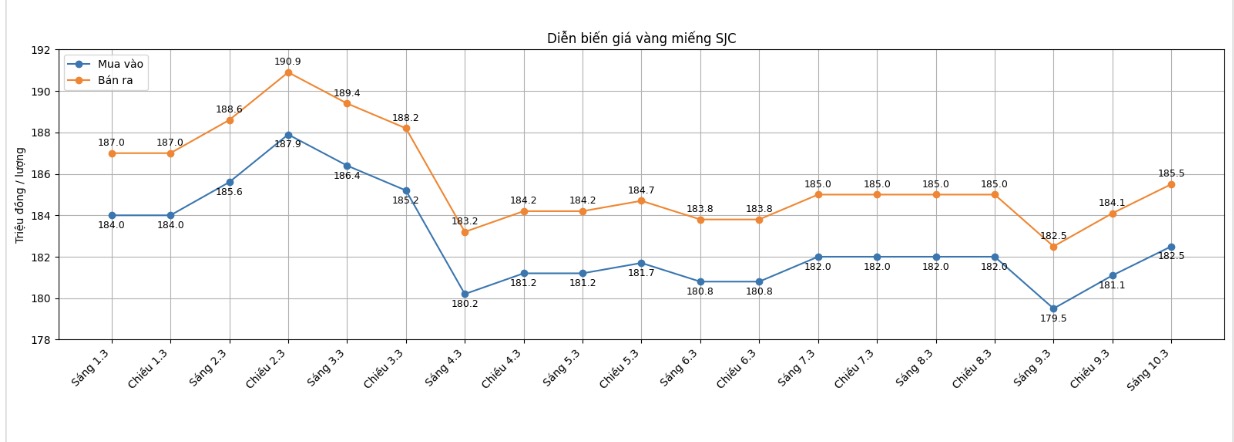
SJC gold bar price was listed by Bao Tin Minh Chau at the threshold of 183.1-186.1 million VND/tael (buying - selling), an increase of 3 million VND/tael in both buying and selling directions. The difference between buying and selling prices is at the threshold of 3 million VND/tael.
Phu Quy Jewelry Group listed SJC gold bar prices at 183.1-186.1 million VND/tael (buying - selling), an increase of 2.8 million VND/tael on the buying side and an increase of 3 million VND/tael on the selling side. The difference between buying and selling prices is at 3 million VND/tael.
9999 gold ring price
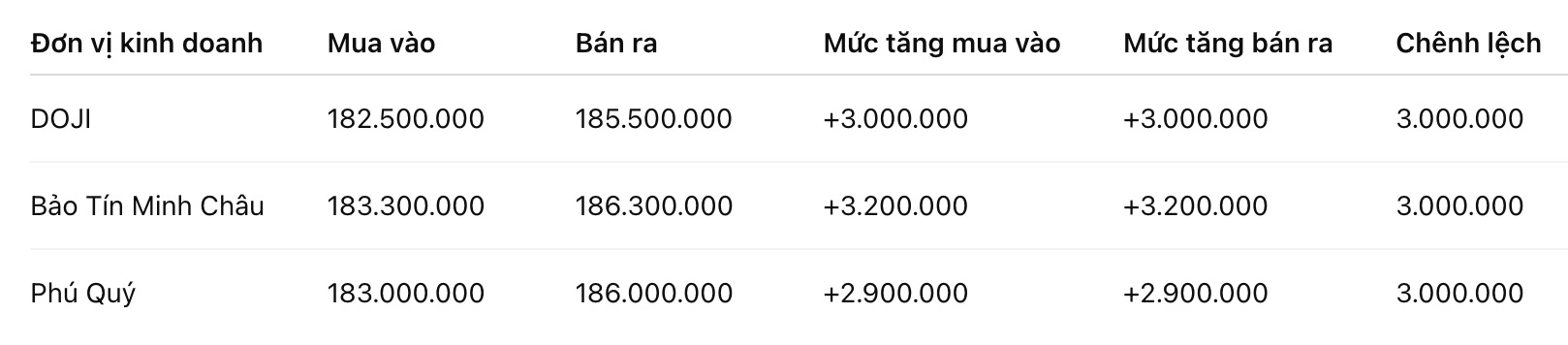
As of 10:00 AM, DOJI Group listed the price of gold rings at 182.5-185.5 million VND/tael (buying - selling), an increase of 3 million VND/tael in both buying and selling directions. The difference between buying and selling prices is at the threshold of 3 million VND/tael.
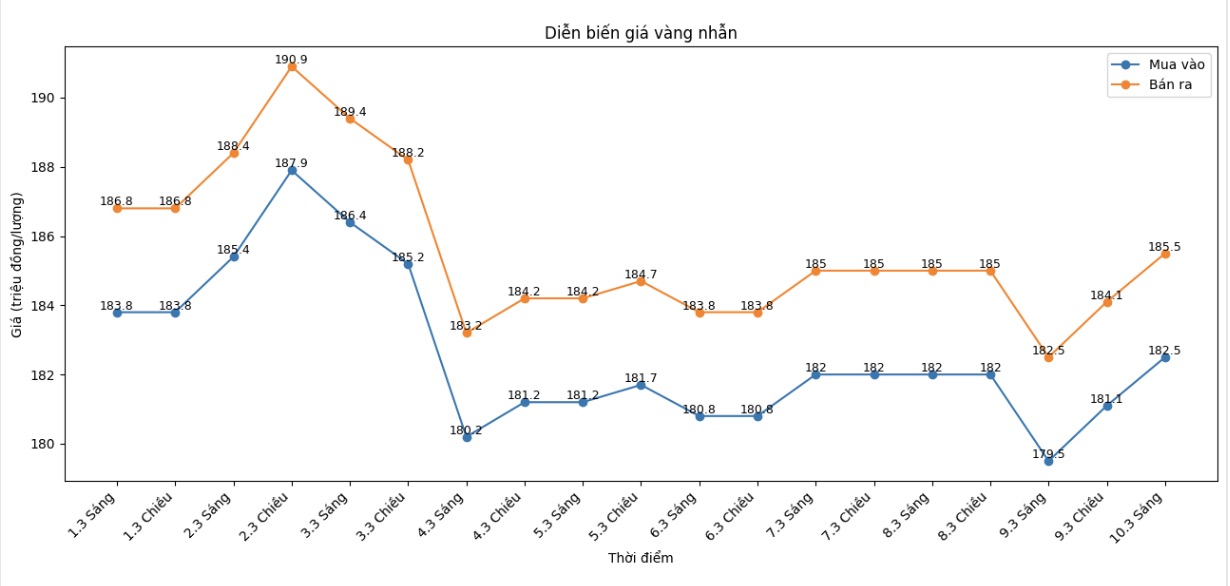
Bao Tin Minh Chau listed gold ring prices at the threshold of 183.3-186.3 million VND/tael (buying - selling), an increase of 3.2 million VND/tael in both buying and selling directions. The difference between buying and selling prices is at the threshold of 3 million VND/tael.
Phu Quy Gold and Gems Group listed the price of gold rings at 183-186 million VND/tael (buying - selling), an increase of 2.9 million VND/tael in both buying and selling directions. The difference between buying and selling prices is at 3 million VND/tael.
Currently, the buying - selling price difference of gold is at a very high level, around 3 million VND/tael, posing a risk of losses for investors.
World gold price
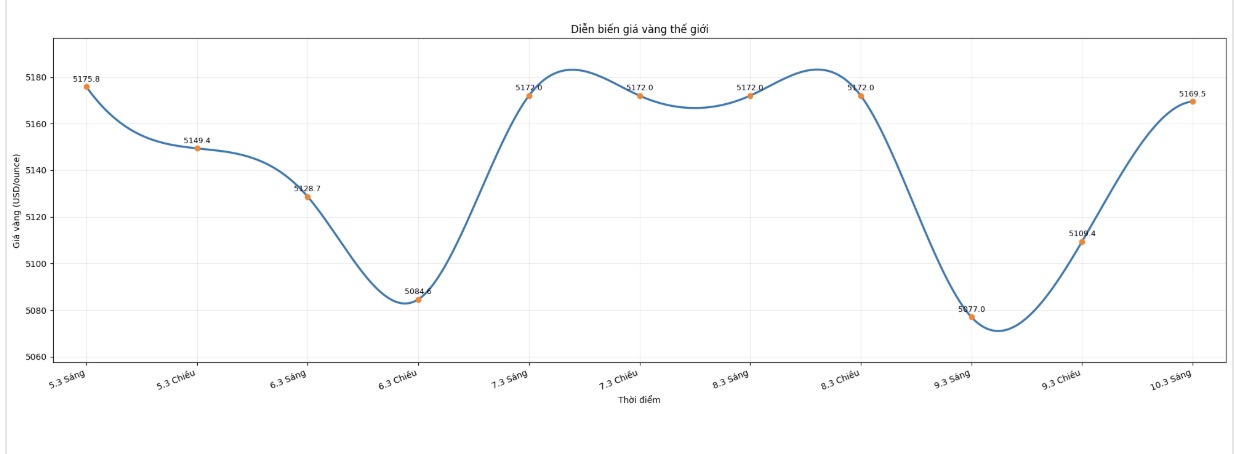
At 10:11 AM, world gold prices were listed around the threshold of 5-169.5 USD/ounce, up 92.5 USD compared to the previous day.
Gold price forecast
The world gold market is experiencing a period of strong fluctuations as many geopolitical and macroeconomic factors are impacting. In the most recent trading session, gold prices fell and then rebounded after the energy market fluctuated violently. Oil prices at one point jumped to 119 USD/barrel before quickly falling to around 94.7 USD/barrel, leading to a cautious sentiment in financial markets.
This development occurred in the context of escalating tensions in the Middle East after airstrikes between the US, Israel and Iran. Initially, the USD rose sharply and became a prioritized safe haven asset, putting downward pressure on gold prices. However, when the market assessed that the conflict could drag on, concerns about energy supply disruptions and the risk of inflation rising again partially supported the precious metal.
Traders are now also adjusting their expectations about the monetary policy of the US Federal Reserve (FED). Many forecasts suggest that the time to cut interest rates may be postponed from May to September. The high interest rate environment often puts pressure on gold because it increases the opportunity cost of holding non-performing assets. However, inflation hedging demand still helps gold maintain a certain resilience.
From a long-term perspective, investment demand for gold is still maintained. The latest report from the World Gold Council (WGC) shows that global physical gold ETFs recorded cash flow of about 5.3 billion USD in February, marking the 9th consecutive month with positive net capital flow.
Mr. Joe Cavatoni - senior market strategist at the World Gold Council - said that geopolitical tensions continue to be an important factor driving gold demand. However, he noted that short-term price volatility is not a decisive factor in the long-term trend of the precious metal.
There will still be price increases, but the sustainable trend of gold will only become clearer when the market understands the results of systemic events" - Mr. Cavatoni said.
Meanwhile, demand from central banks is also considered an important supporting factor. The People's Bank of China (PBoC) has added gold to foreign exchange reserves for the 16th consecutive month in February, raising total holdings to more than 74 million ounces.
According to experts, in the short term, the gold market may continue to fluctuate strongly as investors closely monitor geopolitical developments and monetary policy signals from the FED. However, in the context of global economic instability still existing, gold is still considered an important safe haven channel in the investment portfolio.
Gold price data is compared to the previous day.
See more news related to gold prices HERE...


