
Sticking to the deep forest, meticulously searching for every inch of land
In June, the border area between Vietnam and Laos in Quang Tri province was scorching hot, emitting smoke at the temporary station of the Team for Searching and Repatriating Martyrs' Remains of Economic - National Defense Team 337 (Military Region 4) in Trang Ta Puong village, Huong Lap commune.
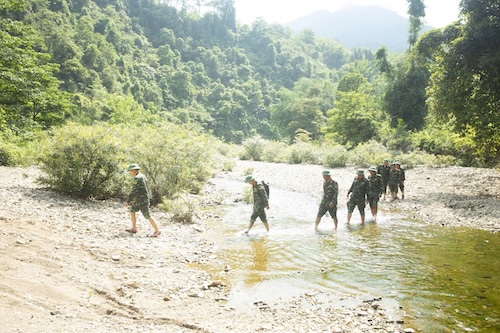
To avoid the heat, every day from 6 am, the soldiers have prepared military equipment and tools to march straight into the deep forest of Cha Ly mountain to carry out the task of searching for martyrs' remains.
At the foot of Cha Ly stream, the soldiers parked motorbikes on the bank, carrying hoes, shovels and water bottles to walk through the jagged rocky beaches to reach a steep hill, where traces of a temporary cemetery from wartime were discovered through information from veterans, village elders and village chiefs.
Because most of the traces have been erased by time and the old forest, the Recovery Team must rely on the rules passed down from previous generations: when buried, the graves are usually located in vertical or horizontal rows, heads facing towards the top of the hill and feet downstream towards streams, each grave is about 1 to 1.2m apart.
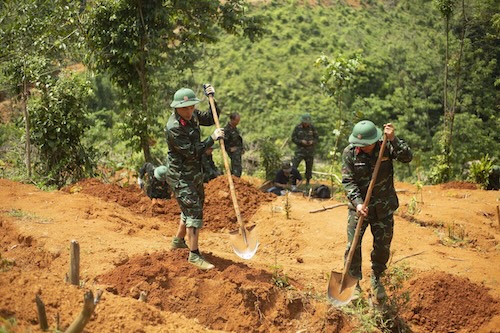
In the middle of a steep hill, for nearly a month, soldiers have dug a long line of acupuncture points under the scorching forest sun.
Lieutenant Colonel Phan Dinh Phi - Team Leader of the Repatriation Team - shared that the excavation order was meticulously carried out from bottom to top. Each grave was in charge of two soldiers, one person carefully using hoes and shovels, and one person upstairs used their hands to gently squeeze each handful of red soil to carefully search for each button, hammock piece or remaining bone sample.
From the end of March to now, the unit's persistent spirit of not giving up has been rewarded when 8 sets of martyrs' remains were successfully collected. When discovered, the remains and artifacts were photographed, detailed records were made, and embalmed according to the spiritual ritual of respect before being carefully wrapped and brought to the storage place.
Rapid excavation, DNA sampling at cemeteries
In parallel with field search work, the campaign to identify the names of heroic martyrs is also being implemented rapidly by Quang Tri province with a "huge" amount of work. According to the Steering Committee for searching, repatriating and identifying martyrs' remains of Quang Tri province, from June 8, the locality has begun to expand the excavation and collection of martyrs' remains biological samples for DNA testing for more than 1,300 graves that have not been identified at Ba Doc Martyrs' Cemetery (Nam Trach commune).
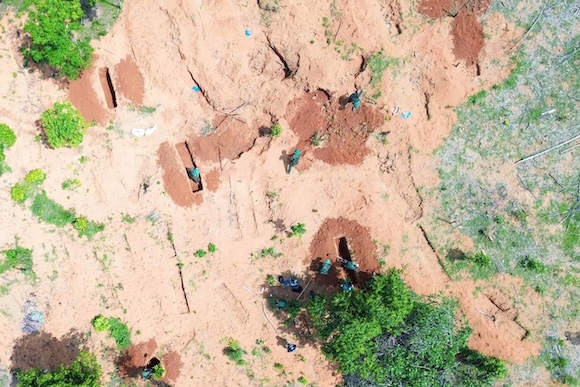
This is the 3rd cemetery in the province to deploy biological sample collection, after functional forces have completed collecting samples at 93 martyrs' graves at Truong Son National Martyrs' Cemetery and are continuing to strain themselves to take samples for 5,929 graves at Road 9 National Martyrs' Cemetery from June 5, 2026. The core force participating in this special task is Team 584 and Team 589 under the Provincial Military Command, in close coordination with the Departments of Home Affairs, Health, Provincial Police and local authorities.
It is estimated that throughout this peak campaign, Quang Tri will organize excavations and collect DNA testing samples for more than 22,000 graves of unidentified martyrs. To ensure the accuracy of the process, the forces have been thoroughly trained in the strict technical procedures of the Ministry of National Defense, from the digitized biological sample collection stage, integrated into the campaign database, to the transportation, handover and sampling stages.
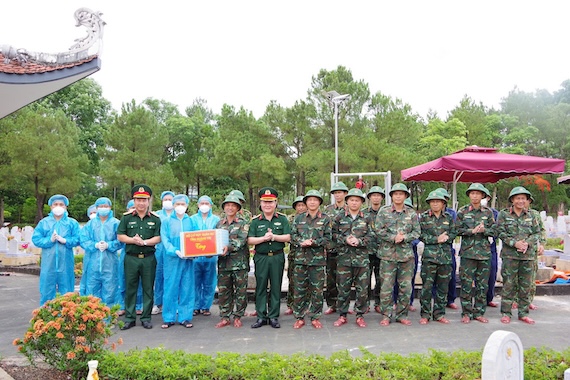
The province's immediate goal is to strive to collect an additional 360 to 590 sets of martyrs' remains and complete the sample collection for relatives. To date, the locality has also completed the collection of 2,771 samples for comparison according to the mother line of 2,138 martyrs' relatives in the area, ready to serve the data comparison work. The outstanding efforts of the army and functional agencies are igniting hope, helping many heroic martyrs to soon identify their identities to "return" to reunite with their families and homeland.


