
World gold prices surged, surpassing the 4,700 USD/ounce mark - the highest level in more than a week, as a series of supporting factors simultaneously appeared, from geopolitical developments in the Middle East to the monetary policy outlook of the US Federal Reserve (Fed).
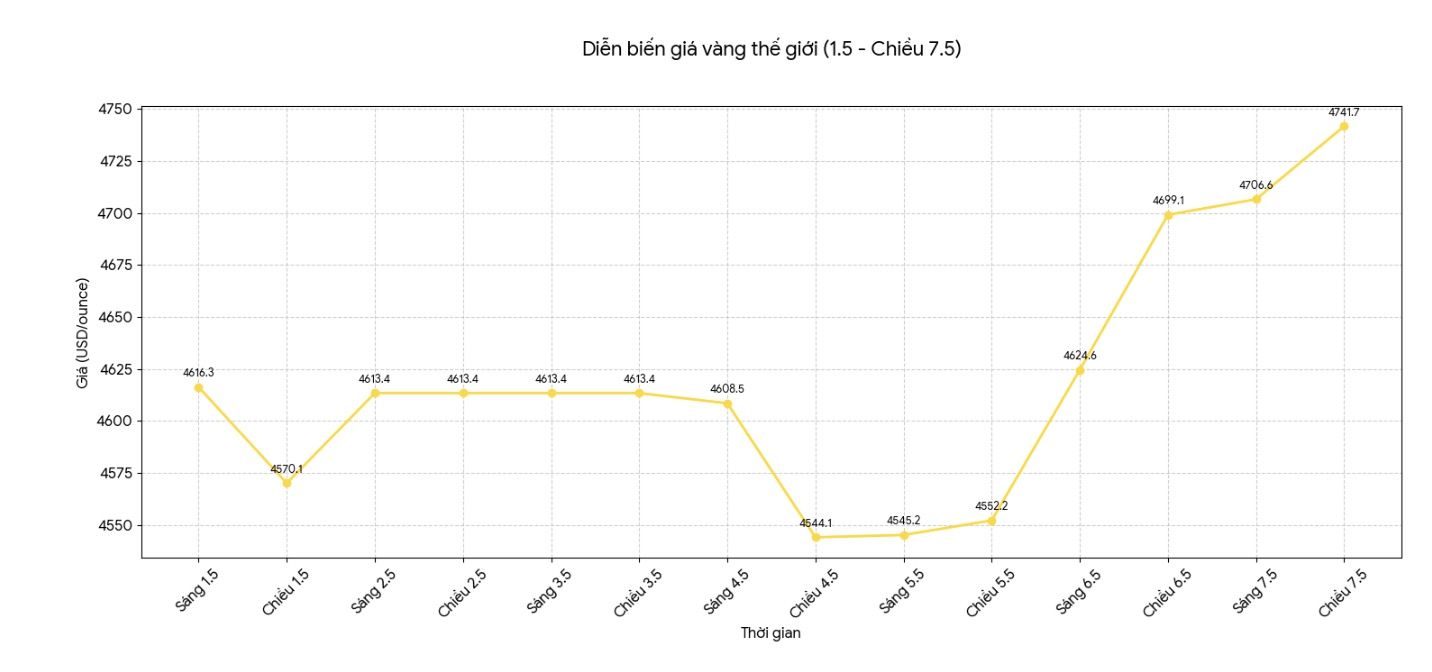
The biggest momentum comes from information that the US and Iran have made "great progress" in negotiations towards a comprehensive agreement to end the conflict. US President Donald Trump said Washington will temporarily suspend the escort operation through the Strait of Hormuz - the world's strategic oil transport route.
This development caused oil prices to fall sharply because the market expects oil supply from the Middle East to soon be reopened. When oil prices cool down, inflationary pressure also decreases, thereby increasing expectations that the FED may cut interest rates in the near future.
Mr. Ricardo Evangelista - analyst at ActivTrades - said that if transportation through the Strait of Hormuz returns to normal, inflationary pressure will ease and create conditions for the FED to cut interest rates in 2026.
According to Mr. Evangelista, in the scenario that tensions in the Persian Gulf continue to cool down, gold prices may return to a strong upward trend, surpassing the 5,000 USD/ounce mark and heading towards 5,500 USD/ounce by the end of this year thanks to the weakening USD and falling bond yields.
At the same time, the USD fell to its lowest level in 10 weeks, making gold more attractive to investors holding other currencies.

In addition to geopolitical factors, the US labor market is also sending signals supporting gold prices. ADP's report shows that the US private sector only created 109,000 jobs in April, lower than market expectations of 18,000 jobs.
This data increases expectations that the FED will find it difficult to maintain high interest rate policies for too long, especially when the rate of wage increases is relatively stable, not creating too much inflationary pressure.
However, analysts believe that gold still faces some risks in the short term. Mr. David Morrison - an expert at Trade Nation - warned that global inflation remains high and the possibility of the FED raising interest rates again at the end of the year is not completely eliminated.
Meanwhile, Mr. Simon-Peter Massabni - Business Development Director at XS. com - said that the gold market is being affected simultaneously by both safe-haven demand and monetary easing expectations.
He believes that the upcoming US non-farm payroll report will be a decisive factor in the short-term trend of gold. If job data continues to weaken, interest rate cut expectations will increase and support gold prices to go further. Conversely, positive data may trigger adjustment pressure after the current strong increase.


