
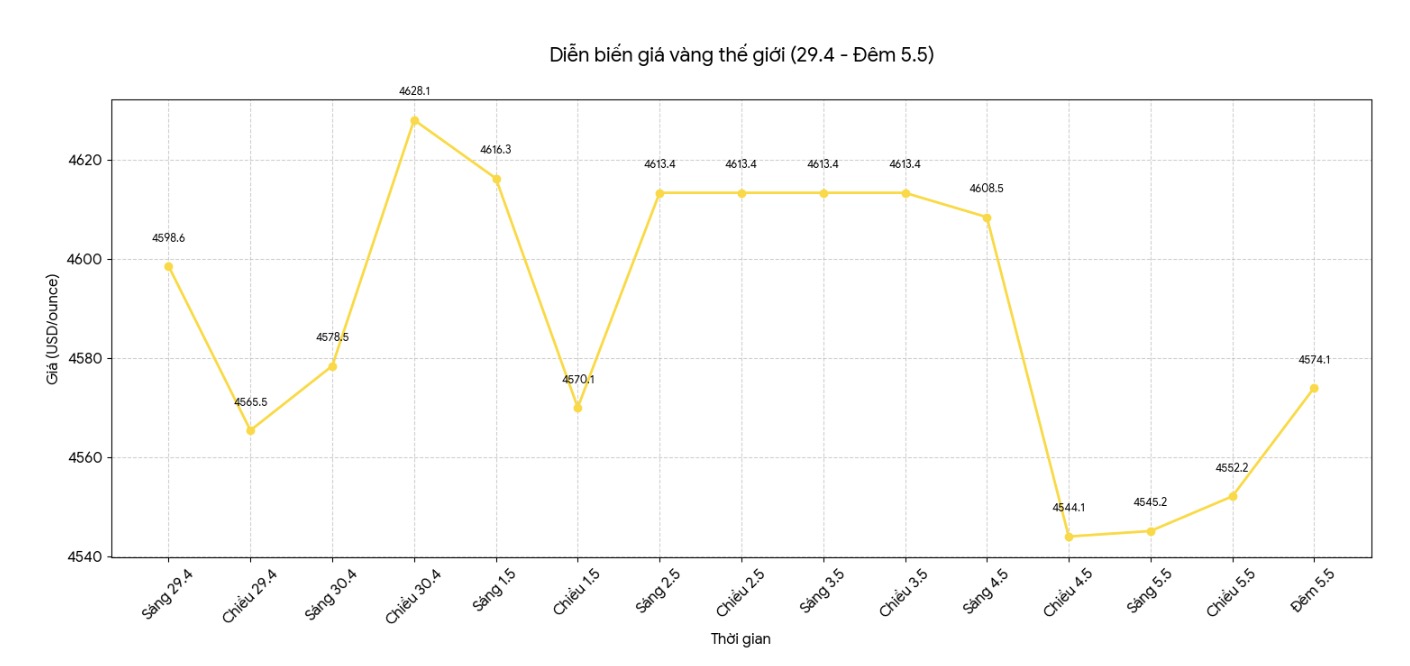
World gold prices rebounded in the trading session on the night of May 5 (Vietnam time), after falling to a 5-week low in the previous session. At 10:40 PM on May 5, world gold prices were listed around the threshold of 4,574.1 USD/ounce.
The main driving force helping gold prices recover came from bottom-fishing buying by investors after a strong sell-off in the futures market. Previously, Comex gold contracts had fallen more than 110 USD/ounce, creating a low price base, triggering the return of cash flow.
In addition, oil prices showing signs of cooling down after a hot increase also contributed to supporting precious metals. According to some experts, the decrease in oil prices due to profit-taking activities has helped reduce inflationary pressure in the short term, thereby creating conditions for gold to recover from the bottom.
However, the geopolitical context in the Middle East is still a strong dominant factor. Tensions between the US and Iran around the Strait of Hormuz have not shown signs of cooling down, causing the energy market to remain high. Brent oil prices are still fluctuating above 110 USD/barrel, raising concerns about prolonged inflation.
This factor is creating a two-way impact on gold. While geopolitical risks support safe-haven demand, rising energy prices increase expectations of prolonged high interest rates, adversely affecting non-performing assets such as gold.
According to analyst Ross Norman, although the long-term outlook for gold is still positive, the market is currently in a prolonged accumulation phase after strong fluctuations in the first quarter. He believes that gold prices are trying to establish a new bottom as physical buying gradually returns.
US economic data also contributed to supporting the upward trend of gold. The JOLTS report showed that the number of jobs opened in March decreased to 6.87 million, reflecting cooling labor demand. This information increased expectations that the US economy is slowing down.
Immediately after the data was released, gold prices recorded new buying power and maintained the upward momentum. However, many experts believe that the weakening of the labor market is not large enough to force the US Federal Reserve (Fed) to cut interest rates soon.

In fact, the market has now eliminated most of the possibility of interest rate cuts this year, in the context that inflation still contains risks. The USD and high US bond yields are also factors hindering gold's upward momentum.
Technically, gold prices are in a period of accumulation after a deep decline. The resistance level is near the 4,600 USD/ounce area, while important support is in the 4,500 USD/ounce area. Short-term developments are forecast to continue to fluctuate as the market waits for more clear signals from economic data and monetary policy.


