After a period of strong increase and continuously establishing high price zones, the prospects of the gold market are becoming more unpredictable. In recent weeks, many major banks in the world have adjusted gold price forecasts, reflecting rapid changes in the interest rate environment, the strength of the USD and investment demand.
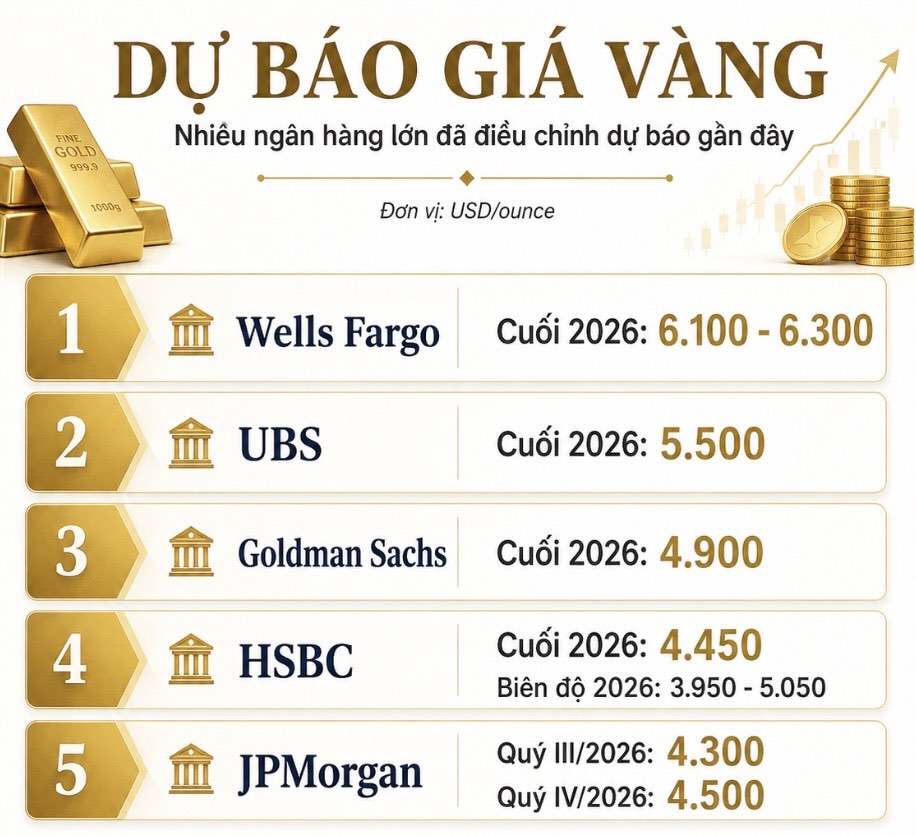
The most notable is JPMorgan. This bank recently forecast that gold prices will reach about 4,300 USD/ounce in the third quarter and 4,500 USD/ounce in the fourth quarter of 2026. The new target is significantly lower than the expectations set by JPMorgan previously.
According to the bank's assessment, gold demand from some important groups is weaker than expected. Risks for gold prices are still leaning downwards if US economic data continues to strengthen, causing the Fed to be able to maintain tight monetary policy or raise interest rates earlier than market expectations.
Despite sharply lowering forecasts this year, JPMorgan has not changed its positive views on long-term prospects. The bank believes that structural demand may recover in 2027, with buying power from central banks and the physical market continuing to play an important role.
Goldman Sachs has also become more cautious. The bank has lowered its gold price target for the end of 2026 from $5,400 to $4,900/ounce. Goldman Sachs's view is currently described as structurally positive in the long term but cautious in the short term, as downside risks remain before growth drivers return.
This change takes place in the context of strong reversal of expectations for US monetary policy. Goldman Sachs has postponed the time for forecasting the Fed to begin reducing interest rates to 2027, instead of the end of 2026 as previously expected. Interest rates staying at higher levels for longer increases the opportunity cost of holding gold - an uninterested asset.
UBS also adjusted its gold price target for the end of 2026 to 5,500 USD/ounce, down 400 USD compared to previous forecasts. The reason given is the long-term risks from high bond yields and a strong USD. In the short term, UBS once warned that delaying interest rate cuts could put pressure, bringing gold back to the 3,850-4,000 USD/ounce range.
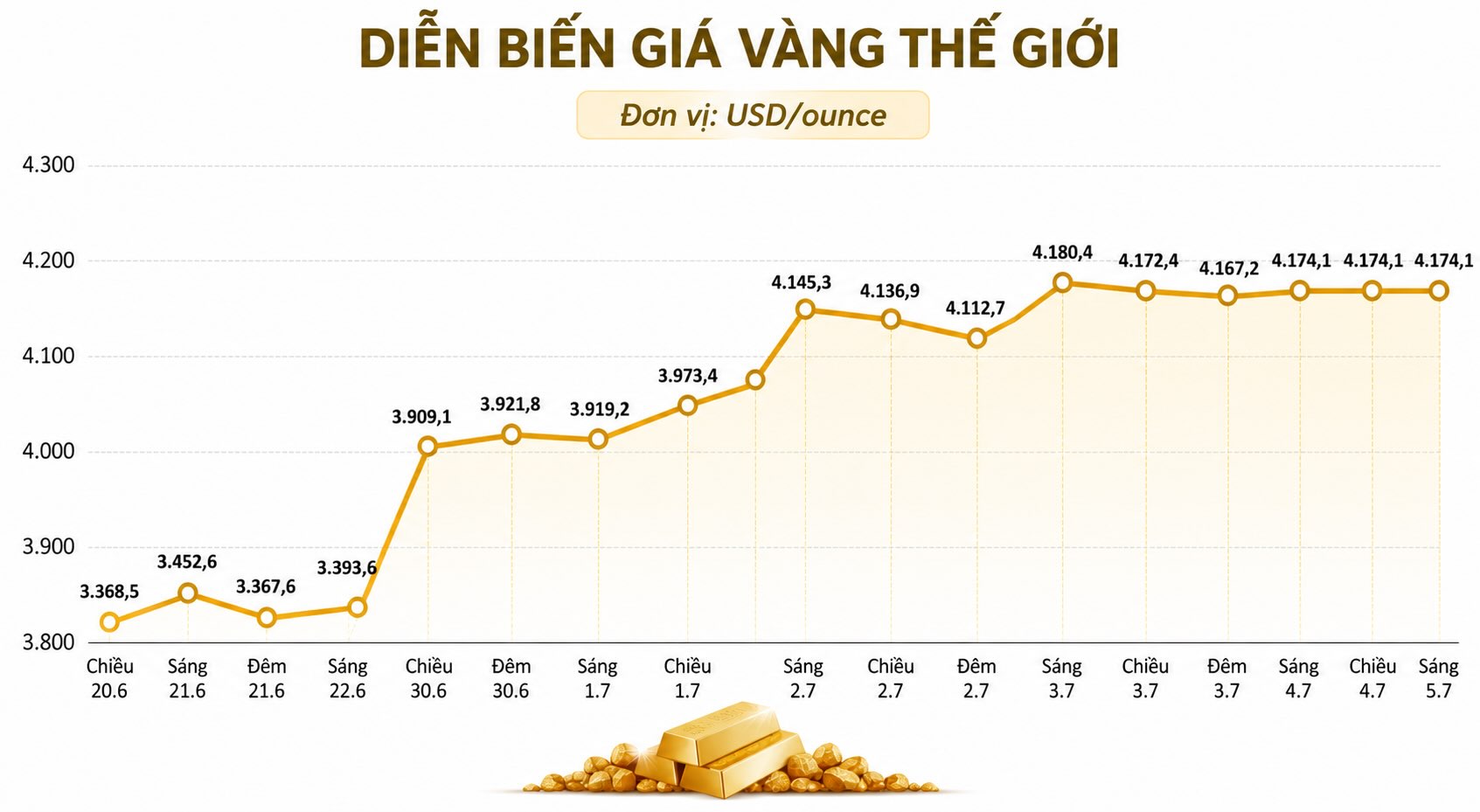
Continuous changes in bank forecasts occurred after the gold market experienced a volatile quarter. World gold prices just recorded the sharpest quarterly decline in about 13 years. In June alone, this precious metal fell more than 11%, under pressure from high interest rate expectations and changes in Fed monetary policy.
However, the outlook for gold prices has not completely turned negative.
HSBC forecasts that gold prices may fluctuate in a wide range of 3,950-5,050 USD/ounce in 2026, with a year-end price of about 4,450 USD/ounce. This forecast shows that analysts are preparing for a volatile market instead of a one-way upward trend as before. HSBC believes that geopolitical risks and global public debt are still factors likely to support gold prices.
An expert survey released at the end of April also showed that the medium-term outlook still received support. The average forecast for gold prices in 2026 was given at around 4,916 USD/ounce, although the market faces many short-term resistance forces.
In general, the common point in the latest forecasts is that the outlook for gold prices in the coming time will depend more on the Fed's policy. If inflation continues to be persistent, the US economy maintains its strength and the ability to raise interest rates is strengthened, gold may continue to be under pressure.
Conversely, weakening economic signals could quickly change monetary policy expectations. In fact, gold prices have recovered strongly after US jobs data were weaker than forecast, showing that the market is still reacting very sensitively to interest rate and yield prospects.
In the long term, the gold buying activity of central banks, the need to diversify reserves and concerns related to public debt are still considered the foundation to support the market.
The fact that a series of banks have reduced price targets does not mean that the gold upward cycle has ended. Instead, new forecasts are showing a different phase: Gold prices may fluctuate more strongly, under greater pressure in the short term, while the debate about long-term upward prospects has not yet closed.