
Tickets for the concert "Tinh Ha say hi: Hen giua tinh ha" are officially open for sale for the performance night on October 17. According to information from the organizers, after only 45 minutes, all ticket classes were sold out.
SVIP A is the first area to run out of tickets, followed by SVIP B. Notably, President Lounge with a price of 50 million VND and Sky Lounge priced at 10 million VND also quickly ran out of tickets.
The figure of 50 million VND attracts attention because this is no longer the usual spending level for a concert ticket. The fact that this ticket category still finds buyers shows a significant change in the way a part of the audience spends money on idols and entertainment products.
When the audience doesn't just buy a seat
Concerts are increasingly being designed in the direction of selling "experience" instead of simply selling performance viewing locations.
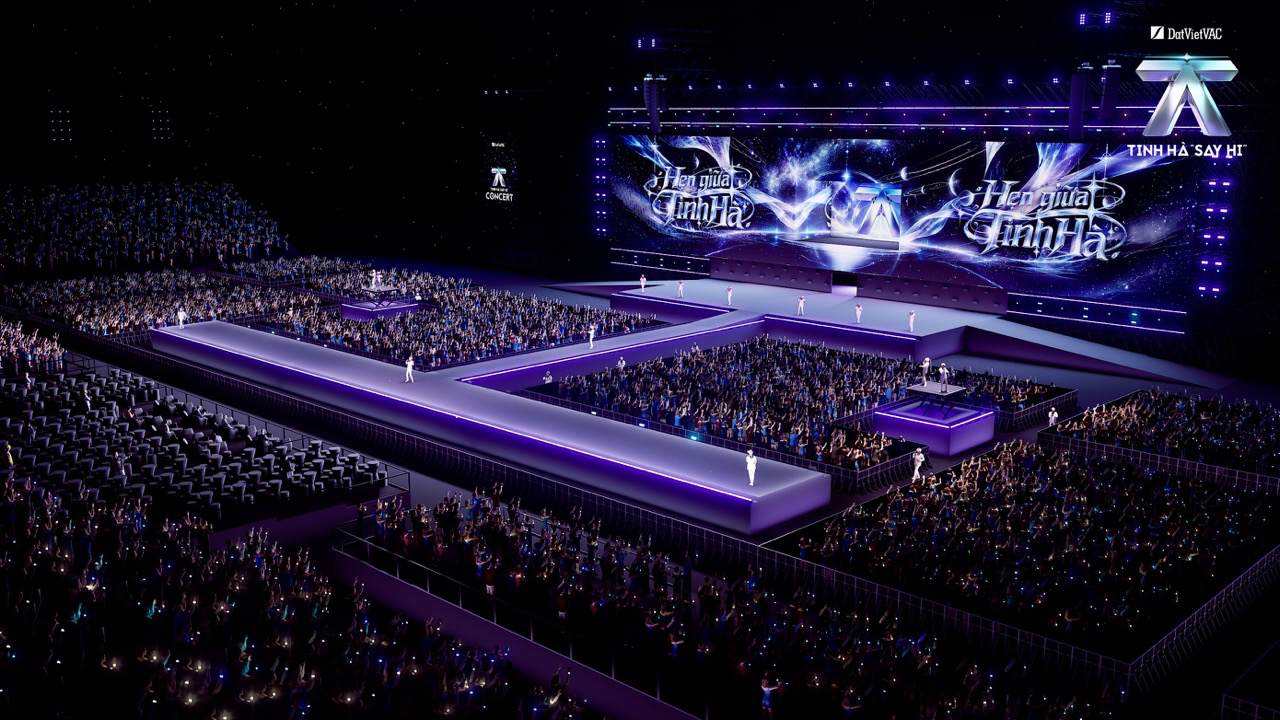
This is quite clearly shown in the way "Tinh Ha Say Hi" arranges the stage. The catwalk named "Tinh Ha String" stretches and connects with the island podiums, bringing the artists deeper into the audience area.
Fanzones and GAs also become important areas instead of the entire experience focusing on the main stage. Lifts, auxiliary stages and gift-giving areas are distributed in multiple locations to increase the number of times artists can reach viewers.
This design solves one of the big problems of large-scale concerts: distance.
For fans, the value of a ticket does not only lie in listening to a song that can be reviewed on YouTube or online platforms. The moment an artist appears a few meters in front of them, walks the catwalk, interacts or directly interacts is a difficult experience to replace with a screen.
Therefore, the distance between artists and audiences is also becoming a factor that can be commercialized. The higher the ticket is, the better the viewing angle, but it is also expected to come with a sense of closeness to idols and a greater level of privilege.
From television programs to consumer ecosystems
The concert selling out quickly also shows that the life cycle of a music program today does not necessarily end after the final episode airs.
Television creates characters, stories and a fan community. Music creates hits. Social media maintains discussion. Concerts then become a place to turn love into actual spending needs.
This is also the reason why recent music programs focus on building artists in groups and creating different combinations. Audiences not only watch a singer but can also form feelings for the whole lineup, performance or relationship between artists throughout the program.
When those elements are brought to the concert stage, what is sold is no longer just a few hours of listening to music but an opportunity to step into the world that the audience has watched for many months on the screen.
From the perspective of entertainment business, this is a notable shift. A television program can become the starting point for a product chain stretching from advertising, digital platforms, music to concerts and many forms of exploiting the fan community.
Before "Tinh Ha Say Hi", the brands "Anh Trai Say Hi", "Em xinh say hi" also showed the ability to bring the heat of the program out of the screen.
Therefore, the fact that a ticket price of 50 million VND still finds a noteworthy buyer is not only because of the price. It shows that the Vietnamese entertainment market is seeing a group of audiences willing to pay more money in exchange for an exclusive and closer artist experience.
After tickets on October 17 were announced sold out, many viewers proposed to organize a second show. If this demand is large enough, the story of "tickets sold out in 45 minutes" will not only reflect the temporary heat, but also be a test for the ability to turn a television program into an entertainment IP with a longer lifespan in the Vietnamese market.


