From mascots to gods in folk wisdom
Horses originally held a special position in Vietnamese history and culture. In the traditional agricultural society, horses are associated with travel, trade, battles and territorial expansion. White - "white" - is the color of sacredness, purity, associated with the supernatural world. When these two elements combine, White Horse is no longer simply an animal, but becomes a sacred animal capable of connecting people with gods.
Folk belief believes that White Horse can manifest, guide, and exorcise evil spirits, helping people overcome difficult times: building villages, opening land, building citadels, establishing hamlets. From that belief, the image of the white horse is gradually humanized, becoming a worship object in many places.
White Horse and historical imprint
Bach Ma's most prominent role in Vietnamese history and culture is associated with Bach Ma Temple, one of the four temples belonging to Thang Long Tu Tran. According to legend, when King Ly Thai To moved the capital to Thang Long, the construction of the citadel encountered many obstacles, and the citadel walls continuously collapsed. The king set up an eruption altar, and the god Long Do appeared in the image of a white horse, running around the land, leaving footprints clearly indicating the solid land. The king ordered the citadel to be built according to the footprints of the horse, from then on the citadel stood firm.
From this event, the god Long Do was conferred the title of Bach Ma Dai Vuong, becoming the god guarding the East of the capital. Bach Ma Temple is therefore not only a place of worship, but also a spiritual symbol associated with the birth and stability of the capital Thang Long. In the people's minds, Bach Ma not only "maintains the citadel", but also keeps the capital peaceful and prosperous.
From the center of Thang Long, the Bach Ma belief gradually spread to many localities in the North and North Central regions. In many villages, Bach Ma temples or shrines are erected as a way to pray for the gods to protect the community. In many places, Bach Ma is worshiped as a village tutelary god, or combined with local gods.
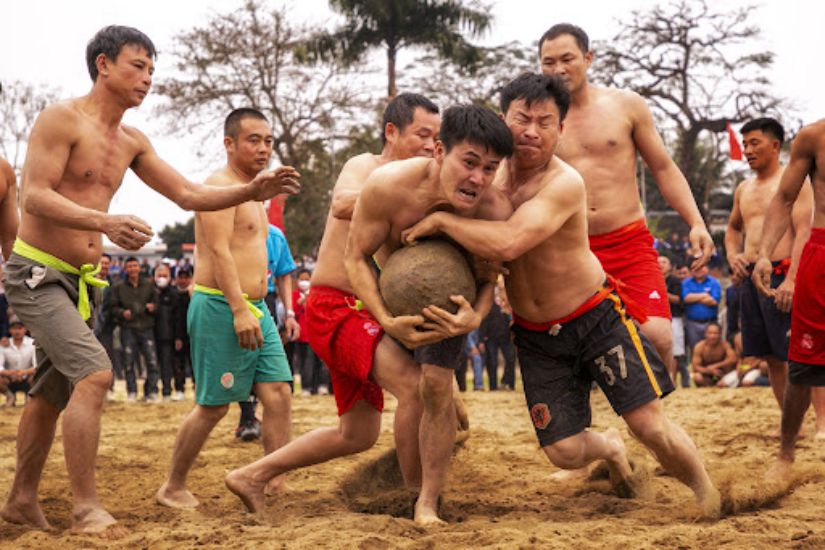
In Nghe An, Bach Ma Temple is one of the 4 most sacred temples of Nghe land. Bach Ma Temple Festival (Kim Bang commune) is held on February 9th and 10th of the lunar calendar every year, which is one of the spiritual activities that tourists and people are interested in.
Since ancient times, when mentioning the sacred temples of Nghe land, people have passed down the saying: First Con, second Qua, third Bach Ma, fourth Chieu Trung. Bach Ma Temple is located in Tan Ha village, Vo Liet commune, Thanh Chuong district. According to legend and temple genealogy, Bach Ma Temple was established to worship General Phan Da, from Chi Linh village, Vo Liet commune, Thanh Chuong district (old) now Kim Bang commune. Bach Ma is the name after the white horse that General Phan Da often rides when going to battle.
Old history, temple inscriptions and legends tell: In his youth, Phan Da was a smart, handsome boy with martial arts talent, loved by the people and admired by friends. In 1418, when Binh Dinh Vuong Le Loi returned to Nghe An, Phan Da brought all his insurgents to join Le Loi's insurgents, making many great contributions and sacrificing themselves in a battle when he was only 24 years old.
Assessing his merits, later, when he ascended the throne, King Le Thai To (Le Loi) posthumously phong him as "Do Thien Dai De Bach Ma Thuong Dang Phuc Than", ordered the establishment of a temple and listed him in the rank of "Dien Le Quoc Te", meaning worship according to State rituals by court officials as chief worshipers. Later, feudal dynasties continued to impose more than 100 imperial decrees and gia phong as Thuong Thuong Dang tuy linh ton than.
In addition, the common point in these temples and shrines is the belief in the guiding and protecting role of the White Horse god. When reclaiming land and establishing new villages, people believe that with the "guidance" of the god, life will be smooth, harvests will be good, and villages will be peaceful. Therefore, although specific legends in each place are different, the image of the white horse still retains the core spiritual meaning.
Not only existing in official rituals, the White Horse also enters the daily spiritual life. The ancients believed that praying for the White Horse would lead to peaceful journeys, smooth business, and avoid disasters. Traders and merchants – those who often travel far – especially value this god, considering the White Horse as the god who keeps word and opens the way to wealth.
In many folk festivals, the image of white horses appears through worship items, paintings, and paper horses offered as offerings. These rituals not only carry the meaning of praying for good luck, but also express the desire to control risks and seek spiritual protection in a volatile society.
Cultural and religious values are harmonious and flexible
Placed in the overall Vietnamese belief, Bach Ma is a typical example of inclusiveness. This is not a Buddha according to Buddhist doctrine, nor completely belonging to the Taoist system. Bach Ma is a local god, formed from folk beliefs, and gradually "nationalized" through its role in Thang Long.
This flexibility reflects the characteristics of Vietnamese culture: not rigidly separating between mascots - gods - people, but allowing images to transform according to the spiritual needs of the community. Bach Ma is therefore both close and sacred; both village-like and national in stature.
Today, amidst modern life, Bach Ma temples are still the spiritual support of many communities. Not only are they places of worship, but they are also spaces to preserve historical memories, legends and cultural identity. Preserving, researching and introducing the true value of Bach Ma belief contributes to helping today's generation better understand how ancient Vietnamese people perceive the world, behave with nature and build communities.
From a mascot in folk imagination, the White Horse has become a persistent symbol of faith, guidance and aspiration for peace. In the flow of Vietnamese culture, it is a vivid proof of the long-lasting vitality of folk beliefs - a place where history, legend and life blend together.