
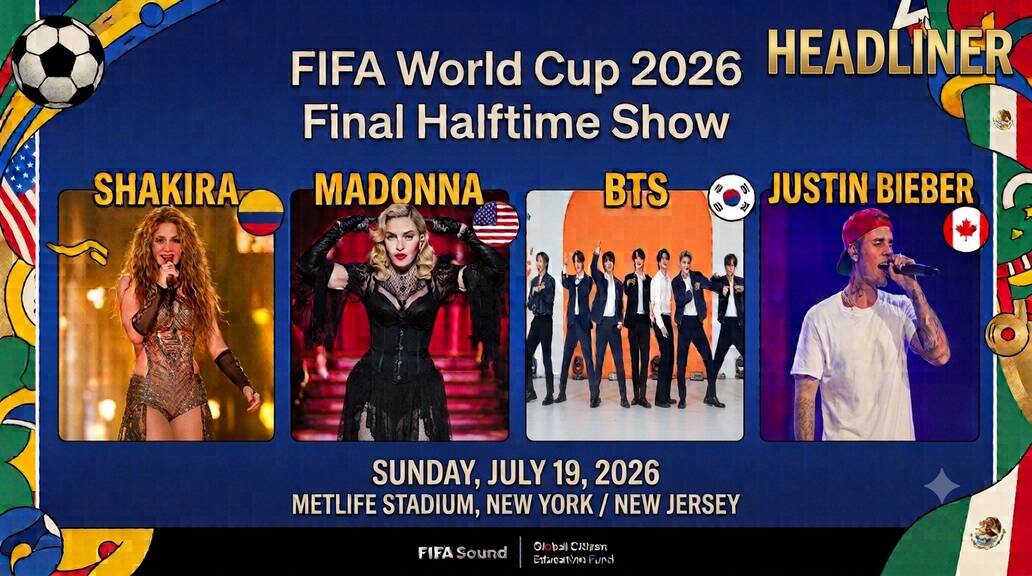
The upcoming performance of Kpop group BTS (Jungkook, J-Hope, Suga, Jin, Jimin, RM, V) at the halftime show of the 2026 World Cup final is creating a wave of excitement among the global fan community.
However, what really made the ARMY community explode was the promotional image released by Global Citizen before the performance on July 19.
The poster confirms that the song "Permission to dance" will be performed by BTS in the program. This turns one of the group's most meaningful songs into the focus on the biggest football stage on the planet, while conveying a message beyond the scope of music.
BTS's performance is also aimed at supporting the FIFA Global Citizen Education Foundation, with the goal of expanding access to quality education for children around the world.
That noble purpose makes the group's performance this time more meaningful to fans, especially after many years of fans waiting to witness BTS reuniting on one of the biggest stages in the world.
The reason "Permission to dance" was chosen also caused discussion.
According to media reports, among BTS's songs, very few songs carry universal messages like "Permission to dance".
Released during the COVID-19 pandemic, the song conveyed a message of hope, resilience and solidarity in a period when millions of people around the world had to live in blockade and instability.
Not only lyrics, the choreography of the song also has special meaning. Instead of just focusing on dance moves, BTS has incorporated international sign language into choreography with movements expressing words like "joy", "dancing" and "peace".
The group has worked closely with experts in the hearing-impaired community and sign language interpreters to ensure that each movement accurately conveys the message of the song.
The management company BigHit Music once shared about this process: "After selecting keywords and symbolic gestures, we turned them into dance and went through many discussions with experts, including deaf people and sign language interpreters, to ensure the meaning of the song is conveyed clearly.
That effort has received responses around the world. Many content creators who are hearing impaired praised the choreography, while many fans learned the gestures and shared videos of re-performing the dance.
A post spreading on social networks wrote: "My cousin watched the MV and was very happy. She said:'They are telling me to dance'. I burst into tears when I heard that.
Sign language interpreter Kim Dong Ho also highly appreciated the influence of the song: "This time BTS has narrowed the gap by bringing sign language into choreography suitable for the lyrics, helping people with hearing impairments to understand the message immediately and enjoy the joy together.
The integration message of the song was also recognized by World Health Organization (WHO) Director General Tedros Adhanom Ghebreyesus.
Currently, there are about 1.5 billion people worldwide with hearing loss. Sign language can help them continue to enjoy music, which brings joy to life," he wrote.
Therefore, "Permission to dance" is considered a very suitable choice for the biggest stage of world football.
If the World Cup connects people from many continents, languages and cultures, then BTS's performance also aims for a similar goal through music, honoring joy, peace and integration, turning the half-time performance program into more than just a simple entertainment performance.


