
Please give the forest god a Neu tree
At dawn on March 6, Cheng Tong village, Tra Tap commune, Da Nang was bustling with the sound of the water fountain worshiping festival of the Xo Dang people with many unique cultural and artistic activities.
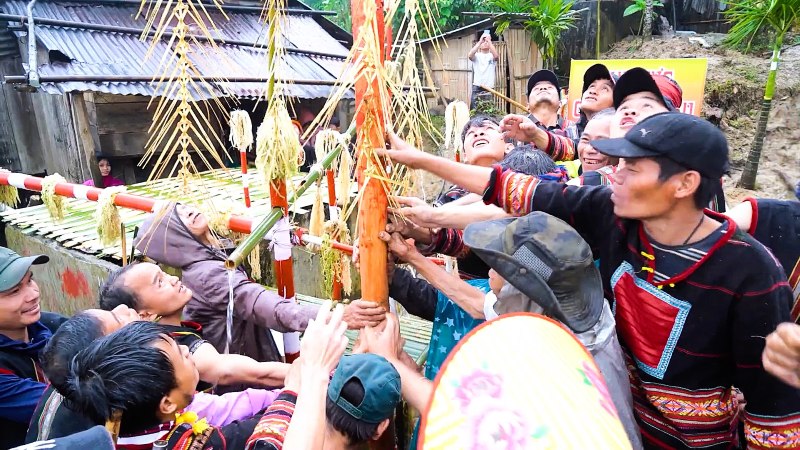
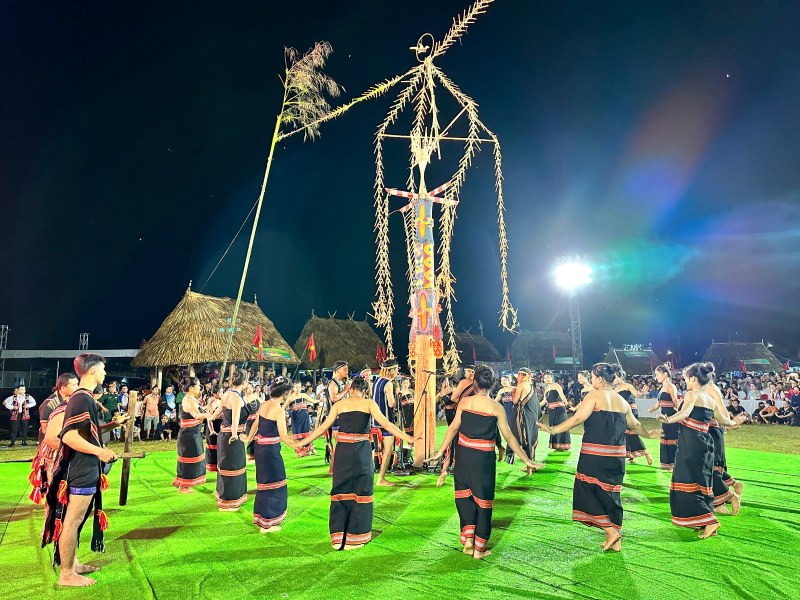
I stood in the square yard of the village house right when the Neu tree was erected directly amidst the calls of each other. On the Neu tree, the national flag fluttered, red in the thin mist. When the old year passed, people returned to the life of the village, thanking the gods, praying for harvests, health, praying for the water trough to be full, for the kitchen to always be on fire.
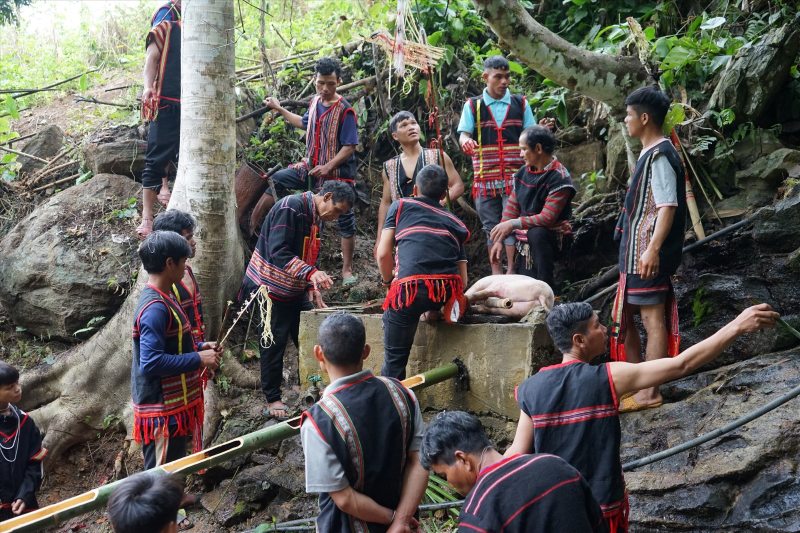
Before the festival day, elder Pham Khai Hanh gathers his children, grandchildren, and young men to go into the forest to find lo o. In this region, erecting the Neu pole is not just "going to get a bamboo tree". It is a trip to ask for permission.
Amidst the vast green bamboo trees, the village elder walked slowly, looking closely at each tree trunk. He chose a straight, tall, and beautiful tree. Then stood silently, speaking to the forest god in a deep, firm voice: "Please witness, the villagers welcome this tree trunk and will offer it back with the products they made. The words ended, the sound of the axe touching the bamboo tree sounded concise and resonant, like a milestone marking the beginning of the festival season.
The Xo Dang people believe that the Neu tree is the "altar" in the festival, the road connecting the earth and heaven. Therefore, this sacred object should not be placed close to the ground. On the road to bring the bamboo umbrella back to the village, Mr. Ho Van Hieu and a group of young people divided up to lift it in sections, tying them along the rows of trees in front of the community activity house, more than one meter above the ground. They do this to avoid anyone accidentally passing by, avoiding disarray in the sacred realm.
For the community, the higher the Neu tree, the easier it is to "reach" the gods. Along the Neu tree trunk, colorful ropes are hung up as an invitation to the forest god, the mountain god. Interspersed are dummies and patterns symbolizing pigs, chickens, birds, fish, shrimp, corn... made from wood, hard paper, foam fibers, bamboo and rattan weaving. It's not just decoration. It's a gift, a thank you for a year of favorable weather and good harvests.
New village, old customs not lost
At the moment the Neu tree was erected straight, people suddenly spoke softly, as if afraid of breaking the atmosphere full of reverence. Anh Hieu hugged the Neu tree trunk tightly. Other young men surrounded and pressed close to the bamboo tree trunk. They shouted in rhythm - a rhythm both to keep the Neu tree standing firmly and as if to send prayers for the new year.
The uniqueness of the water fountain worshiping ceremony lies in the fact that it is not just a ritual to thank the gods. It is a way for villagers to confirm with each other that they still belong to each other. When together erecting the Neu pole, together clearing the road, together hanging flags and flowers, together keeping the sacred rules from previous generations, the community is "sewn up", as solid and sturdy as a bamboo tie tied on a bamboo pole.
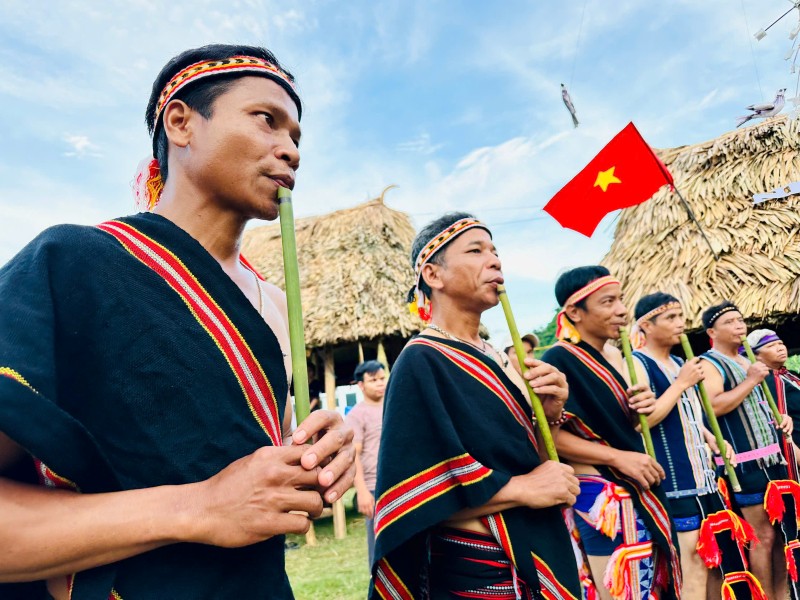
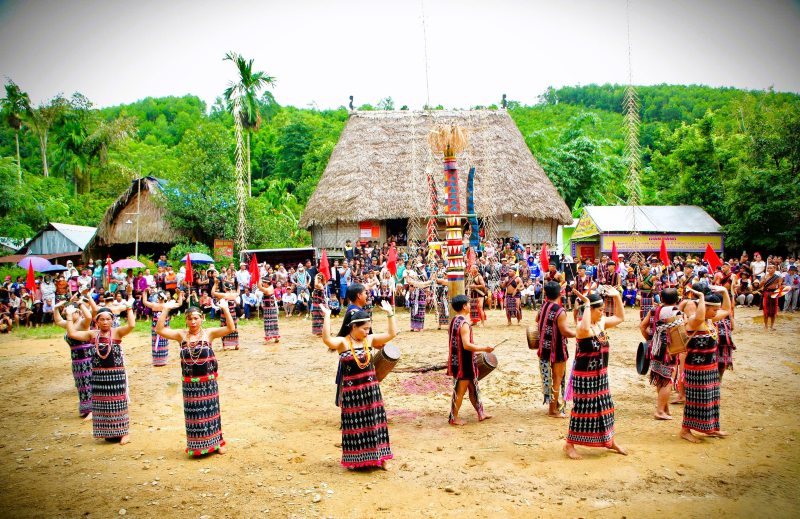
For the past three years, Cheng Tong has organized the largest-scale water fountain worshiping ceremony in Tra Tap. Villagers have not been here for long, their houses are more spacious, and village roads are cleaner. But the "blood vessel" of Xo Dang still motivates them to look towards their roots.
Ms. Truong Thi Luon - Secretary of the village Party Cell said that people are grateful to the Party and the State for a new life that is more convenient and civilized.
Amidst the festive atmosphere, I was held back by the image of a village elder sitting enthusiastically in front of a musical instrument created by himself. The clear sound of the T'rung instrument falls evenly on the dusty rain background, as rustic as stream water flowing. Behind him, a few young men clasped their hands to listen.
He is Ho Van Thap - the only Meritorious Artisan in the western highlands of Da Nang. People say he knows many professions: weaving, weaving, forging. He can play many musical instruments: stone lute, T'rung lute... Things that seemed to be "common property" of a tribe, are ultimately in memory, in one person's hands.
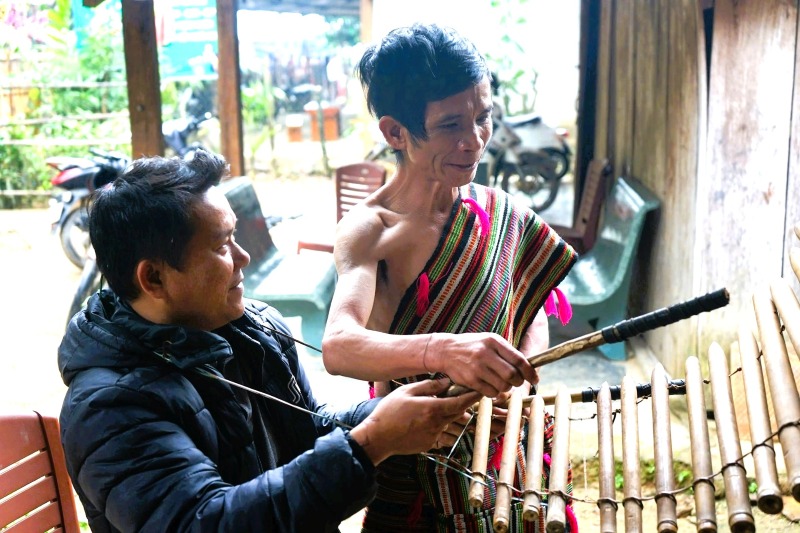
In the water fountain worshiping ceremony, Mr. Thap's zither sound is like another stream parallel to the upstream water: quiet but persistent. If the water fountain is the material lifeline, then the zither sound is the spiritual lifeline.
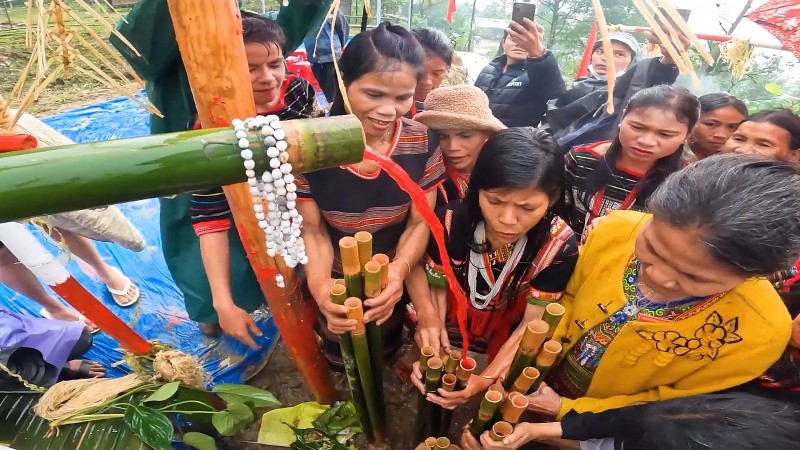
In the highlands in western Da Nang, the Xo Dang and Ca Dong communities still maintain the annual water ditch worshiping ceremony: slaughtering pigs to sacrifice to the gods, bringing upstream water to the village, women collecting water to cook and perform ceremonies at home. At the Rong house, the Neu tree is raised high, decorated with rice grain motifs to pray for a bumper crop; after the ritual part are gongs, dances, singing, rice wine and wishes for abundance lasting many days.
For the people, preserving the source is preserving the old customs; when the water ditch is full, it is also when the mountains and forests enter the festival season.


