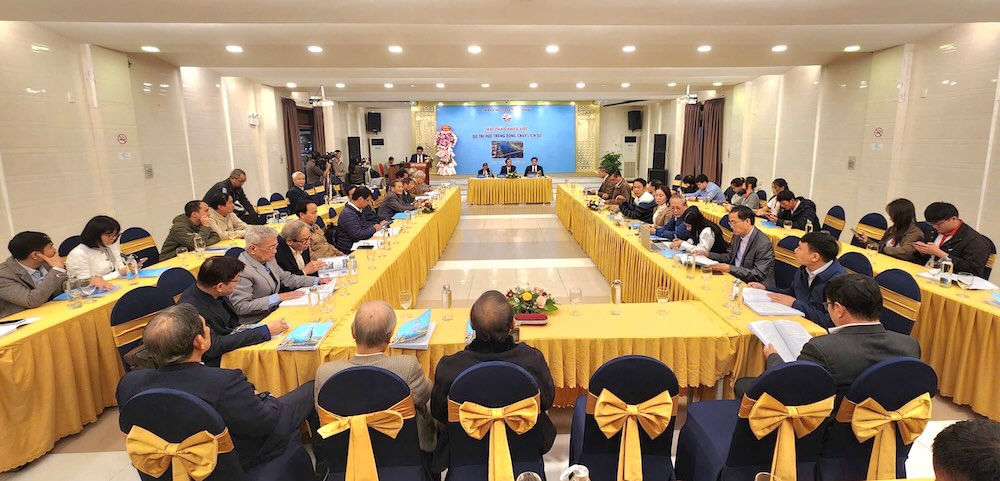
The event was attended by leaders of Hue City, scientists, experts in the fields of history, culture, architecture, planning and many delegates interested in the development process of Hue city.
Speaking at the workshop, Dr. Phan Tien Dung, Chairman of the Hue City Historical Science Association, said that Hue city has a long history of formation, originating from the Champa period with the remains of Loi citadel and Hoa Chau citadel.
It is a rare urban area that converges folk, royal, colonial and modern architectural forms; develops harmoniously between architecture, landscape and culture, creating its own identity. Through the workshop, it aims to identify the value of Hue urban area in historical periods, while proposing sustainable development solutions in the future.
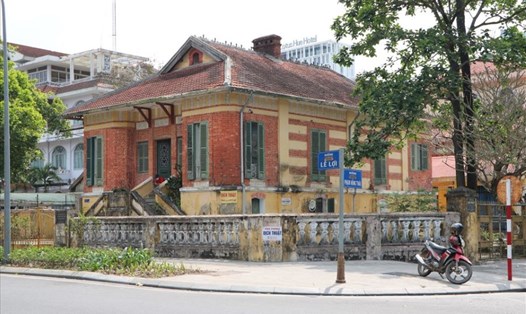
Researching on this topic, researcher Tran Nguyen Khanh Phong in his paper "Street name locations in Hue", the researcher emphasized the role of the street name system as an important component of Hue's urban cultural identity.
The author recommends that in the coming time, it is necessary to focus on naming the streets after traditional villages to preserve the memories of villages and hamlets, a special layer of cultural sediment of Hue; at the same time, preserving street names bearing the mark of folk culture that have been deeply ingrained in community life.
The workshop attracted 31 presentations, of which 22 typical articles by 26 authors were selected for editing in the book Ky yeu. In particular, the Century focuses on three main groups of issues including Hue through historical periods (9 presentations); characteristics (7 presentations), urban values of Hue and the development of Hue today (7 presentations).
The scientific results gained from the workshop are assessed to make practical contributions to the work of policy making, planning development and implementation of the city's target programs in the coming time.