
The urban romance movie "The Tale of Secrets" starring Chung Han Luong and Chu Chau, which has just aired, has attracted attention with the setting of the story "the governor loves a divorced woman who works as a janitor".
Thanks to strong growth after 2 days, the film quickly entered the list of potential "dark horses".
However, not only the plot, but also the cast of the movie is being discussed. Fans discovered a coincidence in Chinese movies revolving around the topic of middle-aged love that have recently aired.
Chung Hán Lương once collaborated with Tần Lam in the movie "City of Dance", Chu Châu once acted with Hoắc Kiến Hoa in "Why is he still single". If Tần Lam again collaborates with Hoắc Kiến Hoa in another project, then these 4 actors will complete a "closed circle of changing lovers" in romance movies, middle-aged idols.
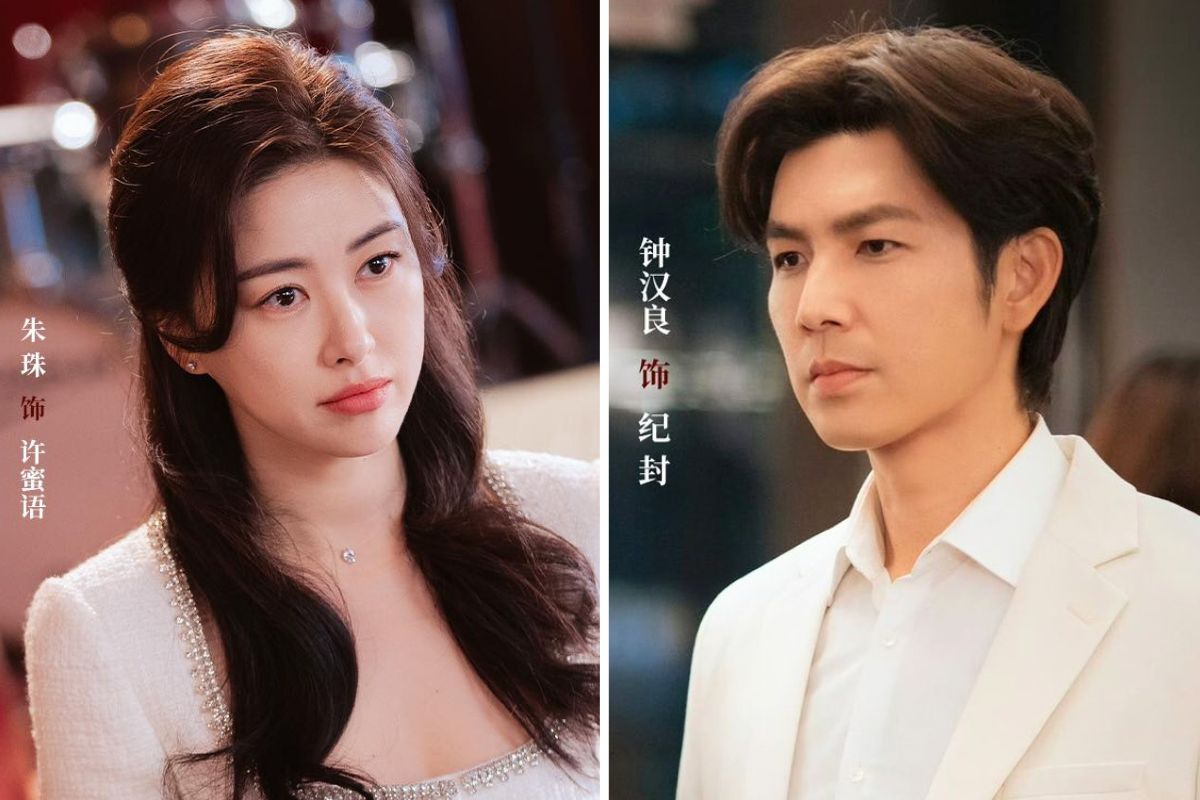
According to Sohu, "changing lovers" on screen is a popular form in idol movies for young people: with a group of actors constantly swapping and pairing in different works, creating a tangled network of feelings.
This type of cast arrangement may become increasingly popular in the middle-aged idol film genre.
For example, Vuong Duong successively collaborated with Nhiet Y Trat in the law film "No fear", and with Tan Lam in the startup film "Shine like her"; Tan Chi Loi both acted with Bach Khach in the medical film "Human Heart Club", and paired with Lam Vu Than in the film "Blind Goddess".
Repeated combinations with high frequency have become a clear characteristic in the selection of actors for this film genre.

The formula for choosing actors for middle-aged idol movies is increasingly limited, because the number of actors who can handle this film genre is already not many.
Mid-aged idol films require main actors to have appearance, high recognition and the ability to create themes. Names like Chung Han Luong, Tan Lam, Vuong Duong, Chu Chau, Tan Chi Loi, Hoac Kien Hoa... are a few mid-aged actors with high suitability, so they become targets for platforms to "keep their place" and continuously reuse.
In addition, the issue of script homogeneity is also promoting the exchange of actors. Who plays the referee, who plays the female warrior in the office - the main difference lies only in pairing. When the script itself lacks recognition points, replacing a new cast becomes the least costly way to create a "fresh feeling" for the film.
Besides, the professional difficulties of middle-aged actors are also factors that cannot be ignored. For many people, having a film to act in is already not easy, so they have very little choice of script or co-stars, and often only receive roles and co-stars that are repetitive.
However, this model of choosing actors in the style of "changing lovers" is gradually revealing its downside.
The most obvious consequence is causing the audience to be "appetized". Taking Chung Han Luong as an example, the audience jokes that from "A Lifetime Together" to "This Life Has You" and "Dancing City", the love motif is still repeated, making viewers no longer feel new with similar stories.
In the long run, constantly seeing the same group of actors acting in similar love stories makes it difficult for audiences to empathize, leading to the quality of evaluation of this film genre increasingly decreasing, even falling into the vicious circle of "the more it is shown, the more failure".
Creators need to get rid of the "safe" mindset, giving more suitable middle-aged actors new and challenging roles, instead of just revolving around a few "familiar faces".


