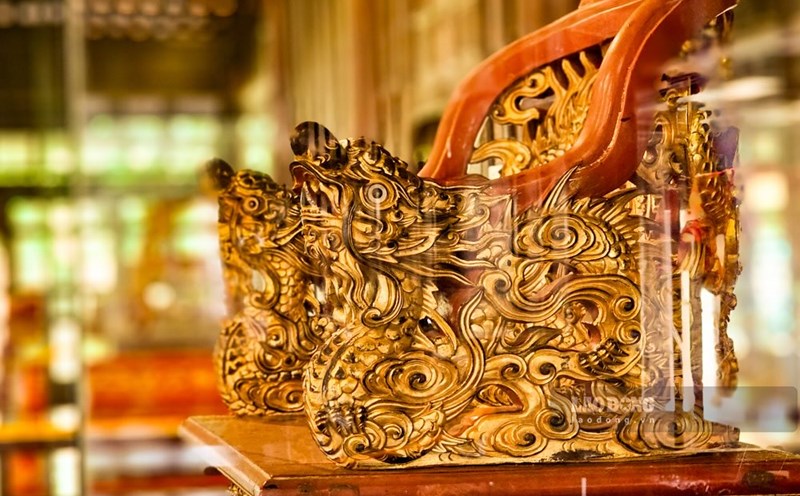
Restoration from a rare incident
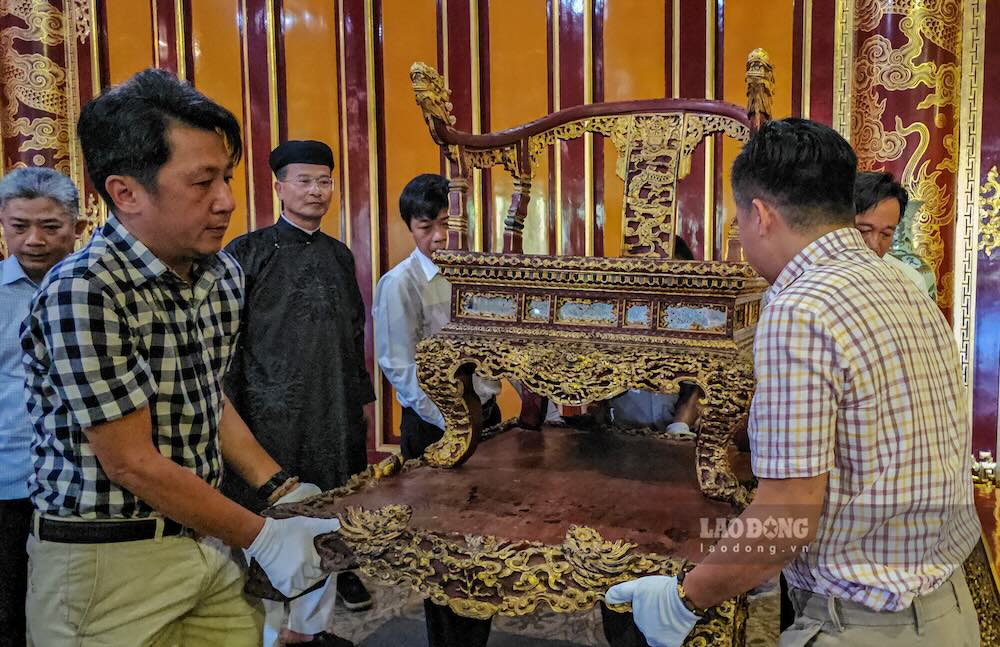
On the morning of June 4, the national treasure of the Nguyen Dynasty throne was officially returned to its display location at Thai Hoa Palace, Hue Citadel, after more than a year of being taken for preservation and restoration due to damage.
Previously, on May 24, 2025, subject Ho Van Phuong Tam (born 1983, residing in Hue City) committed acts of destroying artifacts, breaking the left throne part, causing 14 fragments to be separated. The incident caused public uproar because this is one of the important artifacts of the Hue heritage system.
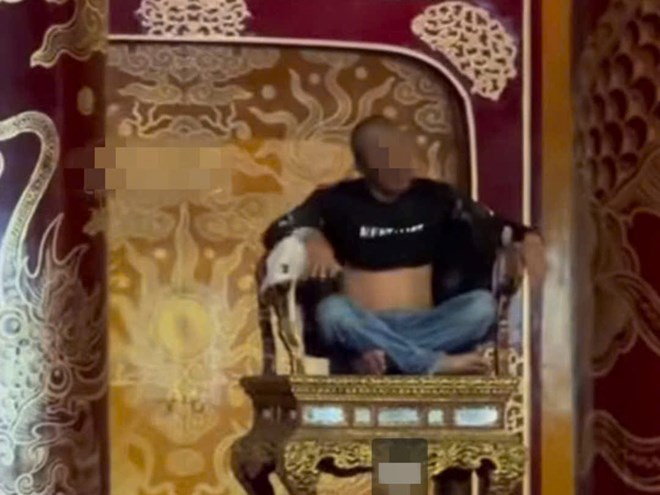
Immediately after the incident, the artifacts were taken to the antique warehouse of the Hue Royal Antiquities Museum for preservation and to develop a restoration plan. Hue City People's Committee then established a professional council including managers, researchers and artisans to supervise the entire implementation process.
The restoration work will be carried out from April 22 to May 4, 2026, at the Hue Royal Antiquities Museum, implemented by Hue Relic Repair Joint Stock Company using socialized funds.
According to the Hue Ancient Citadel Relic Preservation Center, the restoration process strictly adheres to the principle of maximally preserving the original elements of the artifacts. Experts have cleaned, treated mold and termites; assembled 14 fragments; restored the connecting bolts and treated cracked and missing positions with materials compatible with the original material.
The entire process is filmed, photographed, recorded and stored to serve research, management as well as long-term preservation.
After restoration, the damaged throne part has been restored to its original shape, size and color. The performing unit affirmed that it did not add new patterns or details, and did not change the original elements of the treasure.
Mr. Ngo Van Minh - Director of the Hue Royal Antiquities Museum - said: "We do not make new details but try to maximize the remaining fragments. The restoration is carried out according to a strict process from positioning, assembling on a 3D model to practical assembly; the paint color and gold plating are also processed to ensure similarity with the remaining parts of the throne".
Symbol of power
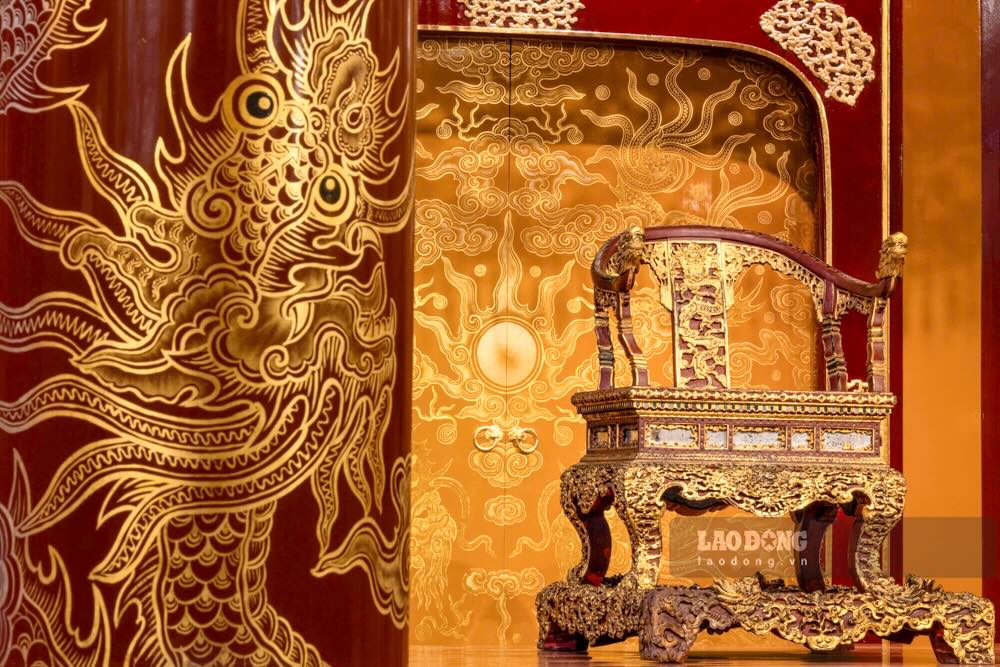
The throne is placed in the center of Thai Hoa Palace - the place where the important ceremonies of the Nguyen Dynasty take place such as the coronation ceremony, the great court ceremony or the reception of envoys.
This is a unique artifact, no second similar artifact still exists. In 2015, the Nguyen Dynasty throne was recognized by the Prime Minister as a national treasure.
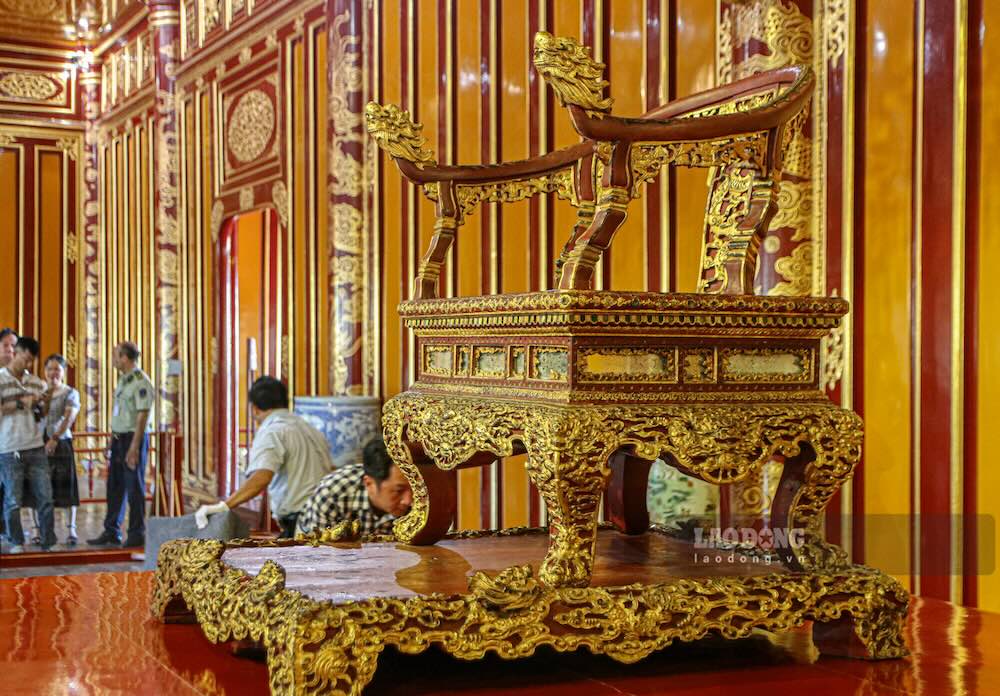
According to research, the artifact is 101cm high, 72cm wide, 87cm long; the base is 118cm long, 90cm wide and 20cm high. Above is the elaborately gold-plated beucon. The entire artifact is made of wood with dense dragon motifs, expressing the meaning of praying for blessings, longevity and the throne of the emperor.
According to researcher Phan Thuan An, the throne was crafted by a team of artisans in Hue capital specializing in serving the royal family and court. The exquisite carvings and gold-plating on the artifacts reflect the top level of fine art of royal artisans during the Nguyen Dynasty.
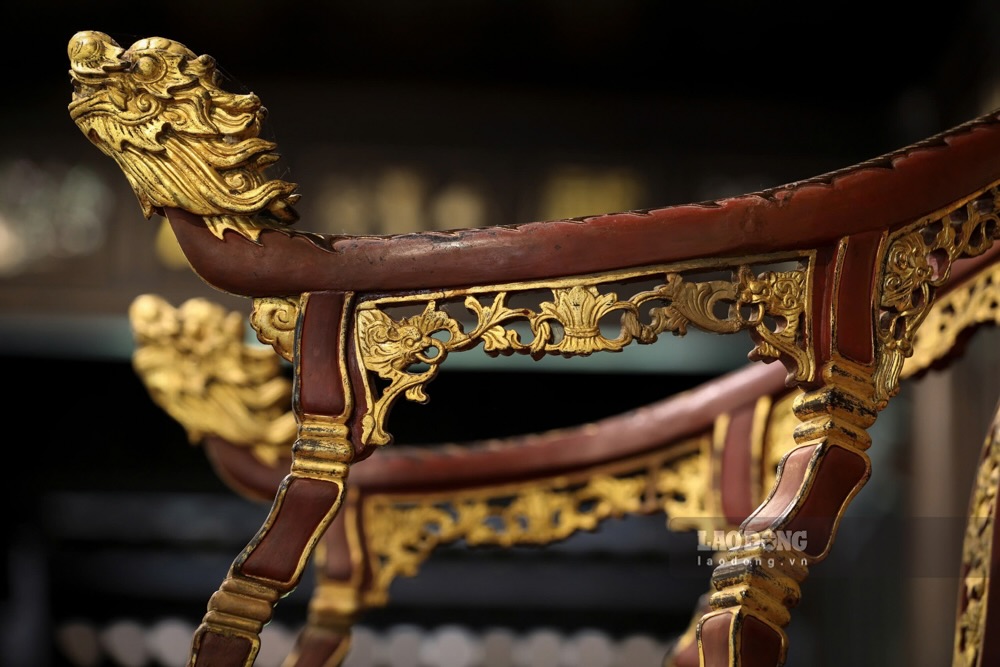
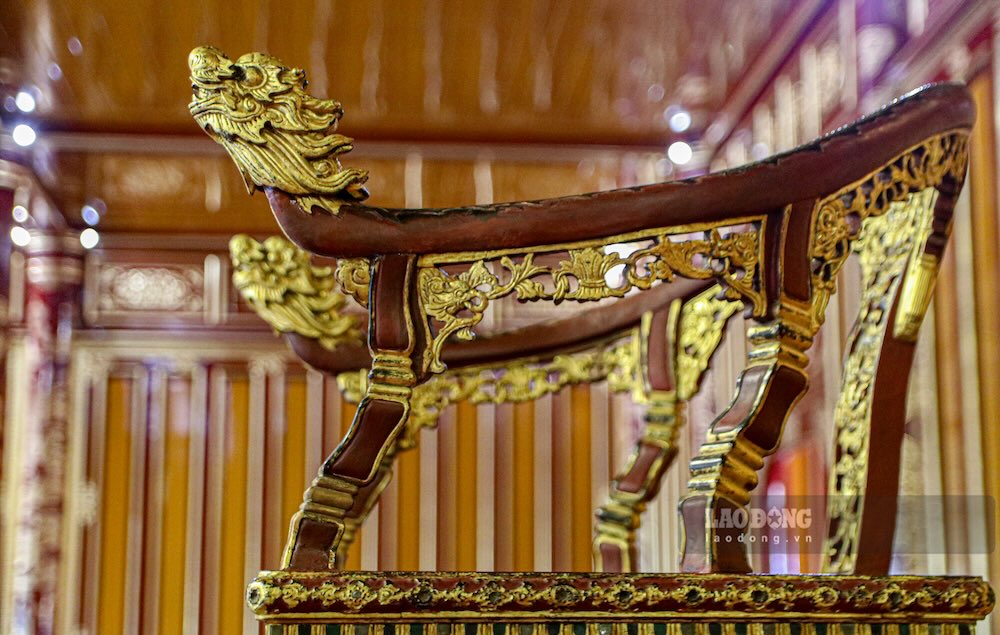
Not only is it a unique artwork, the throne of the king is also a symbol of power passed down through 13 Nguyen kings. King Bao Dai was the last monarch to sit on this throne before the Nguyen Dynasty ended.
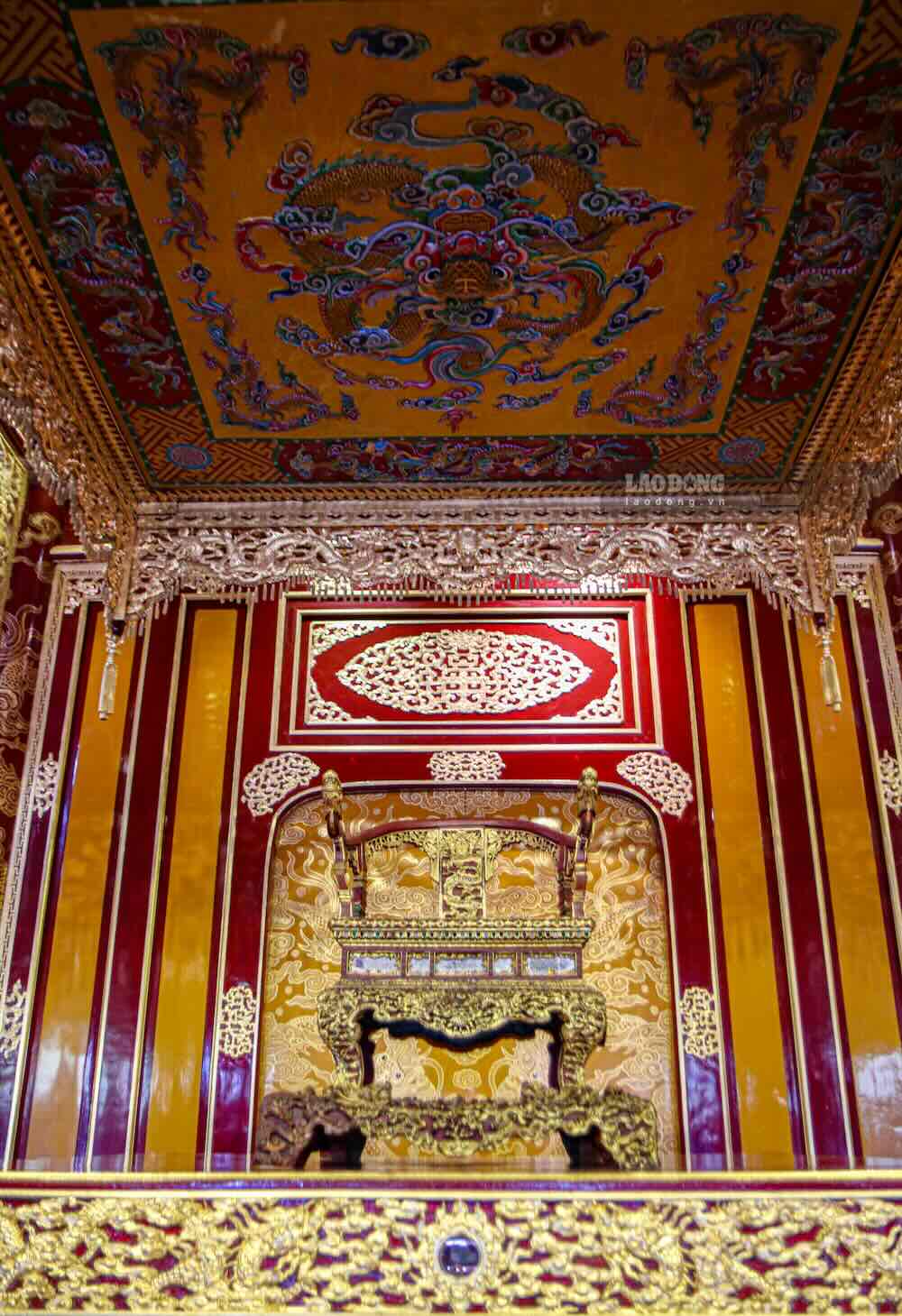
The Director of the Hue Royal Antiquities Museum informed that before bringing national treasures back to display at Thai Hoa Palace, relevant units have reviewed and implemented many solutions to enhance the safety of artifacts.
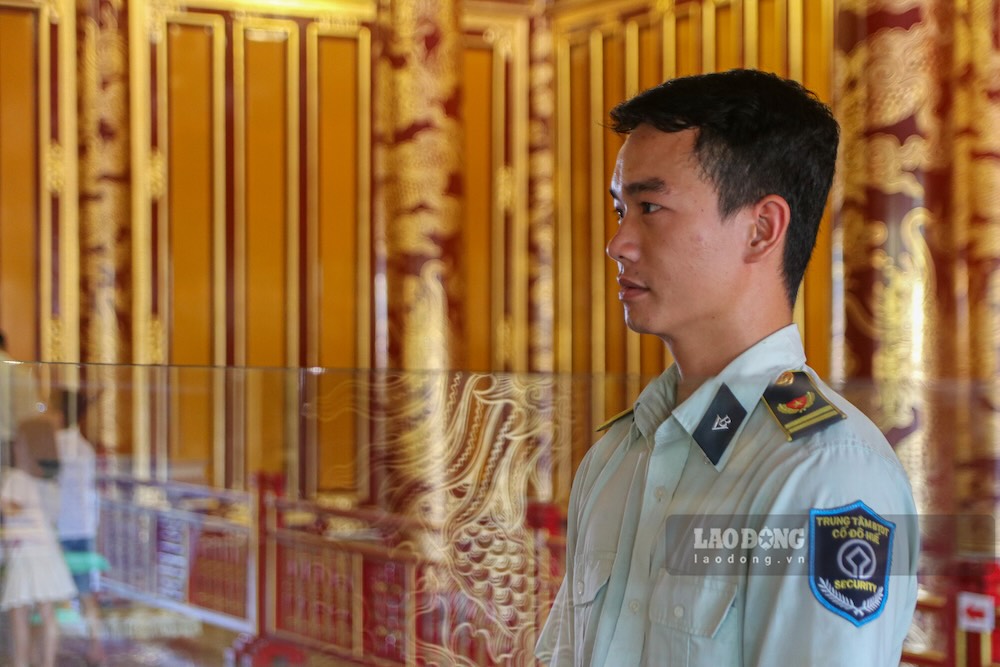
After the incident in 2025, we have advised to equip additional surveillance camera systems, anti-intrusion alarm systems and reinforced glass systems to protect the display area at Thai Hoa Palace. Most recently, the unit also installed an additional layer of protective locks to minimize external impacts. The locks in this area are only directly managed by museum staff and security management forces," the Director of the Hue Royal Antiquities Museum informed.