
Present in Yen Chau commune in the first days of the new year, Lao Dong Newspaper reporters recorded the joyful spring atmosphere spreading throughout the village.
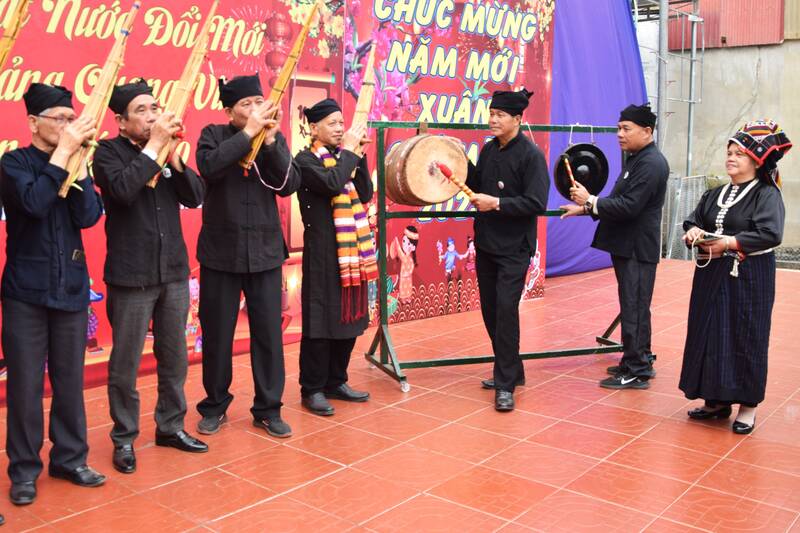
In the middle of the village cultural house yard, the sound of drums and gongs echoed, everyone hand in hand opened the xoe circle.
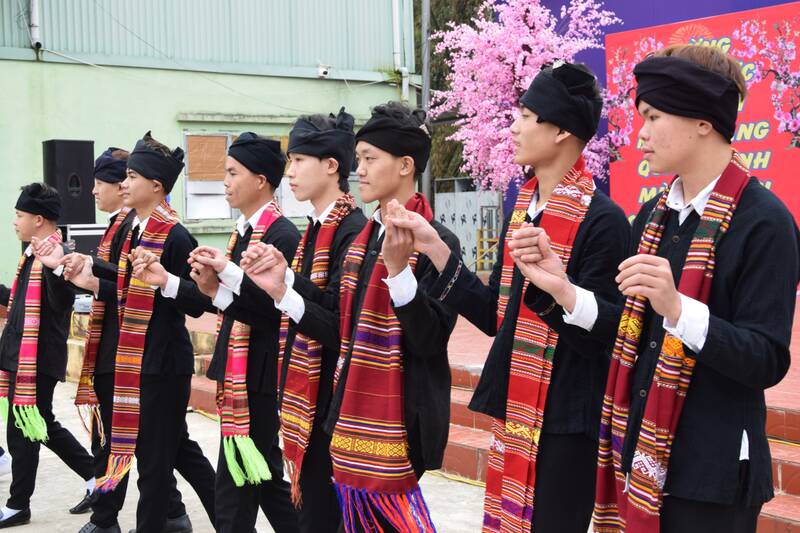
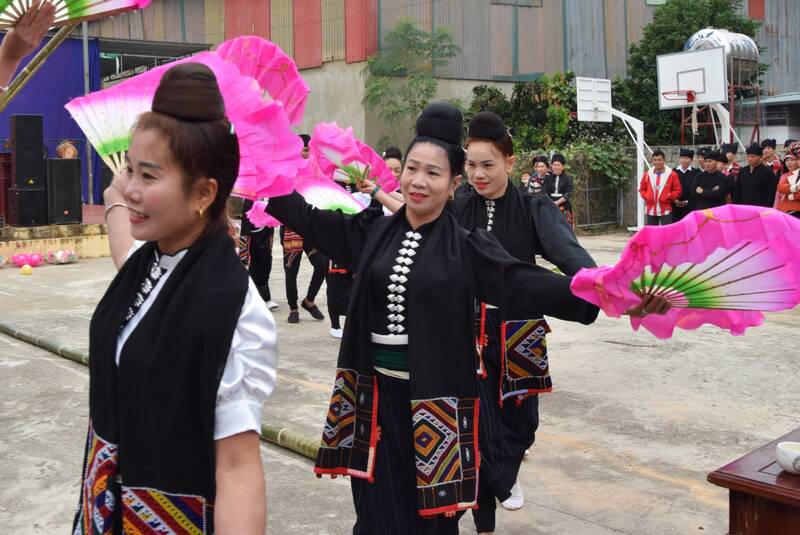
According to the elderly, the ancient Thai people called Xoe dance "xe". The participants in Xoe were called "xao xe". That simple way of calling shows that Xoe has been naturally associated with community life.
For generations, the song about Thai Xoe has been sung: "No Xoe flowers do not bloom, no Xoe rice plants do not bloom, no Xoe corn plants do not produce corn, no Xoe boys and girls do not become couples".
Children from 13-15 years old have been taught every movement by grandmothers and mothers. Step forward, step back, lift a towel, swing your hand. Simple but decisive movements, slow but attractive rhythm.
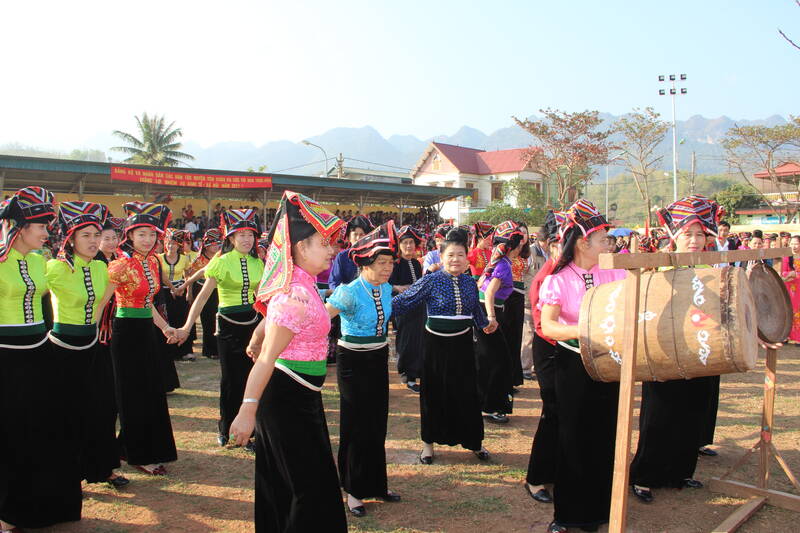
Six ancient Thai Xoe dances including holding hands (kham khen); tung khan dance (nhôm khan); tiến lùi dance (đổn hôn); phá xí dance (bổ bốn); nâng khan mời rượu dance (kham khan mơi lảu); đi vòng tròn vỗ tay dance (ỏm lọm tốp mư)... are still maintained in many villages.
Ms. Hoang Thi Thoat, Head of the Thai Cultural Preservation Club, said: "The Xoe dance is the soul of the Thai ethnic village for many generations, anyone can participate. The more rounds the Xoe dance, the more crowded, the happier, the more community-connected it is.
According to Ms. Thoat, art troupes and clubs in villages with Thai people living are all engaged in cultural and artistic activities, practicing Xoe dance regularly. The core of Xoe dance is regularly trained to maintain the correct ancient Thai Xoe movements.
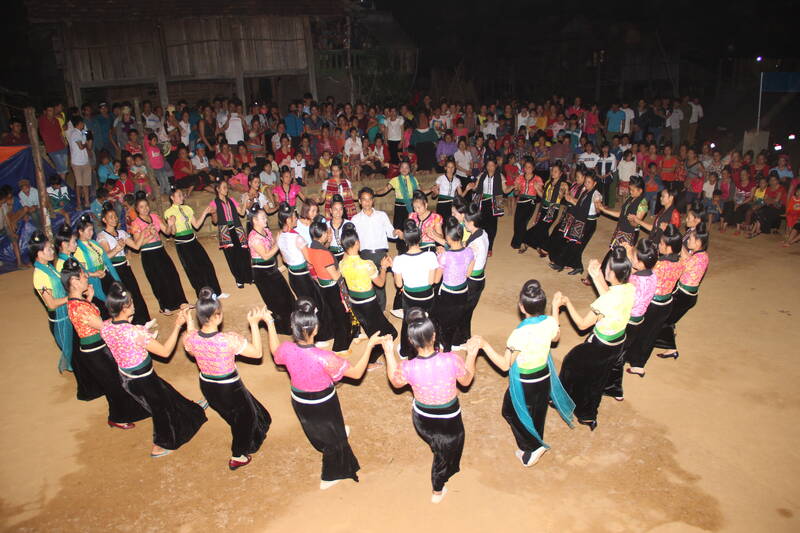
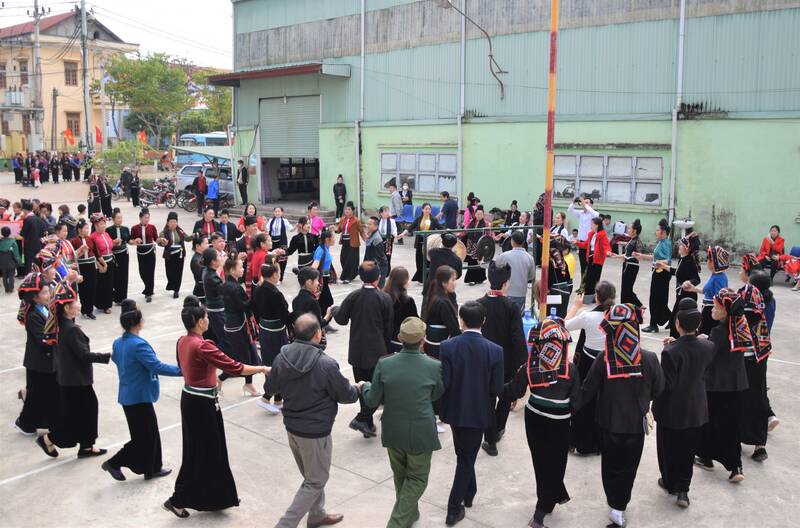
The music follows the xoe circle ranging from drums, gongs, cymbals and khen bè. The music is short, the rhythm repeats, sometimes fast, sometimes slow, sometimes urgent, sometimes gentle, the more you listen, the more passionate it becomes.
Under the flickering light of fire or around the Neu tree on Tet or festivals, people dance Xoe together. Silver button shirts sparkle, gentle black velvet skirts follow each spinning wheel.
One person held the other's hand tightly. The circle closed and then opened, laughter mixed with the sound of drums and gongs echoing in the mountains and forests.
In 2022, Thai Xoe art was recognized by UNESCO as a representative intangible cultural heritage of humanity. This is a great pride of the Thai ethnic people in Son La in particular and the four Northwest provinces in general.
Mr. Lo Duc Viet, Vice Chairman of Yen Chau Commune People's Committee, said: "The locality identifies preserving Xoe as a long-term task. Every year, the commune organizes contests and Xoe exchanges to celebrate the Party and Spring. At the same time, it links Thai Xoe with community tourism development.
According to him, the transmission to the younger generation is emphasized to preserve the ancient Thai Xoe identity.
In modern life, xoe is not only present in festivals. The xoe circle is in village yards, cultural houses, and cultural and tourism events.
The government gets involved, artisans are dedicated, and if the club is maintained, the heritage is continuously passed down. Xoe is not just a memory of the past, but is living in today's life.
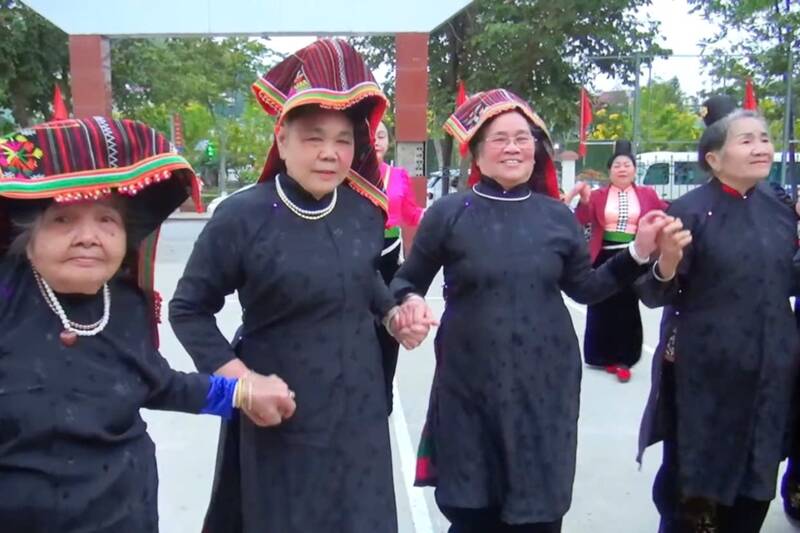
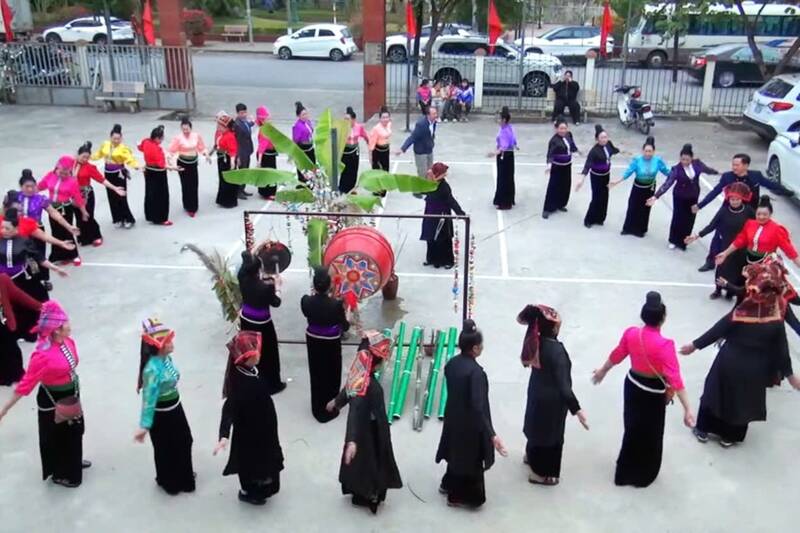
Spring comes, the xoe circle extends again between the mountains and forests of Son La. That is faith, solidarity, sharing, and a strong bond connecting the community through generations.


