
In recent years, History in Vietnamese general schools has faced a paradox. This is a foundational subject on history and national identity, but it is not a priority choice for students.
This situation is partly reflected in exam results, the trend of choosing subject combinations and students' learning methods.
According to the analysis of the score distribution of the 2025 high school graduation exam, the whole country has more than 481,000 candidates taking the History exam, with an average score of about 6.52 points, the score level that the most candidates achieved is 7.25 points. Although there are more than 1,500 candidates achieving perfect scores, the score distribution shows that History is not a subject with superior attraction compared to Natural Sciences or Foreign Languages.
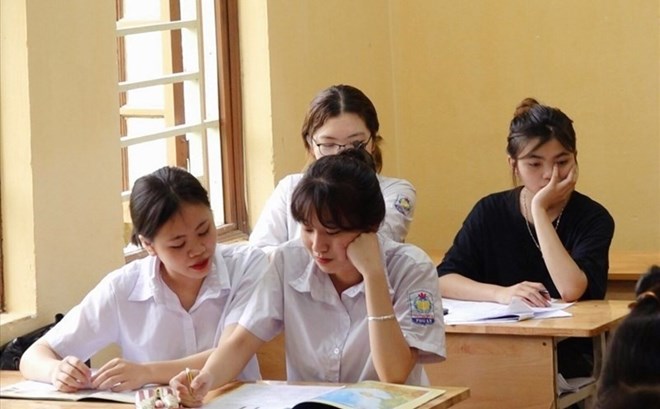
At the high school level, History once fell into a situation of "few people choosing to study" when it was included in the optional combination in the new general education program.
Many schools record a low percentage of students registering for history combinations, especially in natural science-oriented classes, leading to the risk of a shortage of academic and research human resources in the field of social sciences.
The habit of learning history by memorizing events and timelines also makes the subject labeled dry, difficult to access, and less associated with real life.
In that context, the innovation of the historical approach is posed as an urgent requirement.
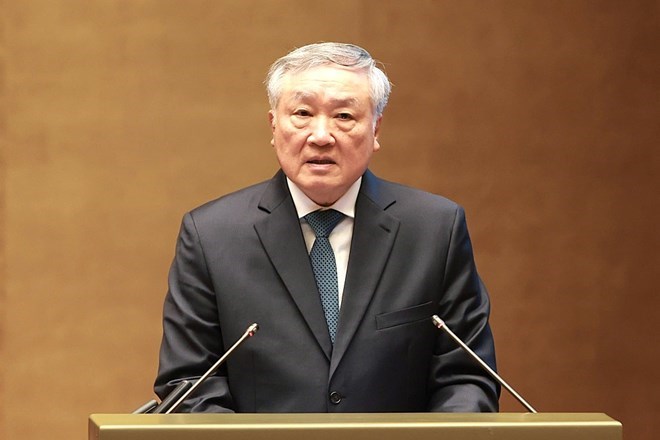
At the Conference to thoroughly grasp and implement Resolutions 79, 80 of the Politburo, providing information on the action program to implement Resolution 80-NQ/TW of the Politburo on developing Vietnamese culture, Standing Deputy Prime Minister Nguyen Hoa Binh emphasized that the group of tasks on resources, infrastructure and cultural human resources is a key pillar.
One of the key tasks on Vietnamese cultural development has clearly stated: "Promulgate the National Strategy for developing cultural and artistic human resources. Implement the Project on renovating art education throughout the system of educational institutions associated with digital transformation; promote international training by sending 80 experts and artists to train and foster abroad each year. Organize a specialized training program for 5,000 human resources to develop electronic games to serve Vietnamese history education".
A notable highlight is the task of training 5,000 human resources to develop electronic games to serve Vietnamese history education, showing a new approach in conveying historical knowledge through technology and creating digital content.
Standing Deputy Prime Minister Nguyen Hoa Binh said: "Through video games, history education is an effective path.
Bringing history into the digital space, especially electronic games, opens up opportunities to change traditional learning methods. Instead of rigid memorization, students can access history through context, characters, choices and consequences, thereby forming historical thinking and emotions with the nation's past.
This is also a way for history to become a part of contemporary cultural life, instead of being "framed" in classrooms.
Along with that, movements like "Proud to be Vietnamese" when spreading will also make history become the love and pride of every Vietnamese citizen.


