
On the morning of July 31, a training conference on the implementation of the Press Law and documents detailing the implementation of the law was held at the Vietnam Trade Union Conference Center.
Speaking at the conference, Mr. Luu Dinh Phuc - Director of the Press Department - presented the key contents of the 2025 Press Law and decrees detailing the implementation of the law.
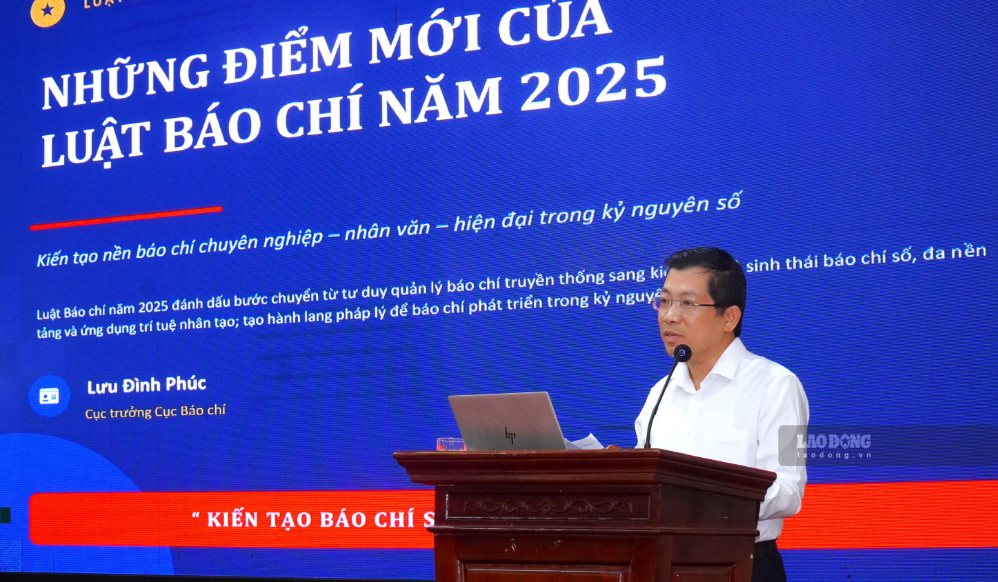
The conference aims to thoroughly grasp the core contents of the Press Law and guiding documents for implementation; and at the same time update new regulations related to press activities, thereby raising awareness and responsibility of cadres, civil servants, reporters, editors and journalists in the process of performing their duties.
The revised Press Law marks an important turning point when for the first time establishing cyberspace as the official operating environment of Vietnamese revolutionary journalism.
This regulation expands the scope of operation of press agencies from the traditional editorial model to the digital environment, creating a legal corridor for the press to develop, innovate and adapt to the digital transformation trend.
One of the outstanding new points of the law is allowing press agencies to operate in cyberspace; and at the same time identifying the content channels of press agencies on digital platforms as press products. The law also lays the foundation for the formation of the National Digital Press Platform System, and at the same time allows the integration of online services in the press to diversify experiences and better meet the needs of the public.
To concretize the provisions of the law, Decree No. 237 clearly stipulates the National Digital Press Platform System model, requiring press agencies when opening content channels on social networks or digital platforms to notify in writing within 10 working days.
Content channels must have unified identification signs from press agencies, and press content and online services must be clearly distinguished on the interface to ensure transparency.
For press agencies, the new regulations create a favorable legal corridor to expand operations on digital platforms, innovate approach methods and improve connectivity with the public.
On the side of state management agencies, this is the basis for unified management of press activities in cyberspace, while affirming national press sovereignty in the digital environment.
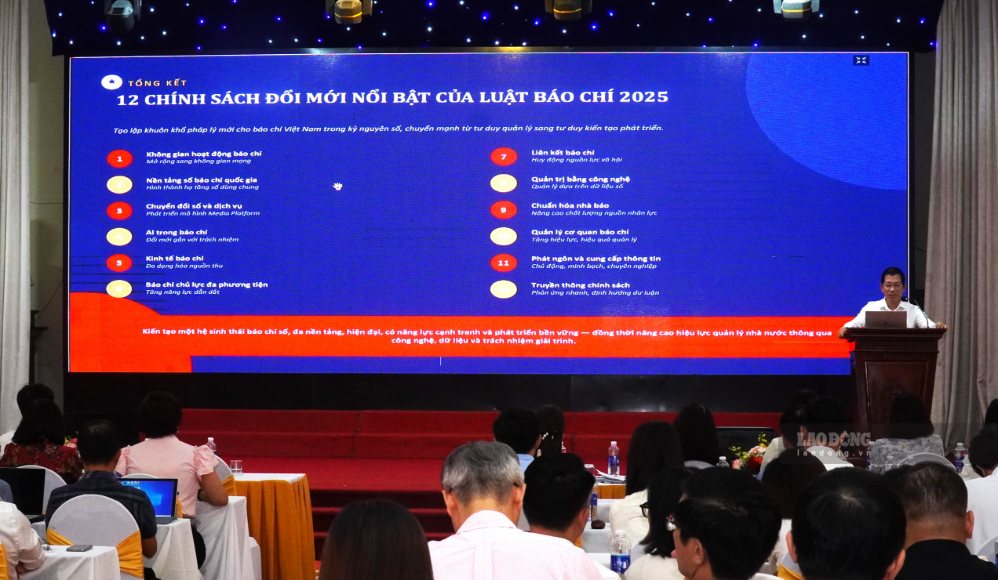
This is also a forum for press agencies, journalists and reporters to exchange, discuss, and clarify difficulties and obstacles arising in the process of applying the law on journalism, contributing to improving the quality of information and propaganda work in the new context.
In addition to introducing the new points of the 2025 Press Law and decrees detailing its implementation, the conference also disseminated key contents of guiding circulars, helping press agencies and journalists fully grasp the regulations for unified implementation in practice.


