
The work "The Prophet" released in 2015 is set in the historical context of the years 1947 - 1950, when Uncle Ho "suffressed" in the Viet Bac war zone.
The film is directed by - Meritorious Artist Vuong Duc, produced by Vietnam Feature Film Studio.
Sharing about the film, Meritorious Artist Vuong Duc said: "I have read The Life (by a veteran who used to be a US intelligence expert) written about Uncle Ho. The more I read, the more I realized that Uncle Ho is an extremely great and mysterious historical figure. Throughout the process of researching his life and career, I always wondered, why could such a simple person do such great things?
My movie "The Prophet" started with respect, seriousness, and access to the huge archive of documents about President Ho Chi Minh. My film will bring to the audience not only a historical story about a great historical figure, but the film also addresses the biggest issue of all leaders, and nations in this world, which is the issue of war and peace".
The movie "The Prophet" was decided by the state to invest in production in 2012. The film is set in a historical context from 1947-1950 in Viet Bac - where Uncle Ho predicted the victory of our army and people in 1954, from Viet Bac advancing to take over Hanoi. The film is filmed in many locations such as: Cao Bang, Lang Son, Tuyen Quang, Bac Kan... The film started filming in May 2014 and wrapped up in February 2015.
Taking on the role of Uncle Ho in the movie "The Prophet" is People's Artist Bui Bai Binh.
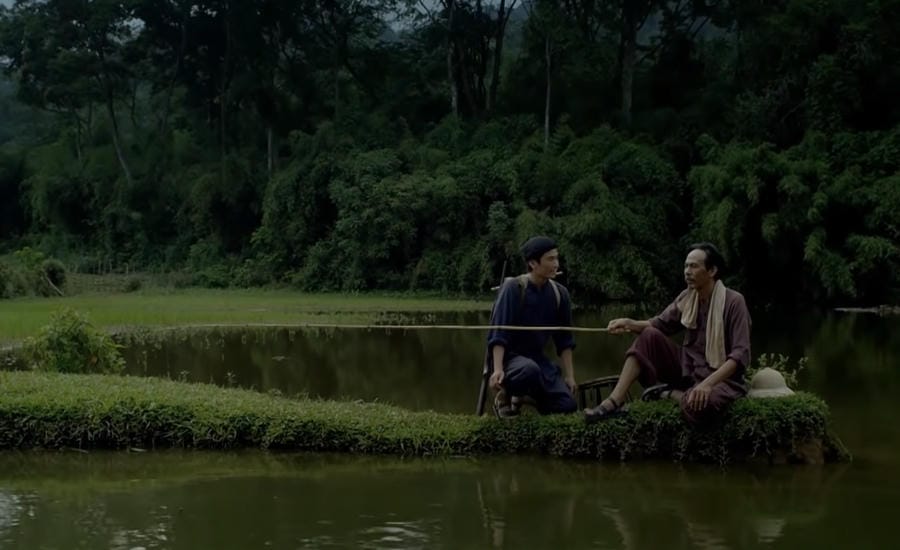
Sharing with Lao Dong reporters about the special role, NSND Bui Bai Binh said, "In the life of any actor, being able to portray the image of Uncle Ho is an boundless happiness but also an extremely great responsibility.
To transform into the image of a historical figure loved by the entire Vietnamese nation, People's Artist Bui Bai Binh affirmed that he is also under great pressure. He reads a lot of documents about Uncle Ho, watches documentaries and movies he has made about his life and career.
I read a lot of historical documents, watch documentaries about Uncle Ho, meet experts - listen to them tell about Uncle Ho, to be able to understand the most about that magnificent historical figure.
I also reviewed previous films about Uncle Ho, watched how Mr. Tien Hoi played Uncle Ho in "See You Again in Saigon", watched colleagues transform into Uncle Ho on stage, in movies... to learn more" - People's Artist Bui Bai Binh said.
Regarding appearance, People's Artist Bui Bai Binh had to lose weight, from 57 kg to 50 kg. Throughout that time, People's Artist Bui Bai Binh almost did not eat, only drank coffee, 2-3 cups a day. When he became faint, he ate a little to hold on.
People's Artist Bui Bai Binh also has 2 crooked teeth. It is very difficult to keep crooked teeth when playing Uncle Ho. After discussing with the director and the makeup group, People's Artist Bui Bai Binh removed 1 crooked tooth and abraded the other one.
Another challenge for NSND Bui Bai Binh is that Uncle Ho is very good at foreign languages. In the film, there are many scenes where Uncle Ho speaks Russian, Chinese, and French.
I had to ask 3 teachers to teach me how to pronounce those 3 languages. Every day, I would take a voice recorder and speak, then turn it on and listen again, self-edit until the director said "yes" - People's Artist Bui Bai Binh recounted.
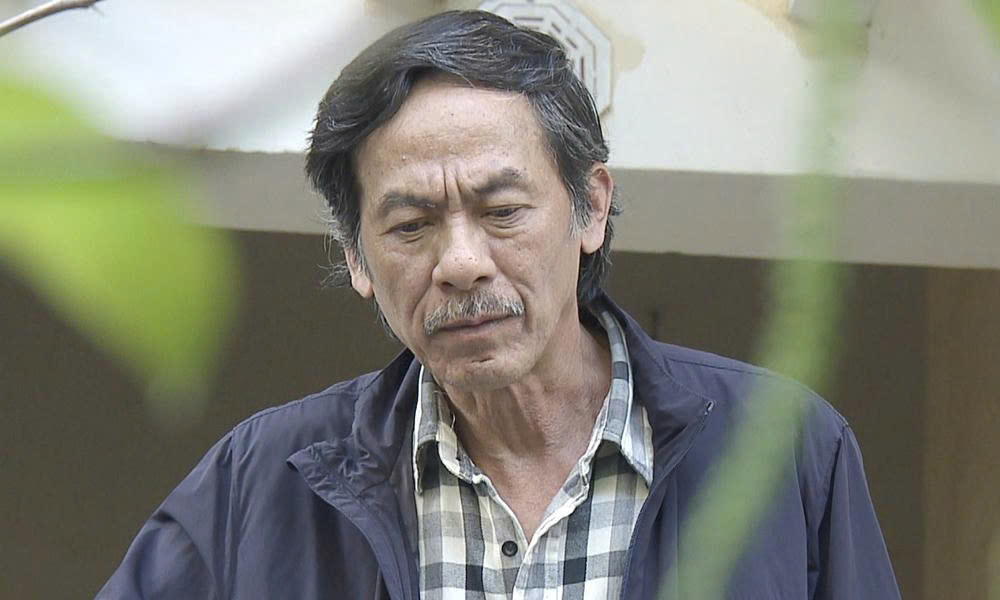
All efforts and preparations in terms of appearance and dialogue are only part of the transformation process of NSND Bui Bai Binh with the biggest role in his career.
According to People's Artist Bui Bai Binh, the biggest difficulty is to feel Uncle Ho's spirit and aura, transform Uncle Ho's aura and worries through each look and gesture.
“For me, appearance or acting technique is just the tip of the iceberg. The most important thing when transforming is to understand Uncle Ho's inner self through each page of documents: What is he worried about for the nation, What did he think during those difficult years, How hard did he have to endure and suffer?... When I can empathize, that spirit will naturally emanate through my eyes. To this day, this is still the most special role, crystallized from many feelings and efforts in my film career” – People's Artist Bui Bai Binh said.


