
Traditional theater before new development requirements
Resolution of the 14th Party Congress places culture at the center of development, considering it as an internal resource and the most important driving force to promote creative economy.
In that context, the merger of the Vietnam Cheo Theater, the Vietnam Tuong Theater and the Vietnam Cai Luong Theater into the Vietnam National Traditional Theater is considered a restructuring step, creating a sufficiently strong institution to promote the value of traditional art forms.

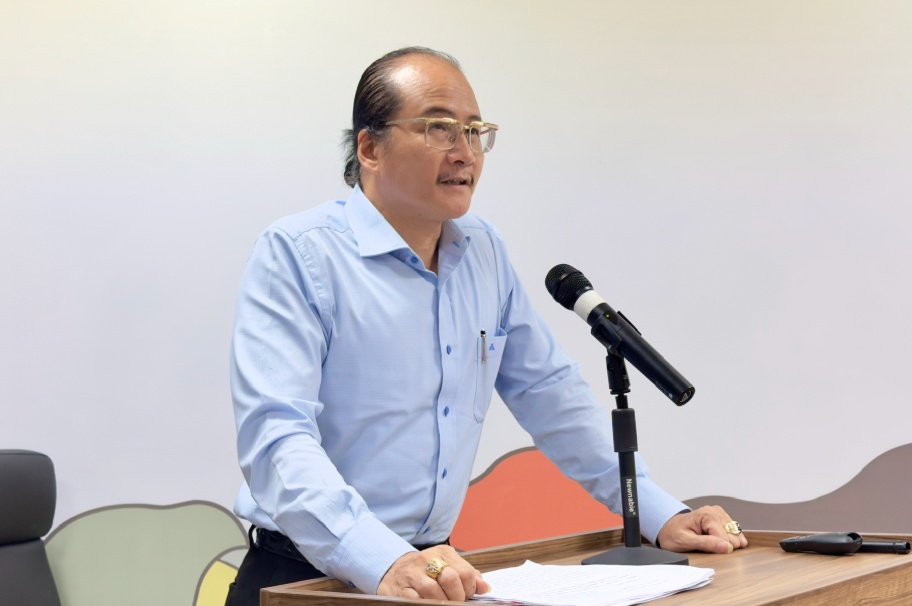
According to NSND Le Tuan Cuong - Deputy Director in charge of the Vietnam National Traditional Theater, this change opens up new opportunities, but the core thing is still to maintain the identity of each type.
Mr. Cuong recognizes that traditional theater is not only an art field but also a place to preserve the cultural core of the nation: "Culture is always the soul of the nation and a nation must preserve that soul, preserve the cultural subject, define culture and identify that culture, then that nation will always have a position and position on the world map".
However, the issue is that in the context of a rapidly changing entertainment market, traditional theaters are facing the requirement to adapt.
Many opinions believe that this type has not kept up with the general development speed, but NSND Le Tuan Cuong said: "The stage accompanies the nation on the journey of development, sometimes ups and downs, but always has responsibility and accompanies the lives of Vietnamese people.
In the current conditions, when digital platforms and the entertainment industry are developing strongly, the fact that traditional theaters have not created widespread spread is a reality that needs to be seriously recognized.
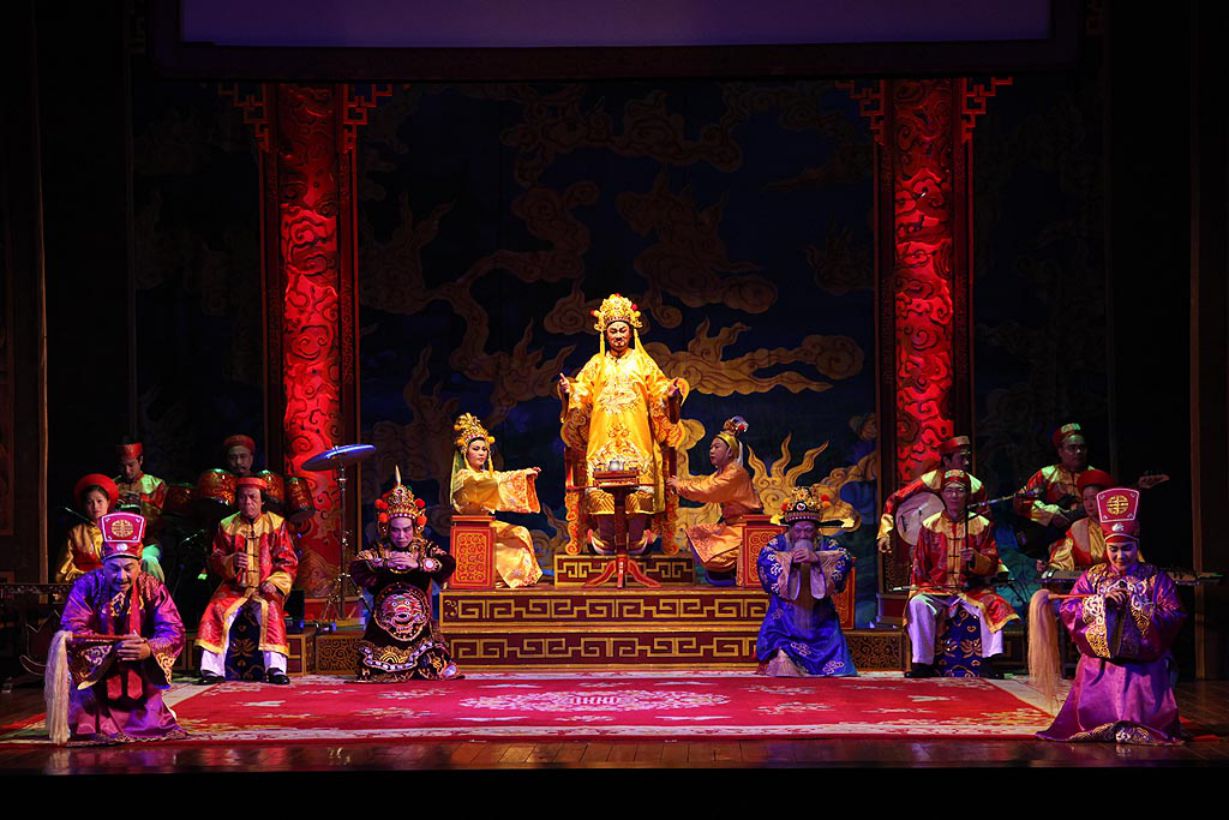
The Resolution of the XIV Congress also emphasized the combination of heritage preservation with economic and cultural development, thereby setting specific requirements for traditional theater.
Not only stopping at preserving old values, art units need to find ways to bring products closer to the public, expand performance spaces and improve the quality of works.
Removing bottlenecks in mechanisms and resources
According to People's Artist Le Tuan Cuong, the most important bottleneck does not lie in ideas or orientations, but in the conditions to turn those orientations into reality. He emphasized investing resources, because if you do not invest, you will not be able to attract talent.
Traditional theater is a type that requires long training time, specialized skills and accumulation of experience over many years, while the current remuneration regime is not commensurate.
Reality shows that low income is becoming a major barrier to attracting and retaining artists.
Before the Tuong, Cheo, and Cai Luong Theaters were merged, the financial mechanism generally did not have much difference.
According to Lao Dong's records, the payment level for artists in these types is relatively low, lasting for a long time.
With a play that can have up to 40-45 participants, the fee for each performance is divided into smaller portions, of which the main actor is about 200,000 VND, the supporting role is 160,000 VND, the extra role is 120,000 VND and the logistics is about 80,000 VND.
Previously, the Tuong Theater received about more than 2 billion VND each year for staging and performing services, including many free programs. However, the actual cost for a play, especially in traditional stages, is high.
Tuong costumes alone are of great value, a set of martial general armor ranges from 50–60 million VND, a hat is more than 3 million VND, and boots are about 3 million VND... Due to limited resources, units often have to take advantage of old costumes and reuse them for many different plays to save costs.
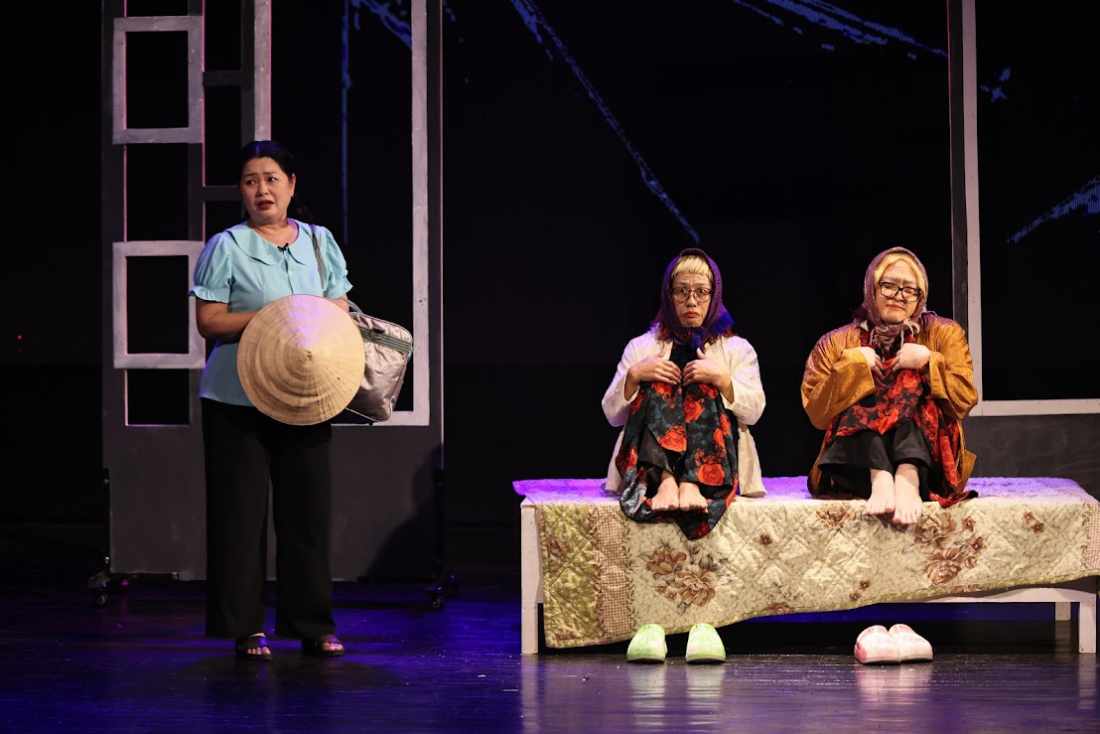
In that context, income from theater and spoken drama is not enough to ensure life, causing many artists to work extra or accept staging plays for external units to have more income.
People's Artist Le Tuan Cuong shared: "Now actor contracts only get 3-5 million VND/month, you guys don't have enough money to rent a house. Training an actor to graduate takes 4 years, coming here we will continue training for another 4 years to be able to work".
From a management perspective, he believes that if living conditions are not improved, it is very difficult to build a successor team, while this is a decisive factor for the long-term existence of traditional art.
This reality also explains why many young people do not choose to pursue the path of theater, even if they have talent.
Besides, the issue of attracting audiences to traditional theater is also a major challenge.
In his analysis, People's Artist Le Tuan Cuong emphasized the direct relationship between art and the public, that "if the audience keeps, art will exist, and if there is no audience, art will also disappear".
Investing in the theater, improving the quality of plays, reaching audiences, and improving the lives of artists - is what NSND Le Tuan Cuong and the Theater are concerned about. Mr. Cuong places a lot of faith and great expectations in investment in culture after the 14th National Congress Resolution.
Resolution of the 14th National Congress emphasizing the care for the contingent of artists as a key factor in cultural development.
Removing this bottleneck not only helps restore vitality to long-standing art forms, but also contributes to realizing the goal of building an advanced Vietnamese culture imbued with national identity.


