
On July 18, the Ho Chi Minh City Department of Construction said that the Ho Chi Minh City People's Committee has assigned the unit to prepare a report proposing investment policies for 6 steel overpasses to reduce traffic congestion at key intersections. The projects are expected to start construction this year and be completed in 2027.
In the central area, the city will build two steel overpasses on 3 Thang 2 street, respectively at the Le Dai Hanh and Ly Thuong Kiet intersections to separate traffic flow along the main axis.
In which, the overpass at Le Dai Hanh intersection is expected to be about 480 m long, 9 m wide, with a total capital of nearly 200 billion VND.
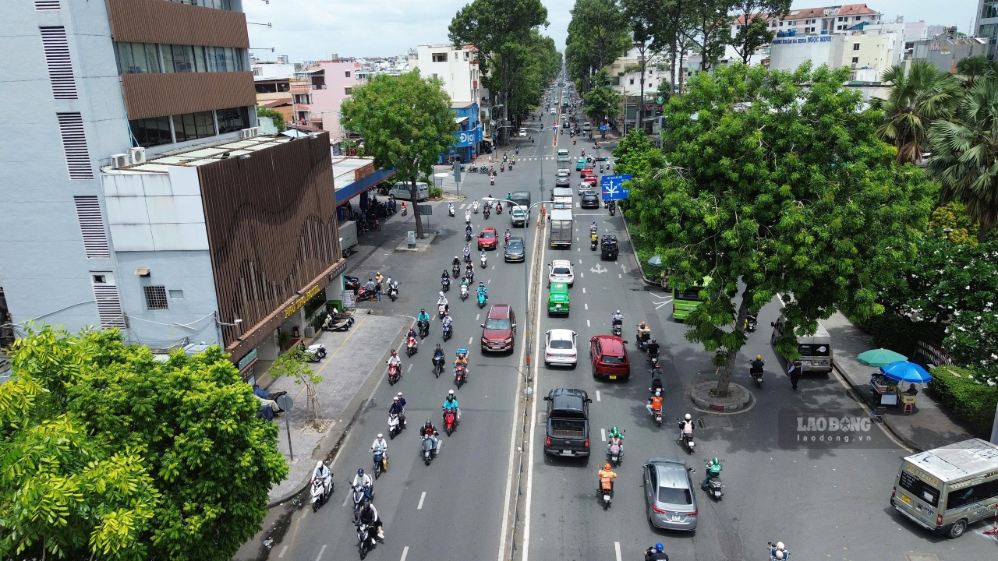
The overpass at Ly Thuong Kiet intersection is about 320 m long, 9 m wide, with a total investment of about 187 billion VND.
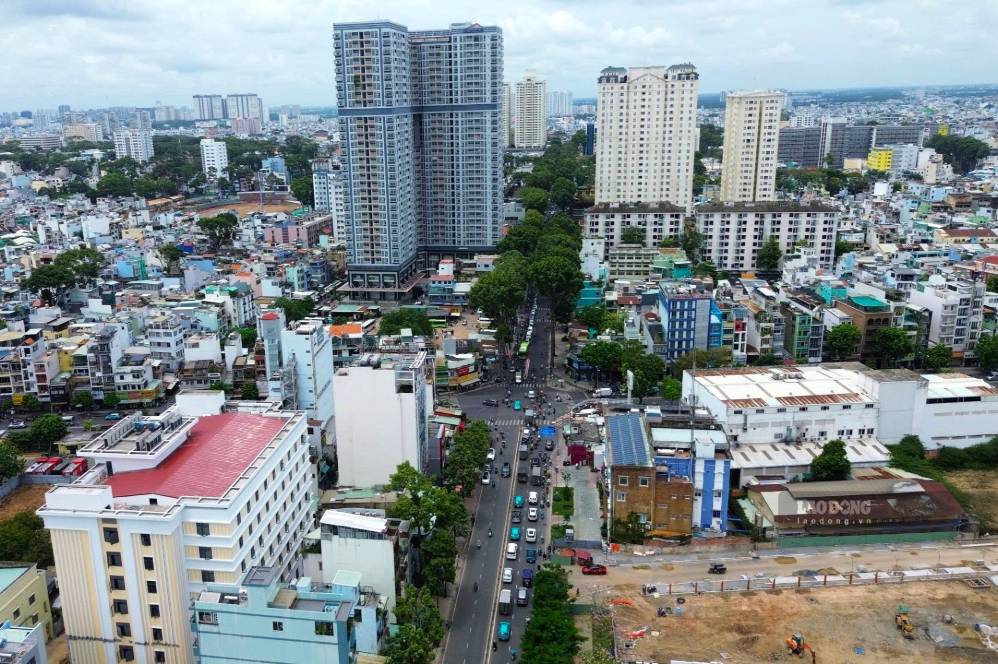
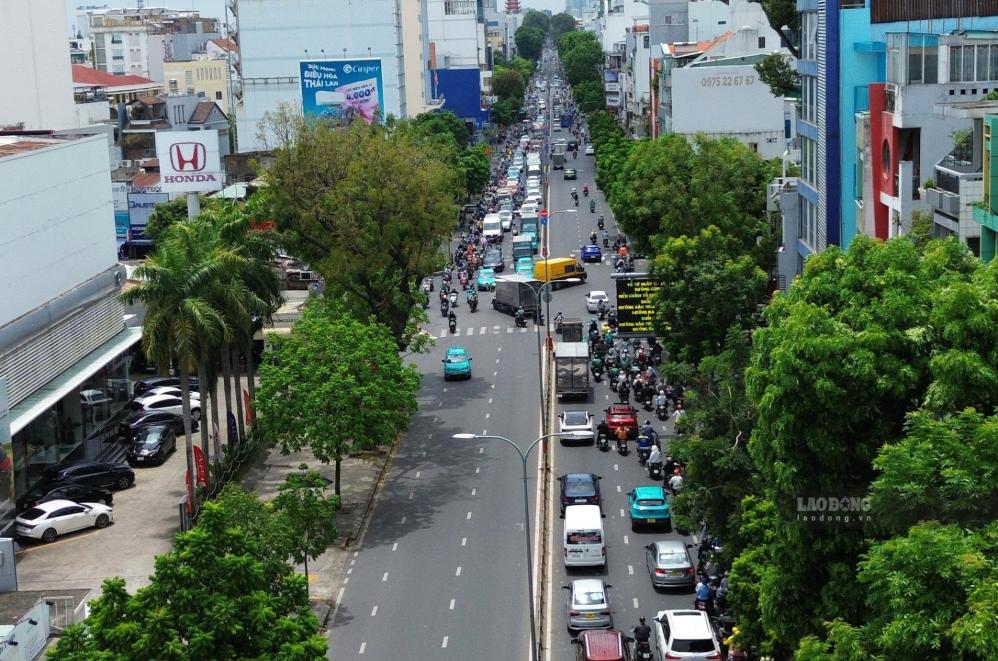
In the Binh Duong area (old), a steel overpass will be built at the Cach Mang Thang Tam - Huynh Van Cu intersection, about 300 m long, arranged with two lanes, combined with widening roads on both sides, with a total capital of about 530 billion VND.
The remaining three overpasses are built in the Ba Ria - Vung Tau area (old), including intersections of National Highway 51 - Phuoc Binh, National Highway 51 - road B1 to My Xuan B1 Industrial Park and DT. 994C - road 30/4 (EO Ong Tu area).
Each project is expected to be about 280 m long, arranged with 4 lanes and an access road system, with a preliminary total investment of about 530 billion VND.
Notably, compared to the previous proposal, the steel overpass project at Nga 6 Cong Truong Dan Chu is no longer on the list proposed for investment.
Steel overpasses are not a new solution in Ho Chi Minh City. In early 2013, the first two steel overpasses at Thu Duc intersection (277 billion VND) and Hang Xanh intersection (1880 billion VND) were put into operation.
Next, the steel overpass at Lang Cha Ca roundabout was completed after 80 days with a cost of 122 billion VND, contributing to reducing traffic pressure on the Cong Hoa - Hoang Van Thu axis, the gateway to Tan Son Nhat airport.
Right in 2013, the city continued to invest in three more steel overpasses at the Nguyen Tri Phuong - Ba Thang Hai - Ly Thai To, Cong Hoa - Hoang Hoa Tham and Cay Go roundabout intersections, with a total capital of more than 1,000 billion VND.
In the 2016 - 2017 period, Ho Chi Minh City spent more than 1,100 billion VND to build three steel overpasses around Tan Son Nhat airport, including Go Vap roundabout, Nguyen Thai Son - Nguyen Kiem - Hoang Minh Giam roundabout and Truong Son road in front of the airport gate.
According to the Ho Chi Minh City Department of Construction, after being put into operation, steel overpasses have significantly contributed to solving congestion at many key intersections. Some locations such as Go Vap roundabout, Cay Go roundabout... recorded traffic jams reduced by about 70-80% compared to before.
Architect Vo Kim Cuong - former Deputy Chief Architect of Ho Chi Minh City, said that steel overpasses are a suitable solution to quickly handle congestion points in the context that the city does not have enough resources to invest in complete grade-separated intersections.
The advantage of this type is fast construction, lower costs than reinforced concrete bridges, less impact on traffic and can be put into operation after only a few months.
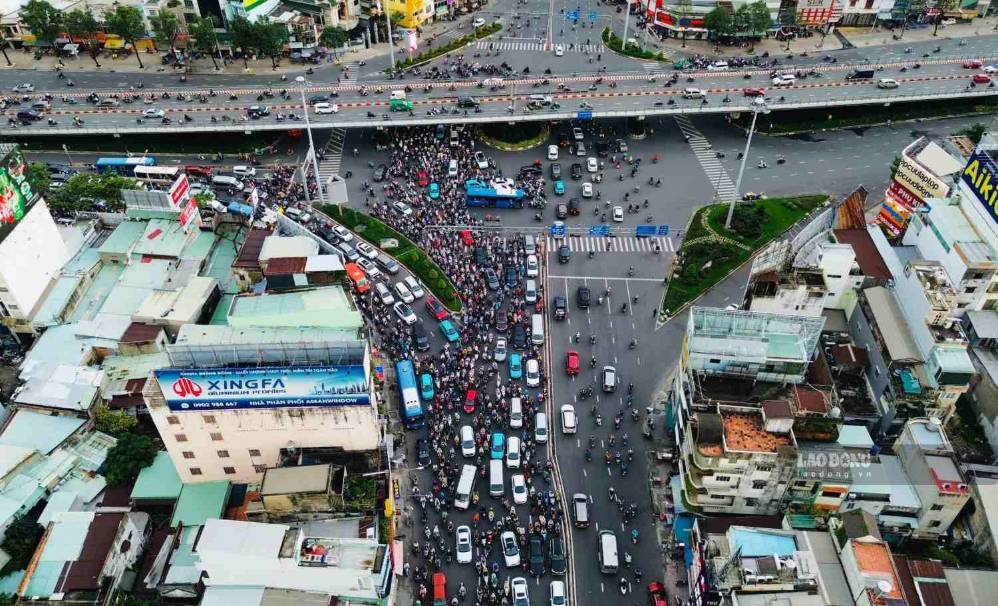
However, Mr. Cuong emphasized that steel overpasses only solve local congestion at each intersection. Meanwhile, the cause of traffic jams in Ho Chi Minh City also comes from the speed of vehicle increase, unsynchronized connectivity infrastructure and public transport not meeting travel needs. "If the number of vehicles continues to increase by 8-10% per year, overpasses will also quickly become overloaded" - Mr. Cuong said.
According to Mr. Vo Kim Cuong, with the current population size and urbanization rate, steel overpasses should only be considered short- and medium-term solutions.
In the long term, Ho Chi Minh City needs to synchronously develop a large-volume public transport network, ring roads, elevated roads, complete grade-separated intersections and traffic demand management solutions to solve congestion sustainably.


