
From special mechanisms to sustainable legal framework
Over the years, Ho Chi Minh City has been granted a number of special mechanisms through National Assembly resolutions such as Resolutions 54, 98, 260, helping to solve many urgent issues from infrastructure investment to administrative procedure reform. However, the pilot resolution is always temporary.
Assoc. Prof. Dr. Vo Tri Hao - Institute of International Law and Comparison, University of Economics and Law (Vietnam National University Ho Chi Minh City) - said that a legal document will create more stability and predictability than a resolution. When policies are legalized, regulations are no longer short-term experimental but become a sustainable legal framework.
For example, in terms of land and infrastructure, according to current regulations, many large transportation projects such as the metro or strategic projects may be entangled in procedures and authority. Meanwhile, a megacity like Ho Chi Minh City needs a more flexible mechanism to implement large-scale projects, while ensuring central supervision and control.
Assoc. Prof. Dr. Vo Tri Hao proposed a " veto" mechanism: Ho Chi Minh City can proactively implement policies or projects without prior permission. Central agencies only intervene if they find it inappropriate for a certain period of time. This mechanism helps significantly shorten the time to handle urgent issues, while still ensuring necessary supervision.
Also according to Mr. Hao, the Special Urban Law needs to give Ho Chi Minh City greater power in planning and infrastructure development, creating conditions for the city to decide on traffic projects, urban areas, as well as development strategies for the expanded region after the merger of Binh Duong and Ba Ria - Vung Tau. "The foundation for Ho Chi Minh City is actually available: high-quality human resources, infrastructure, strong financial resources. The issue is to rearrange to create a complete structure" - Mr. Hao said.
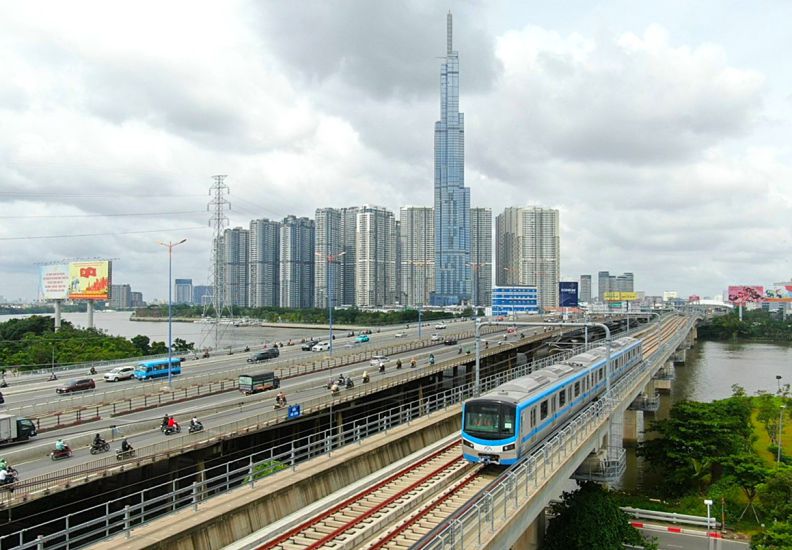
Expanding regional connectivity, welcoming development opportunities
Dr. Tran Quang Thang - Director of the Institute of Economics and Management of Ho Chi Minh City - emphasized that the transition from piloting to formal law meets the requirements of designing institutions commensurate with the scale and role of Ho Chi Minh City.
The Special Urban Law will summarize the achievements and experiences from specific mechanisms, and at the same time create a stable and flexible legal framework, allowing the city to proactively organize development space, mobilize social resources and test new urban governance models.
According to Mr. Thang, thanks to special mechanisms such as Resolutions 54, 98, 260, Ho Chi Minh City no longer has to find "concurrent conductors" connecting the region. Projects linking with Long Thanh, Binh Duong, Vung Tau are being accelerated, for example, the metro line to Long Thanh airport, expansion of National Highway 13 and Suoi Tien metro - Binh Duong New City, or the sea-crossing road connecting Can Gio - Vung Tau.
Specific mechanisms also help Ho Chi Minh City select strategic investors, retain 100% of revenue from TOD (urban development associated with public transport) to reinvest in metro, as well as establish Cai Mep Ha Free Trade Zone (FTZ)...
According to Dr. Tran Quang Thang, after the merger, each region will promote its own strengths: Ho Chi Minh City center in services, finance, innovation; Binh Duong in urban industry, clean land fund; Ba Ria - Vung Tau in seaports, energy, logistics. The Special Urban Law will link these pillars into a developing ecosystem spreading throughout the region, creating strong momentum for Ho Chi Minh City and the national economy.
It is expected that in March, Ho Chi Minh City will complete the outline of the Special Urban Law; in April, complete the draft; in May - June, a workshop will be held to collect opinions for completion. After that, the Special Urban Law is expected to be submitted to the 16th National Assembly for consideration and approval in 2026.


