
Not expected even higher than the national average
On the morning of July 28, the Standing Committee of the Ca Mau Provincial Party Committee organized a Conference to accelerate the disbursement of public investment capital in 2026 to assess the implementation results, identify bottlenecks and propose solutions to promote disbursement in the last months of the year.
According to the People's Committee of Ca Mau province, right from the beginning of the year, the locality has detailedly allocated capital plans for projects that meet the conditions for implementation, and at the same time established 5 supervisory teams headed by the Standing Committee of the Provincial Party Committee to monitor, remove difficulties and urge the progress of key projects.
As of July 24, the province's total public investment capital plan for 2026, including the capital source for 2025, reached more than 10,326 billion VND. Of which, more than 3,461 billion VND has been disbursed, equivalent to 33.5% of the plan. It is estimated that by the end of July, the disbursement rate will only reach about 38.7%, lower than the target of 54% according to the province's plan.
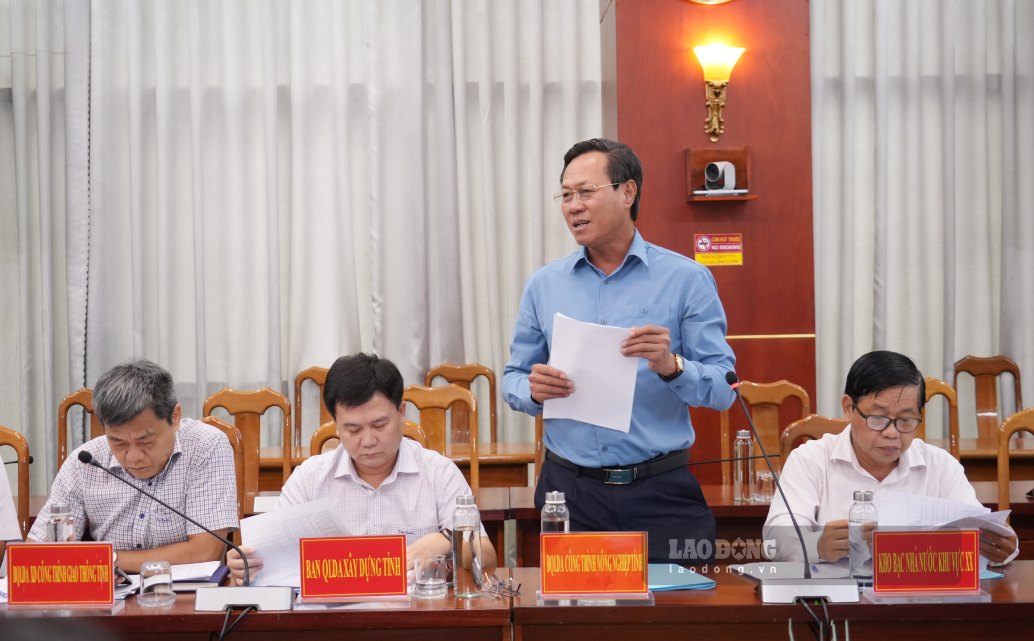
The whole province currently has 77 investors and localities using public investment capital. Of which, 57 units have disbursement rates reaching the provincial average level or higher; 33 units disbursed over 50%, of which 27 units reached 54% or higher. Conversely, there are still 20 investors and localities with disbursement rates below the provincial average level, of which the Department of Culture, Sports and Tourism has not disbursed because it was newly allocated capital from the end of May 2026.
According to the province's assessment, the disbursement progress is still affected by many reasons such as slow compensation and site clearance in some projects; unstable supply of construction materials; some projects complete investment procedures slowly, so capital cannot be allocated in a timely manner; national target programs were newly supplemented capital by the Central Government in June and July, so procedures for allocation are being completed.
In addition, the application of new regulations of the Construction Law and guiding documents effective from July 1, 2026 also requires time for research and implementation guidance, which has a certain impact on project implementation progress.
Determination to break through in Q3/2026
At the conference, delegates focused on analyzing existing problems and obstacles, especially projects that are still slow to clear ground and projects with large capital sources but low disbursement rates, and at the same time proposed many solutions to accelerate the implementation progress.
Secretary of the Ca Mau Provincial Party Committee Nguyen Ho Hai emphasized that the disbursement results of the province have changed but have not met expectations, and have not created a prominent position compared to localities across the country.
Ca Mau Provincial Party Secretary requested the entire province to focus highly on the task of disbursing public investment capital, striving to reach the end of the third quarter of 2026 to put Ca Mau in the top 15 localities with the highest disbursement rate in the country. This is one of the important criteria to assess the level of task completion of departments, branches, localities and investors.
To achieve this, investors must develop detailed disbursement plans for each month, closely monitor the progress of each project and each item; proactively handle arising difficulties, and not rush work into the end of the quarter or the year.
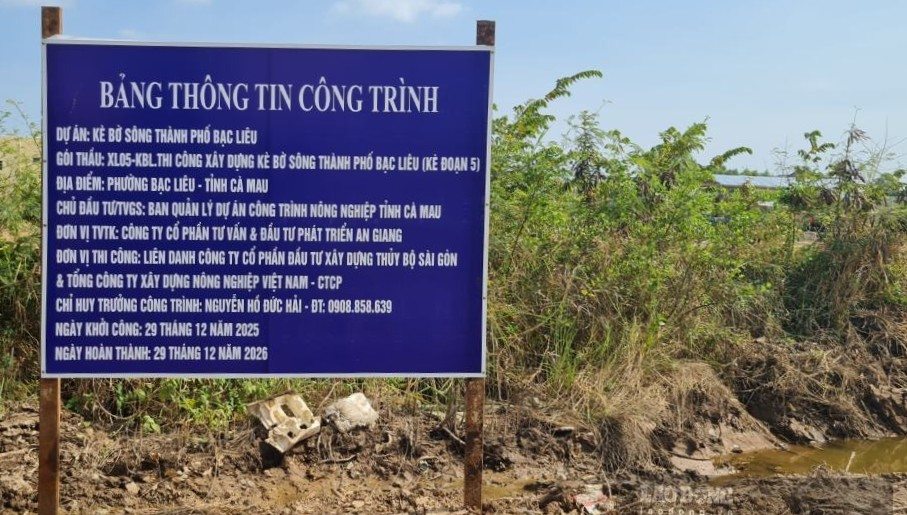
The Provincial Party Secretary requested the supervisory teams of the Standing Committee of the Provincial Party Committee to strongly shift from meetings to direct inspections at the construction site, accompanying investors and localities to remove difficulties right at the site. The inspection must be substantive, clearly defining the responsibilities of each agency, unit and individual for each project.
For slow-progress projects, it is necessary to clarify the causes, especially subjective causes such as the lack of close coordination between agencies, slow investment preparation, or the low sense of responsibility of a part of officials. These shortcomings must be overcome immediately in August to create clear changes in the following months.
The head of the Ca Mau Provincial Party Committee also requested state management agencies to shift from management thinking to companion thinking, supporting investors and businesses; proactively guide and remove difficulties instead of letting dossiers be prolonged or shirking responsibility.
Provincial Party Secretary emphasized that accelerating the disbursement progress does not mean doing it at all costs. All projects must ensure the quality of construction, absolutely not allowing losses, waste, and negativity, and at the same time improve the efficiency of using public investment capital, contributing to promoting economic growth and completing the province's development goals in 2026.


