
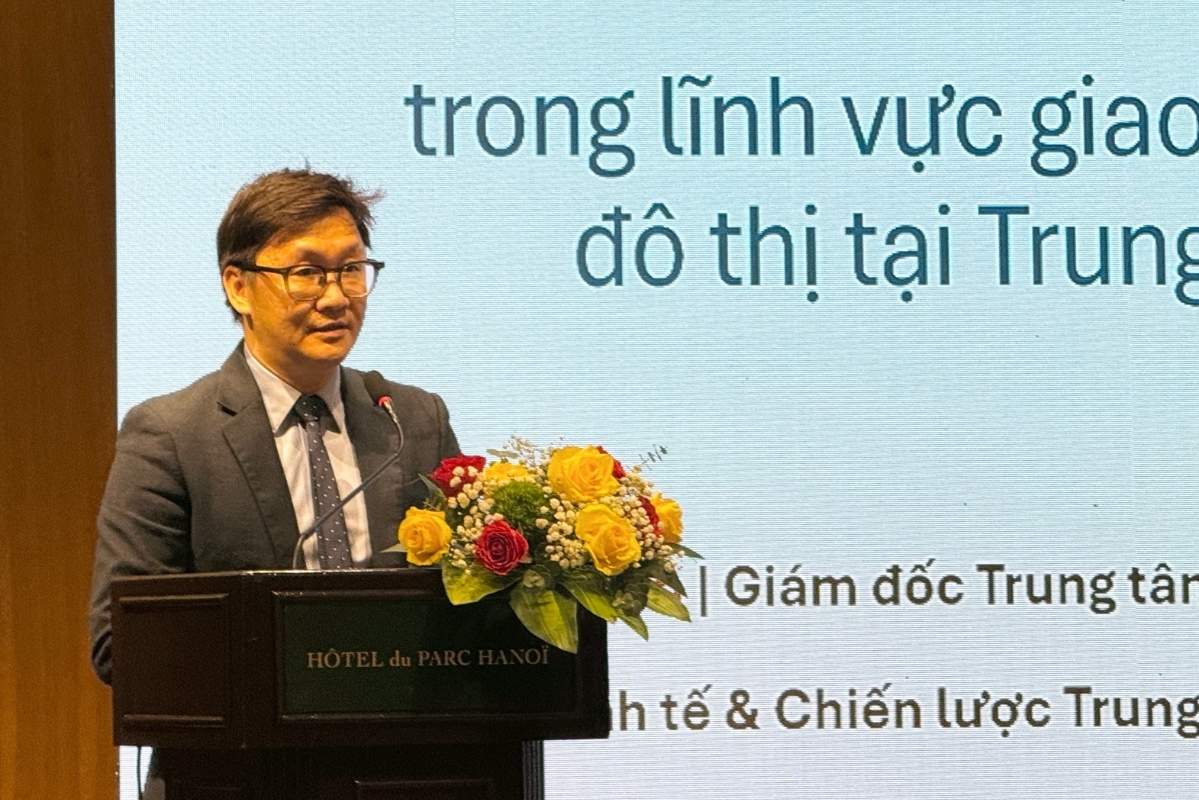
At the Workshop "International Experience in Promoting Green Transportation Transformation" held on March 17, Dr. Pham Sy Thanh - Director of the Center for Strategic and Economic Studies of China (CESS) shared research on urban transportation transformation in China. He emphasized that the core is not immediate transformation but building a policy with a roadmap, synchronization and focus.
Mr. Thanh said that the core point is how China builds a multi-layered policy system, combining improving existing means and developing new means.
From those core points, he believes that the transition process should follow the "three-tiered" model. The first is to improve efficiency and reduce emissions of internal combustion engine vehicles through strict emission standards. The second is to promote the transition to new energy vehicles. The third is to develop intelligent transportation systems, towards a mobile service model.
At least two parallel roadmaps must be implemented, gasoline cars should not be abandoned immediately but need to be gradually improved while promoting electric vehicles" - he said.
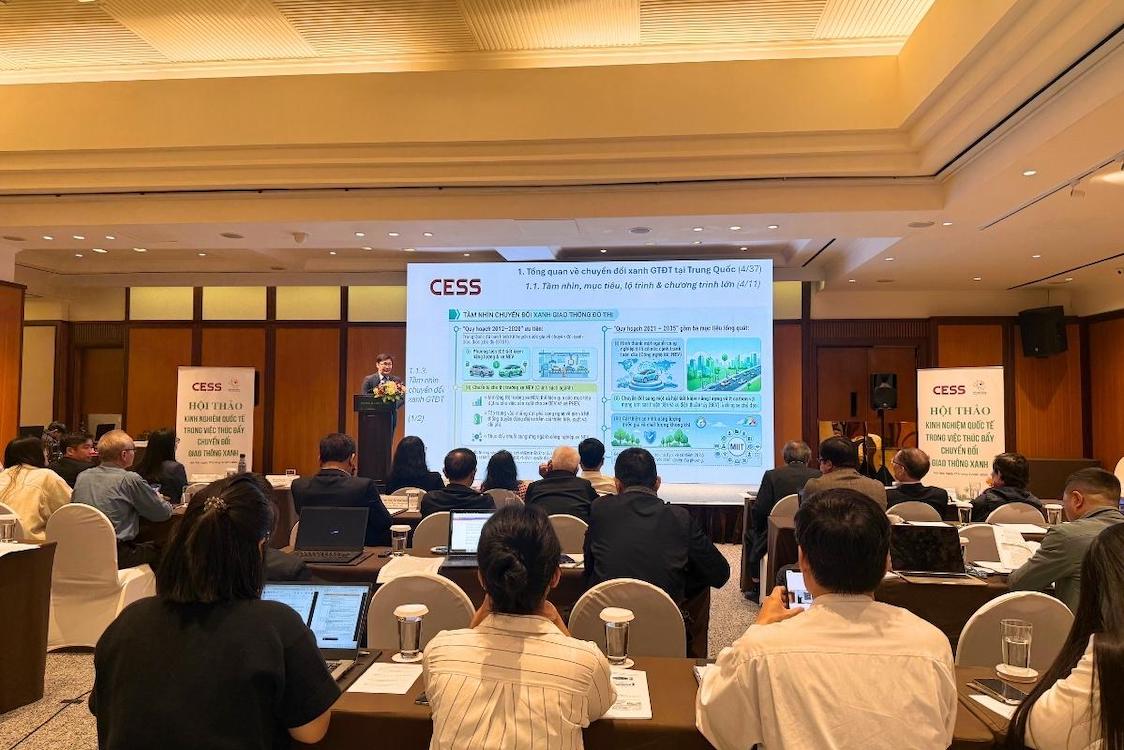
Dr. Pham Sy Thanh added that a key point is to issue specific regulations for each stage, accompanied by clear timelines. For example, China sets a deadline for vehicle fleet conversion of about 5 years for some vehicle groups.
In parallel, it is necessary to apply high emission standards (equivalent to level 3 or higher) for both passenger cars and diesel trucks, combined with non-financial restriction measures such as vehicle labeling, traffic regulations or parking control.
Policies need to stratify subjects. Accordingly, public cars and urban service cars should be prioritized for 100% conversion to new energy vehicles as soon as possible.
For private cars, it is necessary to orient technology choices: prioritize pure electric vehicles, fuel cell vehicles and hybrids; while not encouraging plug-in hybrid lines if environmental efficiency is not clear" - he said.
In addition, Dr. Pham Sy Thanh said that the scope of application also needs to be flexible according to urban space, fossil fuel vehicles are limited from the central area, while electric vehicles are encouraged to expand from the suburbs.
He emphasized the need for synchronization between policies and infrastructure. The conversion is only effective when there is a complete charging station system, unified technical standards and long-term planning of 15-20 years.
In particular, resources need to be allocated flexibly in stages, avoiding spreading out. In which, financial policies (subsidies, tax exemptions) must go hand in hand with non-financial tools such as technical regulations, urban planning and circulation permits" - he said.
According to Dr. Pham Sy Thanh, an effective strategy needs to meet 5 factors: national master plan, long-term roadmap, clear emission reduction goals, awareness - financial - legal - infrastructure readiness, and finally, choosing the right priority vehicle group.
From the perspective of industrial policy, Ms. Nguyen Thi Xuan Thuy - Lecturer at the University of Economics (Vietnam National University, Hanoi), consultant of the United Nations Industrial Development Organization (UNIDO) - believes that green transportation transformation cannot be separated from the strategy of developing the domestic automobile and motorcycle industry.
According to her, experience from Japan and Germany shows that these countries are very cautious in completely electrifying vehicles to protect the competitiveness of the domestic industry, which plays an important role in the economy and creates millions of jobs. Therefore, Vietnam needs to consider carefully to both promote green transformation and ensure sustainable industrial development.
In addition, Singapore's model shows the effectiveness of managing vehicle use through smart transportation solutions, instead of just focusing on limiting personal vehicle ownership. This approach helps optimize the use of transport infrastructure, reduce congestion and limit emissions effectively" - Ms. Thuy shared.


