
In recent years, Cao Bang province has recorded extreme weather diễn biến with a higher frequency, increased level of danger, causing great damage to people and property.
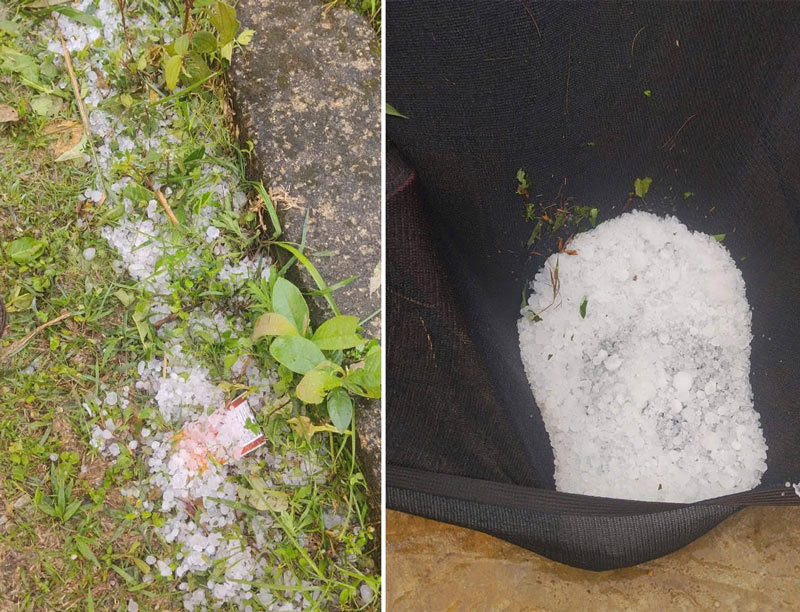
Notably, the hailstorm that occurred on the afternoon of January 31st caused damage of about 43 billion VND. Thousands of houses were damaged, and many areas of crops such as tobacco and corn were crushed.
Faced with that reality, the province's plan aims to integrate adaptive content into development strategies and plans, thereby proactively responding to extreme climate phenomena and limiting damage.
The plan aims to adapt in the period 2026-2030, with a vision to 2050, minimizing risks and improving the resilience of natural, economic and social systems.
The plan aims to integrate adaptive content into development strategies and plans, thereby proactively responding to extreme weather phenomena, limiting damage and ensuring sustainable development.
To implement it, the province identifies three key task groups. First, improve adaptive capacity through efficient use of resources, develop climate-adapted agriculture, protect forests and ecosystems, and at the same time strengthen infrastructure, health and social security.
Second, strengthen forecasting and early warning, proactively prevent and mitigate natural disaster risks.
Third, improve institutions and policies, promote communication to raise community awareness and mobilize diverse resources for adaptive activities.
In resources, the province focuses on assessing the impact of climate on water resources and land, building drought risk maps and investing in water supply projects.
The agricultural sector promotes crop restructuring, applying smart farming models, adapting to weather conditions.
The forestry sector focuses on protecting and developing forests, associated with carbon market research and biodiversity inventory.
Transport and urban infrastructure are oriented to develop in a green direction, increasing resilience to landslides and flash floods; and at the same time arranging and relocating residents from high-risk areas.
In the field of health and social security, the province implements disease surveillance models related to weather, ensuring clean water, environmental sanitation and integrating gender equality in disaster prevention and control.
The Department of Agriculture and Environment is assigned to be the focal point for monitoring, urging and summarizing reports.


