
Total turnover decline
Information from the Department of Industry and Trade of Cao Bang province, total import and export turnover in the first quarter of 2026 is estimated at 131.43 million USD, this figure only reached 8% of the annual plan and is decreasing by 20% compared to the same period last year.
The above figures put the locality in front of the requirement for strong restructuring when the border gate economic development model.
Although playing an important role in local economic growth, border trade activities are still mainly at a "transit" level, with low added value and large dependence on external markets.
In the report on reviewing and proposing economic restructuring of border trade, the Department of Industry and Trade of Cao Bang province clearly stated that in the period 2020-2025, the total import and export turnover through the area reached more than 5.6 billion USD, making a significant contribution to the budget.
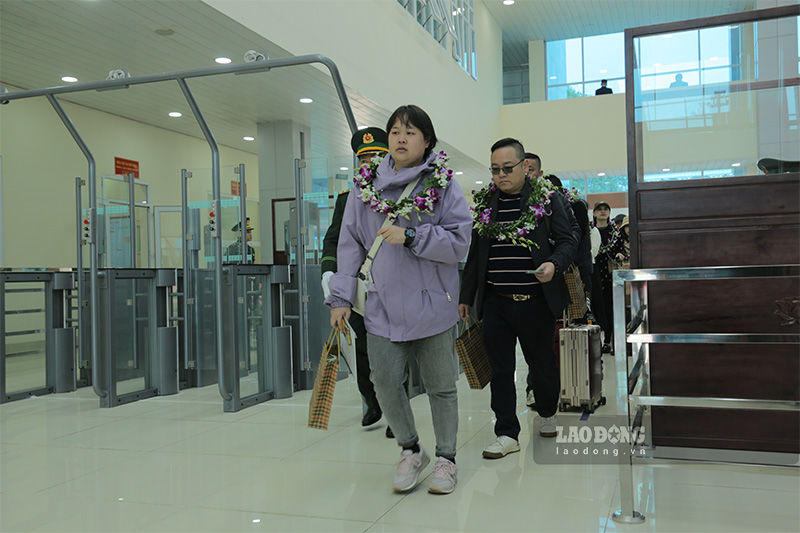
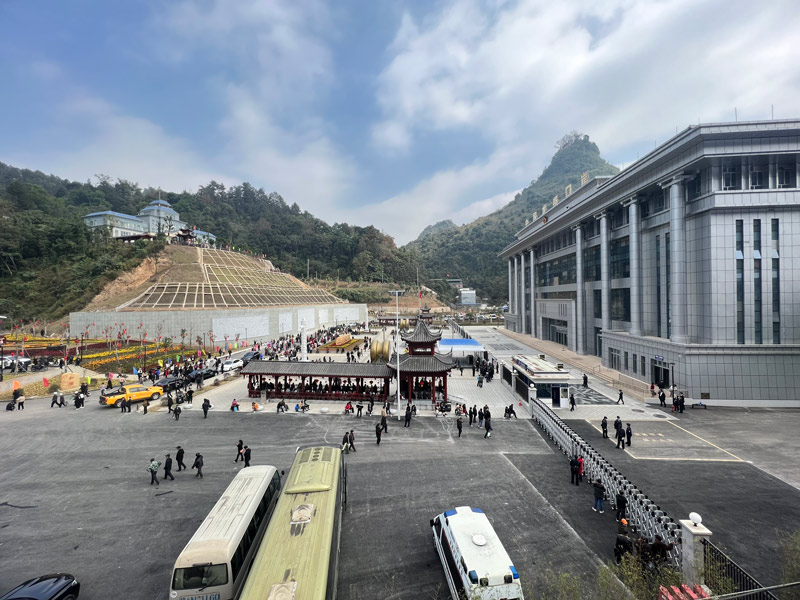
However, behind these figures is the unsustainable operating reality. The flow of goods through border gates fluctuates strongly, at times seriously decreasing due to policy changes from China, showing a large level of dependence and limited resilience.
The commodity structure also reveals risks when exports are mainly agricultural products and pre-processed goods, accounting for a large proportion but almost not undergoing deep processing in the locality.
Important added value such as packaging, inspection, and processing is outside the province, making the actual benefits retained very low. Meanwhile, imports are concentrated in certain commodity groups, lacking diversity.
Another important reason is that a stable supply chain has not been formed. Import and export activities are still seasonal, dependent on individual shipments, and there is a lack of strong focal points businesses to organize goods lines methodically and long-term.
Infrastructure, logistics and institutions have not kept up with development requirements
Besides market factors, infrastructure and logistics continue to be major "bottlenecks". Although invested, the border gate system still lacks synchronization and has not been effectively exploited.
The situation of infrastructure surplus in some places and shortage in others is quite common, while logistics costs are still high due to dependence on road transport in complex terrain conditions.
Some areas have large-scale wharves and yards but operate below capacity, and on the contrary, some places lack essential infrastructure such as cold storage, specialized roads, causing congestion in the organization of goods flow.
High operating costs make many businesses not choose routes through Cao Bang, reducing competitiveness compared to other localities.
Logistics services have also not developed in depth, mainly stopping at simple stages such as loading and unloading, warehousing. Value-added services such as preliminary processing, classification, traceability or integrated logistics are still lacking, making it impossible for the border gate economy to deeply participate in the value chain.
From a management perspective, institutions and operating methods are still significant barriers. The inter-sectoral coordination mechanism does not have a unified focal point, and data is not interconnected, making cargo flow management passive.
The digital transformation process is not synchronized, many procedures are still handled manually, while the "numbered border gate" model has not been effectively implemented.
Notably, the limitations on goods flows, infrastructure and institutions do not exist individually but create a vicious cycle: unstable goods flows make businesses reluctant to invest; weak infrastructure makes goods flows difficult to develop; and the coordination mechanism is not strong enough to break this loop.
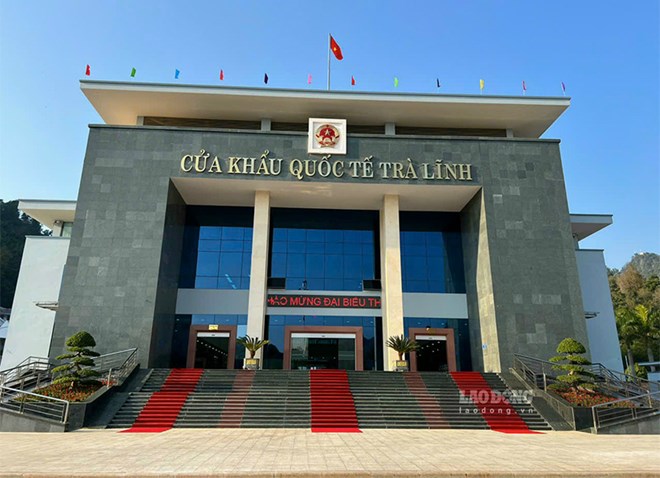
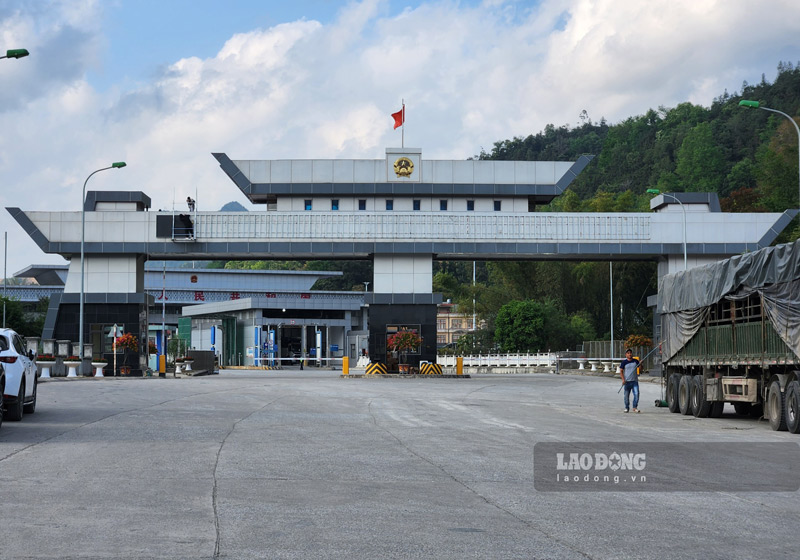
The above reality shows that reforming the border gate economy in Cao Bang is an inevitable requirement. The orientation set out is to shift from a "transit" model to developing a value chain, taking the flow of goods as the center, businesses as the subject and the State playing a constructive role.
Especially, placed in the context that Cao Bang province wants to turn more than 300km of border line into an advantage. Bringing the locality from the "end of the alley house" position on the map to a "connecting facade" in the border gate economy, the reform must be implemented even more.
On April 3, in an exchange with reporters, a representative of the Cao Bang Provincial Border Gate Economic Zone Management Board said that the unit is coordinating with relevant departments and branches to accelerate the progress of building a project to restructure import and export activities, and at the same time deploy a digital border gate model.
It is expected that in the coming time, the province will work with Chinese partners to attract more goods sources and gradually restore import and export activities in the area.


