
These days, Mr. Nguyen Van Vang (Tay Tuu ward) always takes advantage of the cool weather in the early morning and late afternoon to go to the garden. According to Mr. Vang, hot weather makes vegetables easily burn leaves, reducing yield if not supplied with enough water.
Not only Mr. Vang's family, many vegetable growers in the ward also have to wake up early to go to the fields to water, and at the same time invest in greenhouses and net houses to limit the impact of hot sun on vegetables.
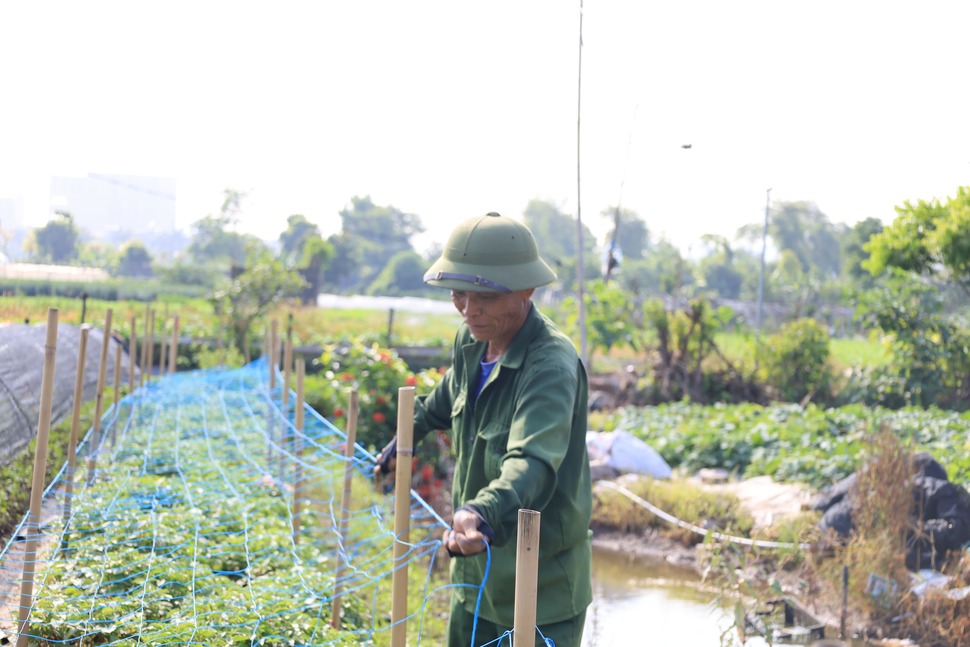
To limit damage caused by heat, many households also have to increase the cost of investing in shielding works. Mr. Nguyen Van An, a vegetable grower in Tay Tuu ward, said that his family has spent nearly 1 million VND for each vegetable bed to build shields and cover with black mesh to prevent heat.
The investment cost includes about 500,000 VND for iron deposit, more than 300,000 VND for each black mesh and about 150,000 VND for bamboo deposit to fix the shielding system.
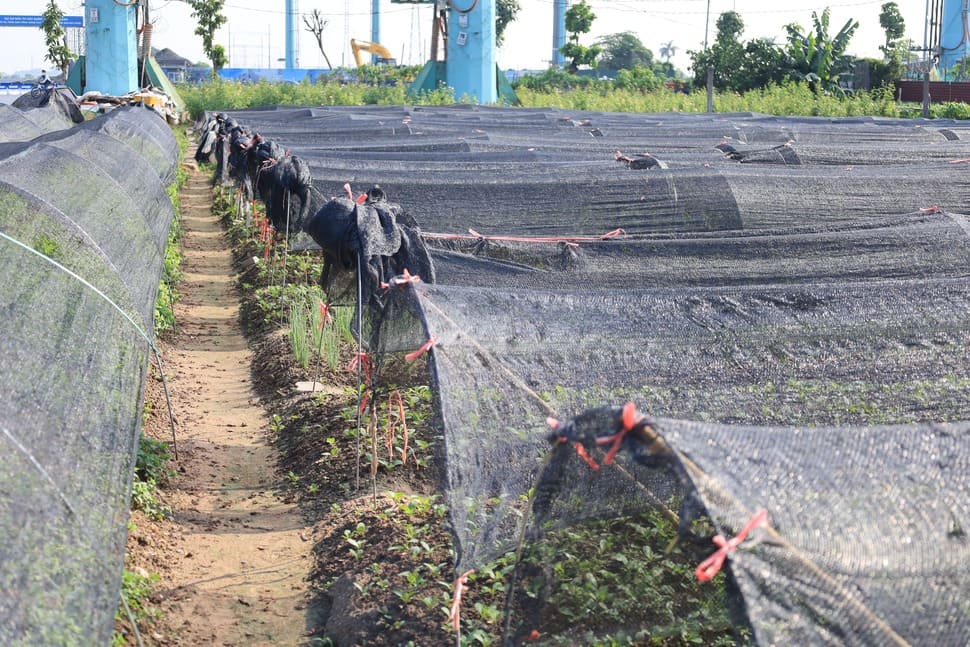
If not shielded, from about 10 am onwards, the vegetables have started to wither, the leaves have curled up. By the afternoon, when the weather is gentle, they will recover, but if the hot sun lasts, the plants will gradually weaken and then die," Mr. An shared.
According to Mr. An, herbs and lettuce are the groups of crops most susceptible to temperature increases. To maintain stable growth, growers must ensure soil moisture and regularly monitor pest and disease situation.
“Every day I have to go to the fields at least twice to water. Hot weather causes more pests and diseases to occur, if not cared for carefully, the whole vegetable bed can be completely lost,” Mr. An added.
Not only in the field of cultivation, farmers also have to spend more money to keep livestock warm. With a scale of about 10,000 chickens, two closed barns at Mr. Nguyen Van Dung's farm in Lap Thach commune (Phu Tho province) have been equipped with additional fans, circulating pumps and cooling plates operating continuously day and night to maintain stable temperatures for poultry flocks.
In the hot season, from 9 am to about 8 pm, I almost don't dare to leave the chicken coop. The biggest worry is the sudden power outage. With a high farming density, just a few minutes of ventilation fan stopping, the temperature in the coop rises rapidly, and the chicken flock can be heat shocked and die en masse," Mr. Dung shared.
Similarly, Ms. Nguyen Thi Hong, owner of a farm raising nearly 600 laying hens in Hanoi City, also strengthened many heat protection measures for livestock. In addition to industrial fans, her family also installed a water spraying system on the barn roof to cool down on hot sunny days.
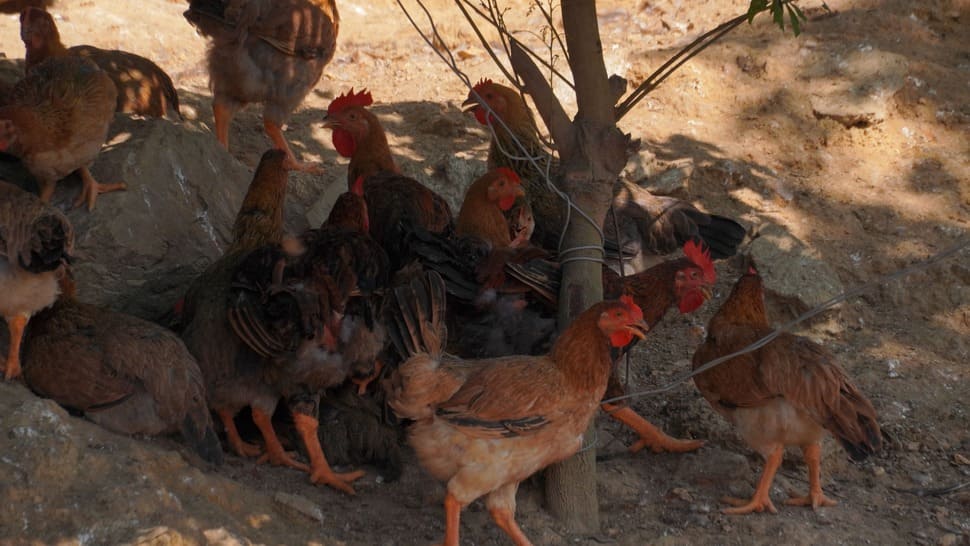
Chickens are very sensitive to high temperatures because they do not have sweat glands and are covered with thick feathers. When prolonged hot weather, poultry often loses appetite, reduces resistance, is susceptible to disease and has a risk of sudden death due to heat shock," Ms. Hong said.
According to recommendations from the Department of Dyke Management and Natural Disaster Prevention and Control (Ministry of Agriculture and Environment), to protect crops in the hot season, people need to water reasonably in the early morning or cool afternoon, avoiding watering in the middle of noon. At the same time, the base should be covered with straw, dry grass or appropriate materials to keep the soil moist; use sunshades, plant windbreaks and supplement organic fertilizer, potassium or foliar fertilizer to increase the resilience of crops.
For livestock, people need to proactively cover barns, use insulation materials, install ventilation systems, cooling or misting. In addition, it is necessary to ensure a clean and cool drinking water source for livestock; supplement vitamins, electrolytes and minerals into the diet; reduce the density of captivity, regularly clean barns to limit pollution and disease outbreaks. Livestock farmers should also not let livestock and poultry roam outdoors during hot sunny weather to avoid the risk of heat shock.


