
The Office of the City People's Committee has chaired the construction of a common digital communication platform of the Hanoi City government, with the core being the City Electronic Information Portal and a system of 140 component electronic information pages of departments, agencies, branches, units and People's Committees of communes and wards.
To date, the platform has formed a unified, synchronous electronic information system, maintaining an overall access volume of more than 20 million visits per month. In which, the City Electronic Information Portal alone in July reached over 6.2 million visits, becoming one of the official information channels with great spread of the city.
Innovation in government governance and communication
Speaking at the ceremony, Mr. Nguyen Tien Thiet - Chief of Office of the City People's Committee said that the platform contributes to ensuring 100% of directing and operating documents of the City People's Committee are publicly available on the Electronic Information Portal within 24 hours from the official release date, meeting the requirements of publicity and transparency, helping people, businesses and press agencies access information quickly, fully and accurately.
Along with that, the City's Operational News Bulletin is published regularly, providing timely direction and administration information to central and city press agencies, contributing to improving the effectiveness of policy communication and information orientation.

The Chief of Office of the City People's Committee said that in the coming time, the Office of the City People's Committee will continue to implement phase 2 of the platform, expanding to all agencies and units under the city; continue to connect and share data with the city's digital platforms; promote the application of artificial intelligence (AI), big data (Big Data), open data (Open Data) and advanced digital technologies to build a modern and synchronous digital communication ecosystem, serving the management, administration and information access needs of people and businesses better and better.
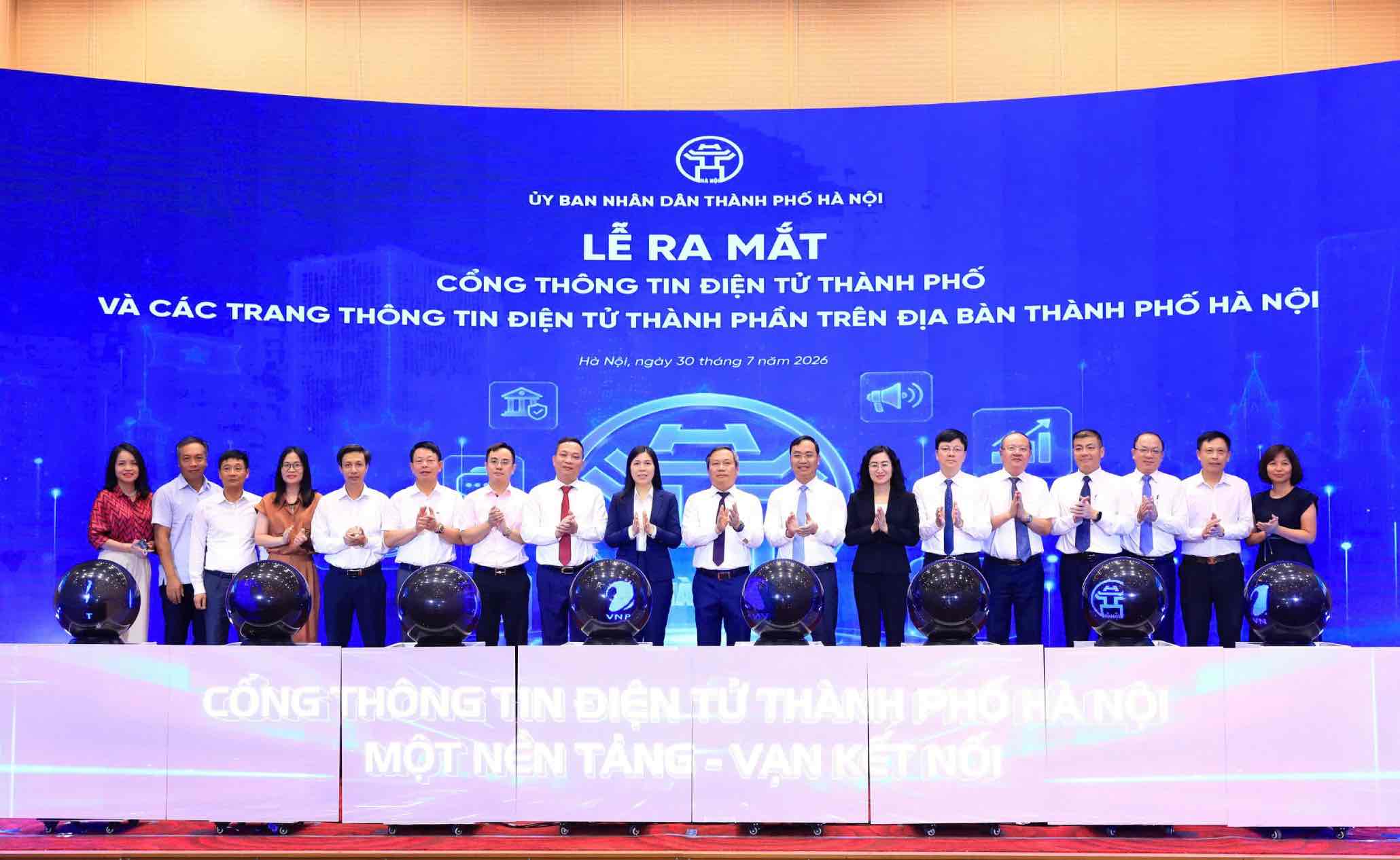
Information management is part of state management
Speaking at the ceremony, Mr. Vu Dai Thang - Member of the Party Central Committee, Deputy Secretary of the City Party Committee, Chairman of the Hanoi People's Committee emphasized that the value of this platform will not be assessed by the number of websites built or the number of news and articles published. The value of the platform must be reflected in the quality of serving state management work; in informing people faster and more accurately; in the timely handling of reflections and recommendations; and in the ability to help leaders at all levels grasp the situation to make decisions close to reality.
That is also the goal the city aims for when building and putting this platform into operation.
For people and businesses, what they need is not a beautiful electronic information page or many features. What they need is accurate, easy-to-find information, updated promptly; procedures are clearly guided; feedback and recommendations are received and answered on time" - Chairman of Hanoi People's Committee said.
Chairman of Hanoi City People's Committee requested departments, agencies, branches and People's Committees of communes and wards to clearly define: Information governance is a part of state management work, not a separate task of the information technology department or the communication department.
The head of each agency must be responsible for the quality of information within their management scope; be responsible for the publicity and transparency of guidelines and policies; be responsible for the progress of receiving and responding to issues of concern to people and businesses. The platform can support faster work, but cannot replace the responsibility of law enforcement officers.
The Office of the City People's Committee continues to closely coordinate with agencies and units to complete the platform in a direction that is more convenient in use, more unified in management and better meets the city's operating requirements. The completion process must be based on feedback from the user agencies themselves and from people and businesses, not chasing after form or adding unnecessary features.


