
It is expected that tomorrow (September 11), the Ho Chi Minh City Department of Construction will coordinate with the Vietnam Fatherland Front Committee of Ho Chi Minh City to organize a conference to criticize the Project on controlling emissions of vehicles in the city.
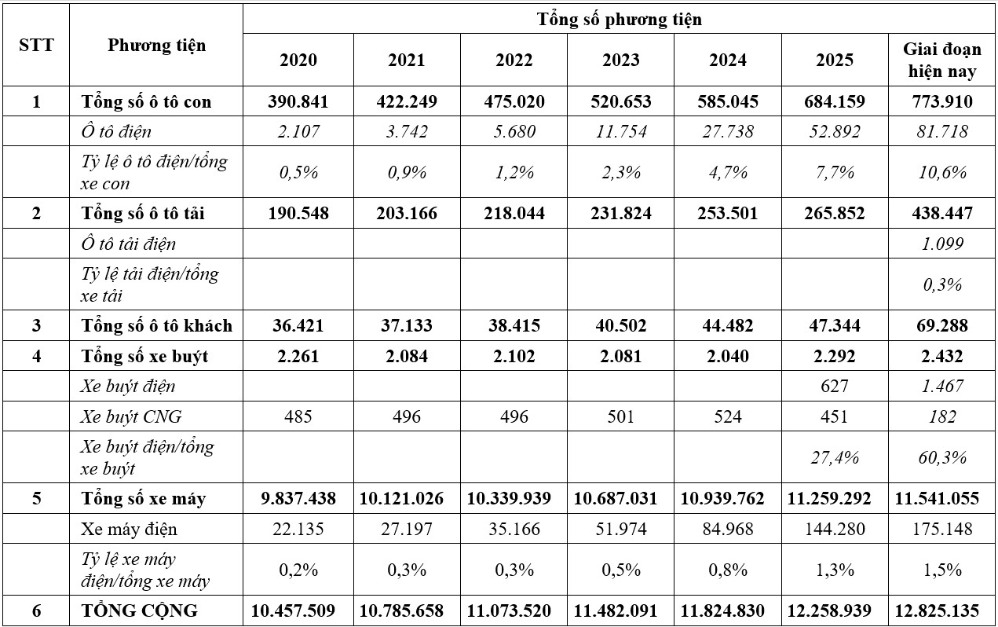
According to the proposal, from July 2027, Ho Chi Minh City will pilot a low-emission zone (LEZ) in the core central area of about 930 ha and Thu Thiem New Urban Area. From the beginning of 2029, the LEZ is proposed to be expanded to Ring Road 2 area.
Project preparation consultants surveyed 1,212 people, showing that only 10.2% of respondents said they could pay for all costs when switching to electric vehicles. Meanwhile, 28% are unable to pay in the next 3-5 years and 23.5% can only switch if they are directly supported with a part of the car value.
Notably, 55.3% of people surveyed said that the expected financial support level is still low. In which, 15.5% proposed redesigning policies according to income, area and type of vehicle; 10.7% want to increase support for some groups that are heavily affected.
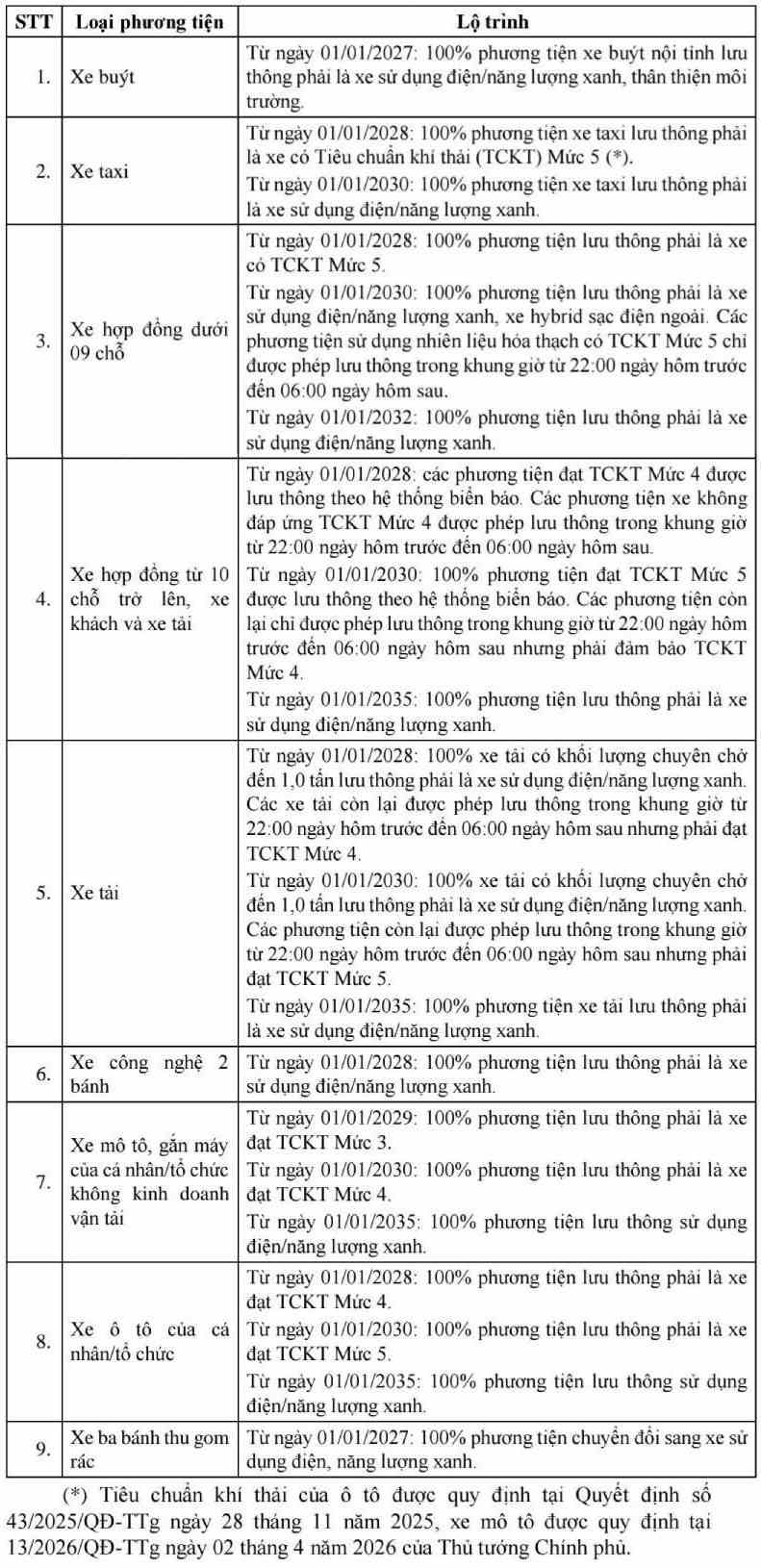
For the group of cadres, civil servants, and public employees (CBCCVC), the project proposes to convert 100% to electric vehicles from January 1, 2030. A survey of 1,127 CBCCVC shows that 61.3% agree with this proposal.
However, consensus comes with conditions. 63.5% believe that a separate support mechanism is needed for CBCCVC to take the lead in transformation. In particular, 81.8% supported arranging charging stations at agency headquarters.
The form of support chosen the most by CBCCVC is direct support for a part of the car value, with 76.6%. Next is support for battery exchange, battery rental and charging costs in the early stages (41.6%); loan interest rate support (39.1%); registration fee and registration support (36.9%).
Worry that infrastructure has not kept up with the roadmap
In the LEZ region, out of 453 responses, 40% believe that emission control regulations may be too strict for used car users with average and low incomes. Meanwhile, 32.9% are concerned that charging infrastructure and public transportation do not meet the requirements.
In the remaining area of the city, where the transition roadmap is extended to 2040, 32.4% of people believe it is still urgent for private cars. 28% assessed that the roadmap could be appropriate if accompanied by strong financial and infrastructure support.
Besides the cost of changing cars, infrastructure is also one of the conditions that determines people's ability to switch vehicles.
The survey shows that 65.8% of people determine that the network of charging stations and battery exchange cabinets must be widespread; 62% request electric vehicle prices to be suitable for income and 53.3% believe that financial support policies must be strong enough and targeted.
People also proposed to prioritize arranging charging stations in apartments, residential areas (60.6%); public parking lots (58.9%); metro stations and public transport hubs (50.1%); existing gas stations (48.1%).
The Propaganda Department of the Ho Chi Minh City Party Committee is also surveying and surveying public opinion to grasp the level of concern, awareness, consensus and willingness to transform people towards the green transport policy; and at the same time record concerns, barriers and expectations to serve as a basis for completing solutions that are suitable to reality.
The survey was conducted online, without collecting identification information. People were asked about their current vehicles and the situation of using gasoline and oil vehicles; the level of interest, understanding and consensus with the green transport policy; the level of confidence in the City's implementation capacity; the possibility of switching to electric vehicles and the expected conversion time.
In addition, the survey focused on clarifying barriers when switching to electric vehicles such as purchase price, charging infrastructure, battery replacement costs, safety, maintenance, impact on livelihoods and the level of policy clarity.
People are also asked to choose solutions that the City needs to prioritize, including financial support and old car exchange, development of charging stations, ensuring vehicle and battery safety, improving the quality of public transport, supporting low-income groups and vehicle users to make a living,...


