
Building houses for people before the rainy season
In the scorching sun on the Long Boc mountainside, Tak Lu village, Nam Tra My commune, Da Nang, calls for each other to move houses echoed non-stop. More than 200 officers and soldiers of Division 315, Military Region 5 divided into groups, some unroofed roofs, some carried wooden pillars, some transported each plank and household items to the new residential area.
Stilt houses that have been associated with the Ca Dong people for many years have been carefully dismantled. Each wooden plank that can still be used is kept for people to rebuild their houses, reducing costs when starting life in a new place.
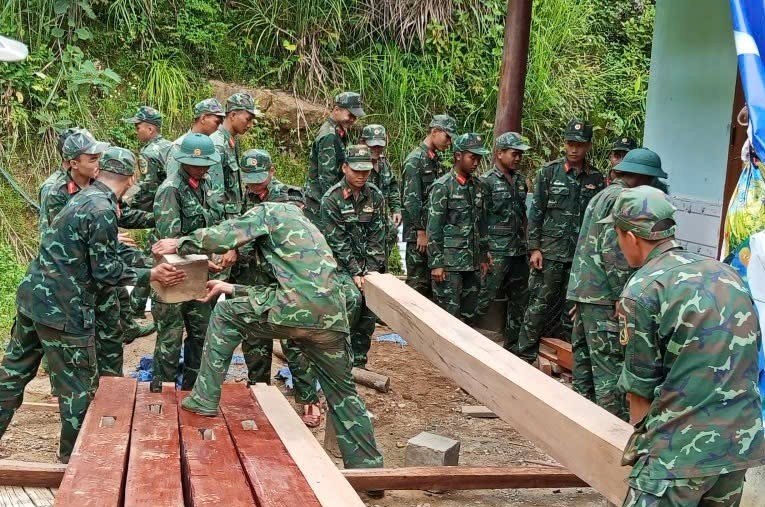
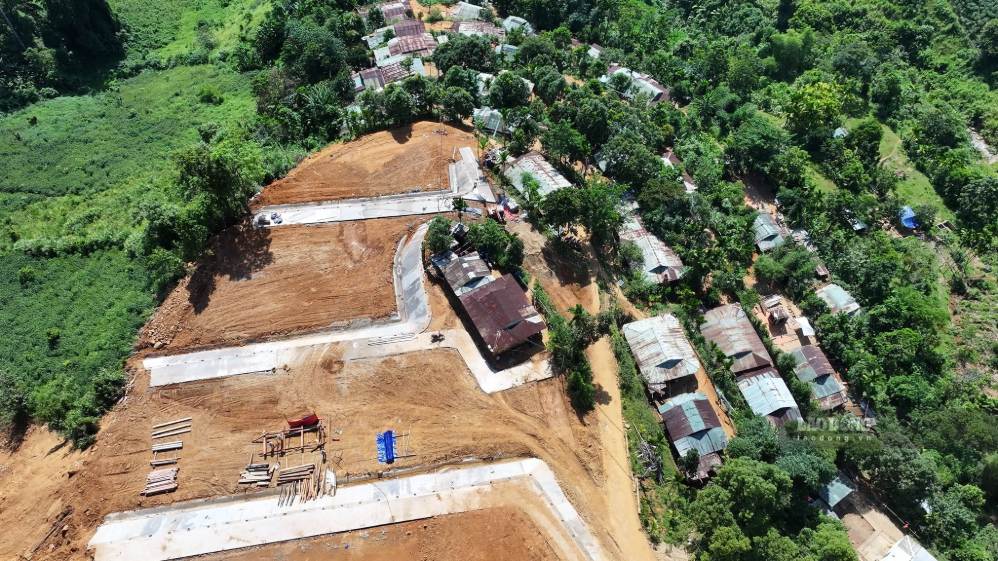
Long Boc village is located in an area at high risk of landslides. Every time heavy rain lasts, soil and rocks on the mountainsides can suddenly fall down, directly threatening houses and people's lives. Therefore, relocating 51 households to safe residential areas is not just a house move, but also a race against the approaching rainy and storm season.
Village elder Ho Van Vien said that people's houses are mostly made of wood, the volume is very heavy. If only based on the strength of people in the village, dismantling and transportation can take many days.
Thanks to the help of the soldiers, people are assured to move houses to new places before the rainy season. People are very happy, this affection will always be remembered by the people of Long Boc village" - village elder Ho Van Vien shared.
The Long Boc emergency residential area project has a total investment of nearly 20 billion VND. This is one of the key projects of Nam Tra My commune to arrange safe accommodation for households living in areas at high risk of landslides.
Representatives of the construction unit said that the contractor is mobilizing maximum manpower and machinery to accelerate site clearance, build internal roads and complete essential infrastructure items.
Relocating more than 6,200 households from landslide areas
In 2026, Nam Tra My commune will implement 33 public investment projects with a total planned capital of more than 176 billion VND. The projects span from transportation, healthcare, and people's infrastructure to emergency resettlement areas.
However, so far the disbursement rate of the locality is just over 40%. Meanwhile, the favorable construction time fund in mountainous areas is no longer much. When the rainy season begins, transporting materials, leveling ground and constructing roads all become more difficult.
Mr. Nguyen Hong Nhan - Vice Chairman of Nam Tra My Commune People's Committee - said that projects that are unlikely to be completed in the year will be considered for capital transfer, avoiding the situation where capital is on paper while people still lack roads, lack safe housing, and lack essential infrastructure.
According to the city's review, in the period 2026-2030, Da Nang has about 6,282 households that need to be arranged and resettled to prevent natural disasters. The city plans to build and complete about 234 concentrated, interspersed or stable resettlement areas and points on the spot.
In the mountainous area alone, there are about 4,474 households that need to be arranged in 117 residential areas and points. In the delta and midland areas, there are about 1,808 households that need to be arranged in 117 other areas and points.
To implement this plan, Da Nang is expected to allocate about 1,000 billion VND from the city budget in the period 2026-2030, an average of 200 billion VND per year. The capital will be used to support the relocation of people and property, building materials, leveling ground, residential land, production land, clean water, domestic electricity and people's roads.
The city sets a target that by September the disbursement rate will reach 60%, by the end of 2026 it will reach at least 90% and complete 100% of the plan before January 31, 2027.
Chairman of Da Nang City People's Committee Nguyen Manh Hung requested units and localities to consider disbursing public investment capital as a key political task, urgently remove obstacles in procedures and land, especially at key projects in mountainous areas and landslide areas.
According to the City Chairman, accelerating the progress of projects is not only to complete disbursement targets, but more importantly to soon bring people to safe places to live, complete roads, schools, medical facilities and essential infrastructure, thereby ensuring social security and improving the lives of people in mountainous and border areas.


