
Times of going through storms
In early September 2018, prolonged heavy rain caused serious landslides in many mountainous localities of Thanh Hoa. National Highway 15C - the main road connecting the lowlands with the old Muong Lat district - was completely cut off by dozens of landslide points.
Upon receiving the information, I and my colleagues immediately set off. The distance from the center of Thanh Hoa province to Muong Lat is more than 200km. We spent almost a day riding a motorbike to reach the border area between Quan Hoa district and the old Muong Lat district.
Here, the whole group decided to approach Muong Lat by river. We crossed slippery roads from Trung Ly commune to Muong Ly commune. When we arrived, it was already dark. The Ma River flowed in the flood season, the water was muddy, carrying trees and many floating objects.
The small boat swam in the fast-flowing water for about 1 hour going upstream. Only when we set foot in the area at the beginning of Muong Lat town did the group feel somewhat reassured. The district center at that time was submerged in darkness because there had been a power outage for many days. After a quick noodle meal, we started nearly a week of sticking to the flood area.
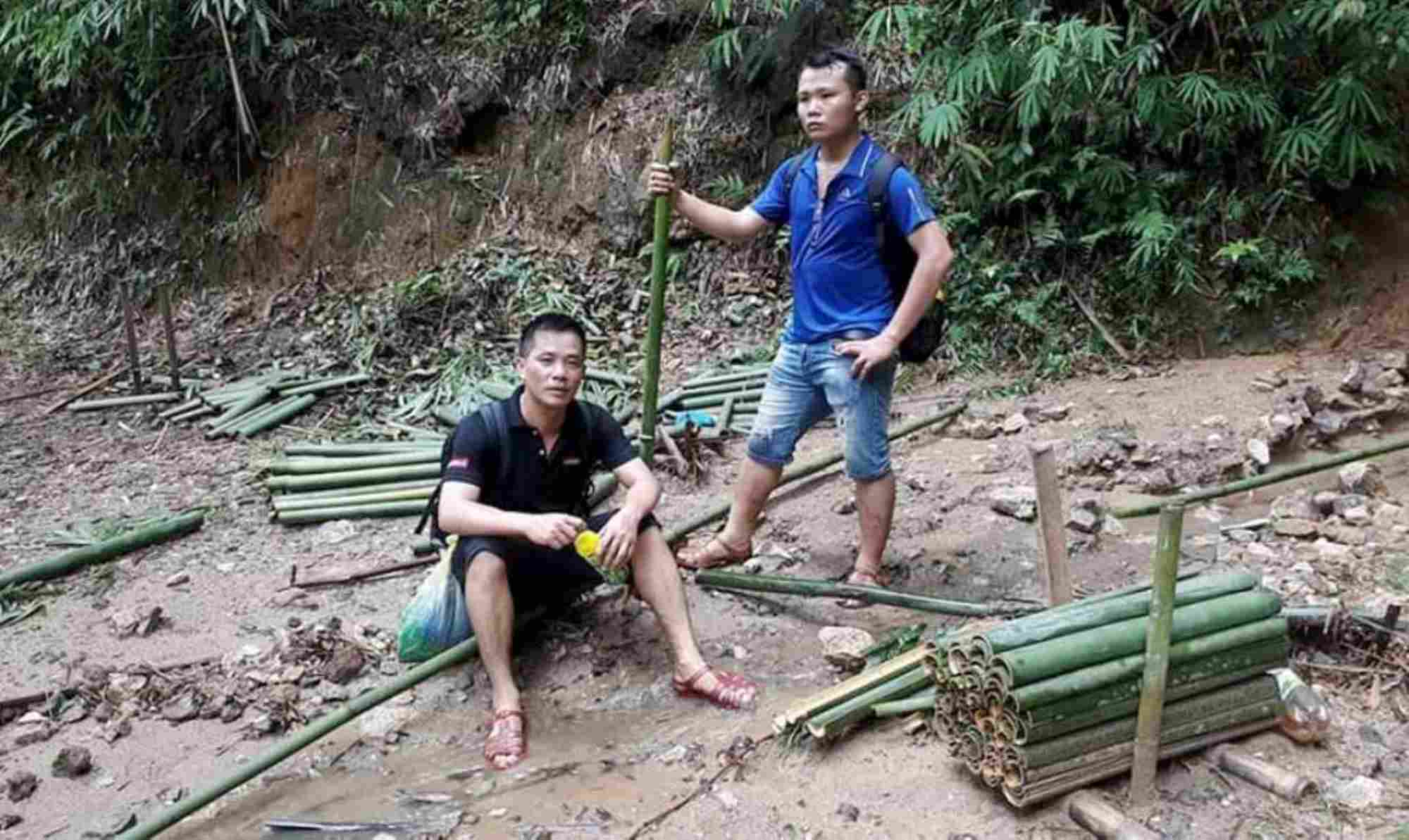
A year later, on August 3, 2019, a terrible flash flood occurred in Sa Na village, Na Meo commune, former Quan Son district. Fierce floodwaters swept away dozens of houses, causing many people to go missing. In torrential rain, we drove motorbikes nearly 200km to Quan Son border district. From the town, the group continued to move more than 60km towards Na Meo commune. The Luong River flowed violently, making the river approach option impossible to implement.
We decided to cross the forest, asking two local people to lead the way. After about 3 hours following the trails, Sa Na village appeared in a desolate and ruined scene. Many houses have disappeared. Soil, rocks, mud, forest trees and people's property are lying scattered. Survivors are still in shock, while many families are desperately waiting for news of missing relatives.
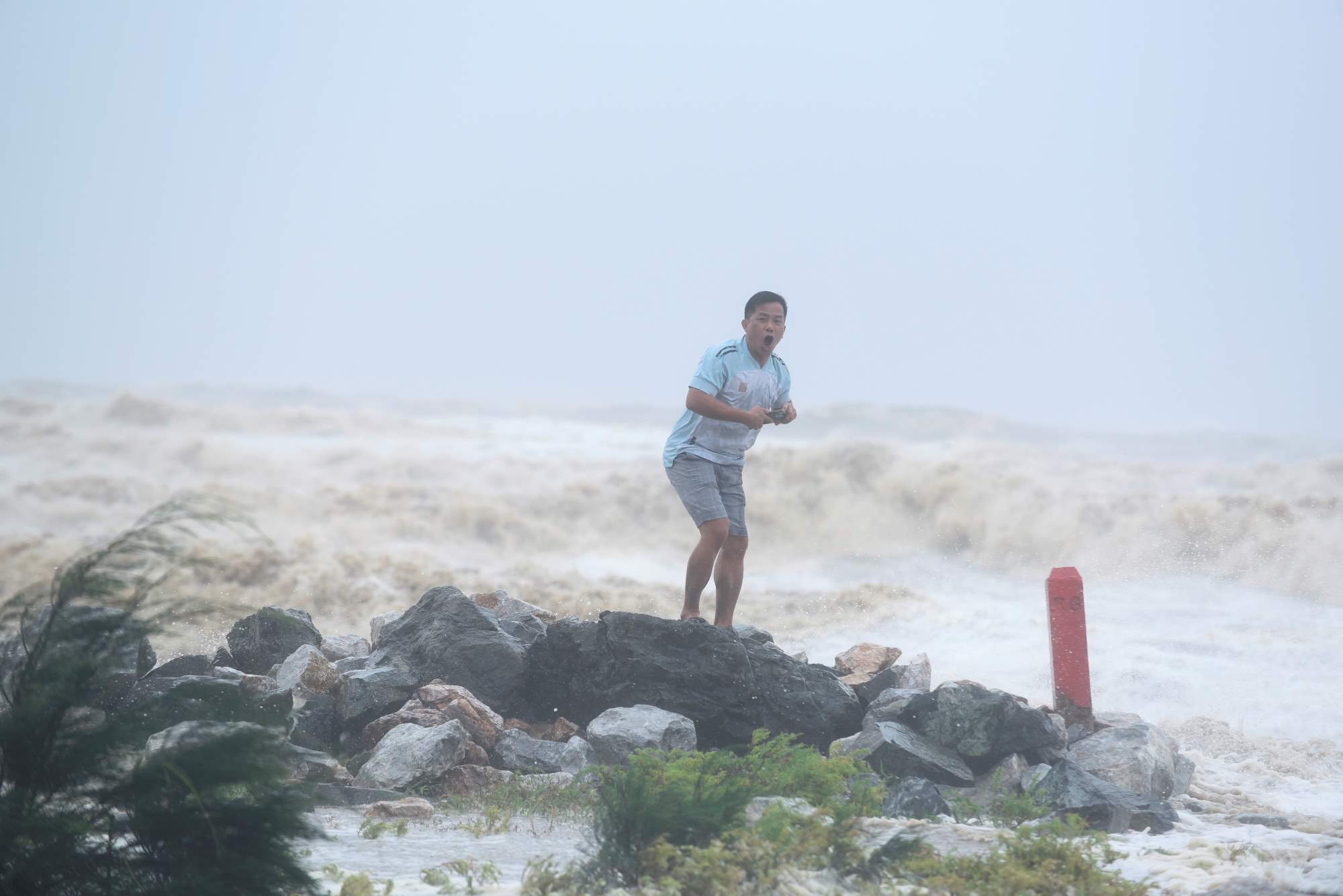
Another unforgettable operation was when storm No. 10 in 2025 affected Thanh Hoa.Although not the locality directly affected, many coastal communes of the province were still quite heavily affected.The areas I went to work in were Nghi Son island commune and Tien Trang sea area.Especially, when I arrived at Tien Trang sea area, big waves and strong winds continuously rushed to the shore.
That was a situation that I could not have imagined.When I stood on a cliff by the sea, the initial waves were still small.However, just a few minutes later, a large wave suddenly rushed in, making me unable to react in time, slipped and fell, soaked and injured.That was probably one of the operations that I will always remember, because the scene contains many dangers and just a little subjectivity can lead to unpredictable consequences.
Accompanying the fates of people making a living
There are working trips that do not require crossing dangerous rivers or epidemic areas, but make people's hearts heavy with the fates that reporters encounter.
In the years of accompanying workers, I have met many examples of overcoming difficulties that make me silent with admiration. One of them is Ms. Nguyen Thi Hoa, in Hoang Thanh commune, Thanh Hoa province. She is the pillar, taking care of 5 people in the family who are often sick, including her husband, 2 children and parents-in-law.
The day I came to my family, she had just finished her shift, carrying a few bundles of vegetables and a few eggs bought quickly along the way. The family's small house was built with the support of the Union member support fund of the Thanh Hoa Provincial Labor Federation and the joint efforts of philanthropists. Almost all the meager income from working as a worker is used by her for medicine and meals for her children. Outside of working hours, whoever hires her to do anything, she does it.
Ms. Hoa's story made me understand that writing about workers cannot just stop at salaries, working hours or statistics. Behind each worker is a family, are worries about illness, housing, children and the future.
For many years, I have followed trade union officials to factories, industrial parks, workers' boarding houses; attended "Trade Union Meals", discounted markets, and meaningful trains and flights taking workers home for Tet.
On many occasions near Tet, I am often present at train stations and airports in Thanh Hoa to welcome trains and flights carrying workers back to their hometowns to reunite with their families. Those companion trips are not just working tasks. For me, it is also a journey of understanding, to realize that after tiring shifts is the desire to live, to contribute in a fair environment and to be respected by society.
After working in the midst of floods, storms, epidemics; in the midst of difficult lives and the nights of welcoming workers back, I understand that the value of a journalist lies not only in being present the fastest but also in the way of conveying events with alertness, responsibility and compassion. It is the times I have gone through storms that have helped me grow up with the profession, know how to listen more, be more cautious with each word and be more steadfast in the face of life's changes.
Because after each scene, each upheaval and each person's fate, what reporters keep is not just a newspaper article but also life stories that need to be told with honesty and responsibility.


