
When the Mekong Delta rivers along and across the highway
Considered a "lowland" in terms of transport infrastructure, the Mekong Delta (Mekong Delta) is undergoing strong changes when a series of expressways are invested, creating a continuous network.
According to the plan, the whole region will have about 1,166 - 1,188 km of expressways, organized according to a model consisting of 3 vertical axes and 3 horizontal axes. This is the foundational structure for forming a modern transport system, gradually replacing the role of national highways that are already overloaded. Among them, 3 vertical axes with a total length of about 575 - 591 km play a backbone role connecting the region with Ho Chi Minh City and the Southeast region. The most important axis is the North-South Expressway in the East (Ho Chi Minh City - Can Tho - Ca Mau) about 245 km long.
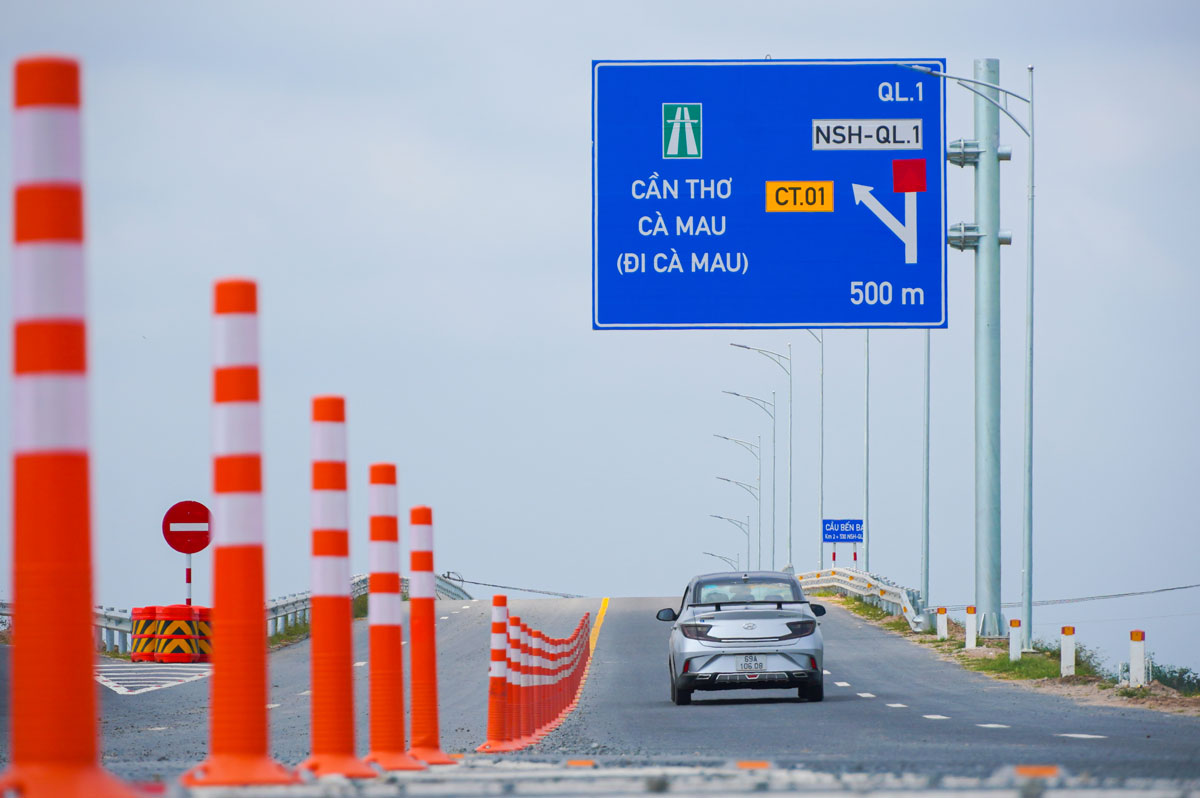
The highlight of this axis is the Can Tho - Ca Mau expressway, more than 110 km long, which has just been completed, helping to connect the entire route from the gateway to the southernmost point of the Fatherland. When put into operation, the travel time from Ca Mau to Ho Chi Minh City will be shortened to about 4-5 hours, nearly halved compared to before. In addition, the North - South axis to the West (Duc Hoa - Rach Soi) and the coastal axis to the East are also being gradually implemented, contributing to expanding the development space along economic corridors.
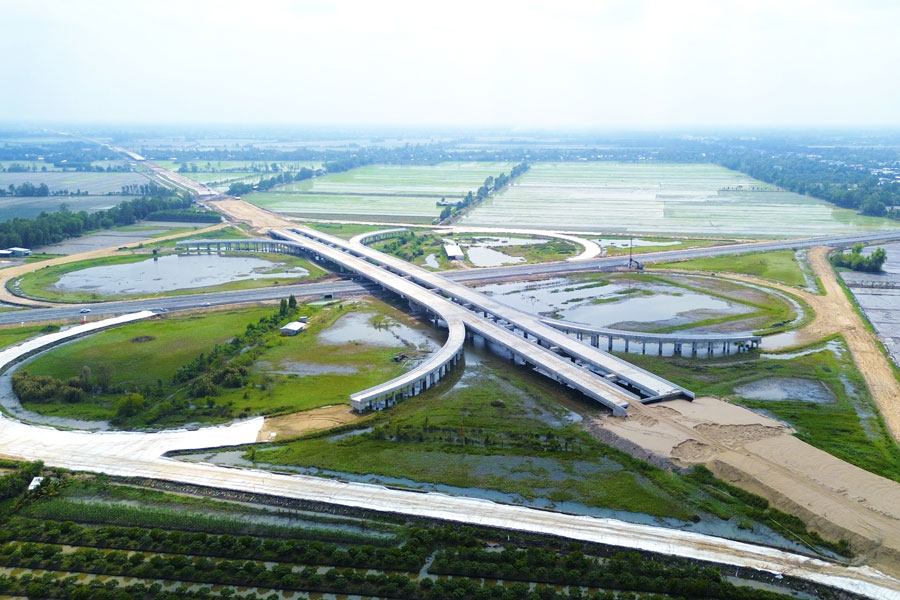
Parallel to the vertical axes, 3 horizontal axes with a total length of nearly 600km play a connecting role within the region. Routes such as: Chau Doc - Can Tho - Soc Trang, Ha Tien - Rach Gia - Bac Lieu, Hong Ngu - Tra Vinh help connect from the Cambodian border to major seaports. This "vertical - horizontal" structure not only facilitates traffic, but also opens up a corridor for transporting goods, especially agricultural and aquatic products - the strength of the Mekong Delta.
Chairman of Ca Mau Provincial People's Committee Lu Quang Ngoi said that the development of transport infrastructure, especially the expressway, is creating great advantages for the locality. From the position once considered the "end point" of the Fatherland, this locality is seen as the "most southern point", with an increasingly clear connecting role in socio-economic development. Transport projects contribute to shortening travel time, reducing logistics costs, thereby increasing attractiveness to investors. Accordingly, in the past, many businesses have come to explore opportunities, showing positive signals about the investment environment. With the existing advantages, the locality is expected to have more room to develop and break through in the coming time.
Expressway to Mui Ca Mau alluvial ground
If the Can Tho - Ca Mau expressway is a step to complete the main vertical axis, then the investment orientation of the Ca Mau - Dat Mui route is considered the next step to bring transport infrastructure to the southernmost point of the country. This route, when completed, will connect the center of Ca Mau province with Ca Mau Cape, creating momentum for marine economic development, tourism and services. At the same time, this is also the final section to complete the vertical axis throughout the region.
Mr. Tran Manh Hung (75 years old, Dat Mui commune, Ca Mau province) said that he, as well as the people here, did not dare to dream that the expressway would reach Dat Mui. "This region is crisscrossed with rivers and water, vertically and horizontally; mangrove forests with alluvial grounds... for a long time, means of transportation by boat, but after only 51 years of liberating the South and reunifying the country, the expressway will come here. I am not familiar with economic opportunities, but it is easy for children to travel, and for the elderly, if they get sick, ambulances will come here, that's great," Mr. Tran Manh Hung expressed his joy.
Not only stopping at roads, the Mekong Delta is being supplemented with a new transport axis by rail. According to the plan, the Ho Chi Minh City - Can Tho - Ca Mau railway line, about 320 km long, will be invested in the next phase. Initially, the Ho Chi Minh City - Can Tho section, about 174 km long, is prioritized for implementation before 2030, in order to connect the regional center with the largest economic hub in the country. When the entire line is completed, the railway will share the transport pressure with roads, reduce logistics costs and improve the competitiveness of goods.
The combination of expressways, railways, seaports and aviation will create a multimodal transportation system, helping the Mekong Delta connect more effectively with economic regions and international markets. With the determination to complete hundreds of kilometers of expressways in the period 2025–2030, along with the orientation of synchronous investment in transport modes, the Mekong Delta is facing a great opportunity to break through.


