
On the afternoon of June 24, in Tram Chim commune, Dong Thap Provincial People's Committee organized the second phase of the program to receive 6 red-crowned cranes, continuing to implement the Project "Conservation and development of red-crowned cranes in Tram Chim National Park for the period 2022-2032".

Step by step restoring the red-crowned cranes population
Reporting at the program, Mr. Nguyen Van Lam - Director of Tram Chim National Park - said that on the evening of June 23, 6 red-crowned crane individuals were safely transported to Tram Chim and brought to the farming area. After being health checked by experts, the entire crane herd was stable and adapted well after the journey from Thailand.
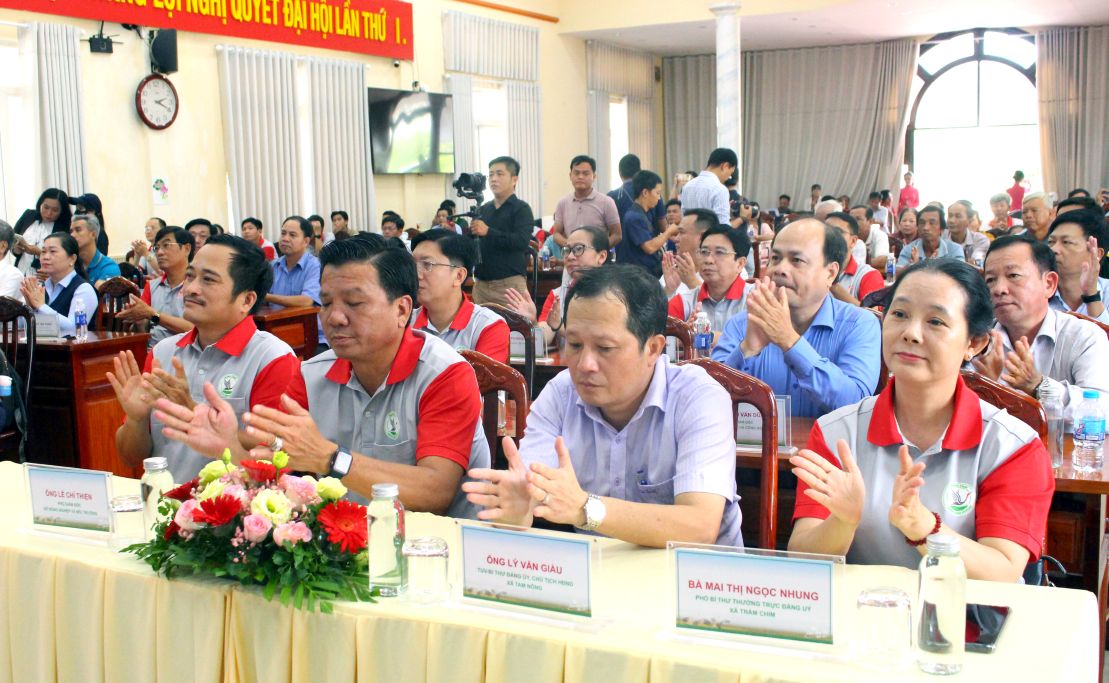
This is the next reception phase in the Project on conservation and development of red-crowned cranes for the period 2022-2032 with the goal of restoring the red-crowned crane population through reception, nurturing, breeding research and gradual re-release to the natural environment. According to the plan, from now to 2028, Dong Thap will receive 30 red-crowned cranes about 6 months old from Thailand.
The first reception in 2025 with 6 individuals has brought many positive signs. After a year of care, the cranes have developed healthy, adapted to ecological conditions in Tram Chim National Park, appeared many natural habits such as foraging, flying, pairing dances and are being prepared for the breeding stage.
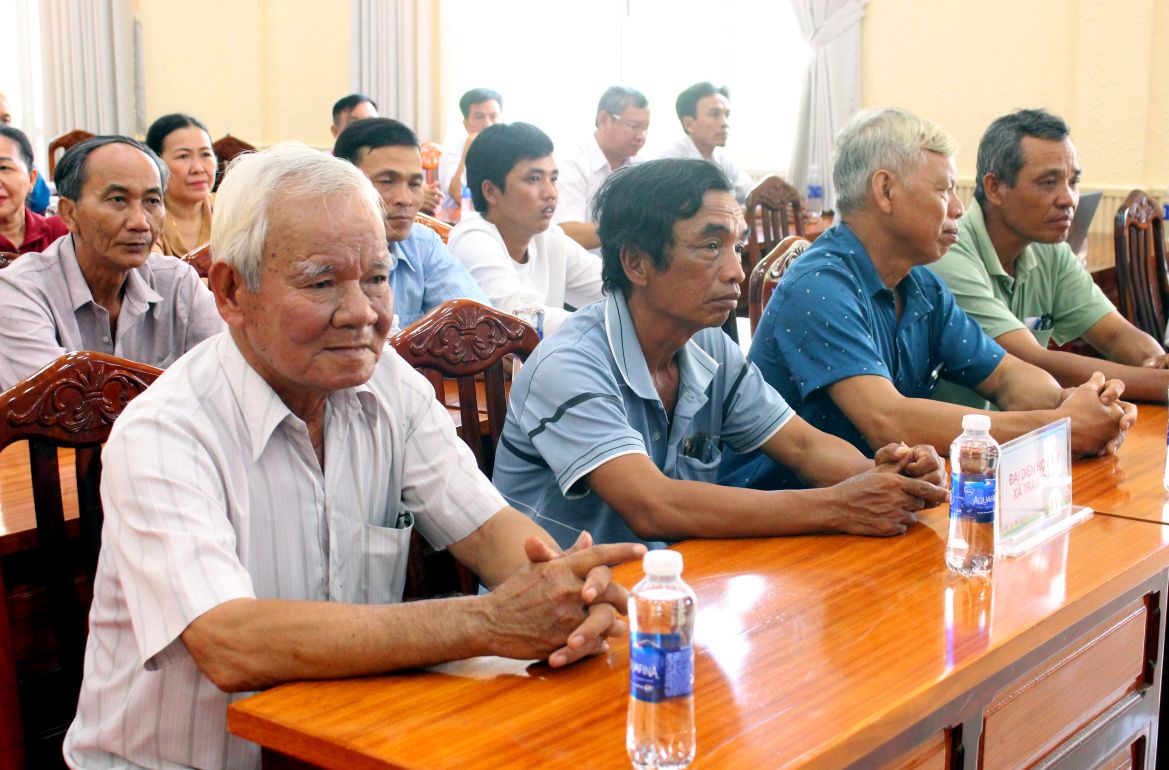
According to experts, the good adaptation of the cranes to the new living environment is an important premise for gradually building a sustainable crane population at Tram Chim.
Sharing at the program, Dr. Tran Triet - Director of the Southeast Asian Crane Conservation Program - said that this reception has many differences compared to last year. If in the first batch, the cranes after returning to Vietnam had to be quarantined at Saigon Zoo and Botanical Garden before being transferred to Tram Chim National Park, this time, after a continuous transportation journey of about 19 hours from Korat Zoo, the individuals were taken straight to Tram Chim National Park.
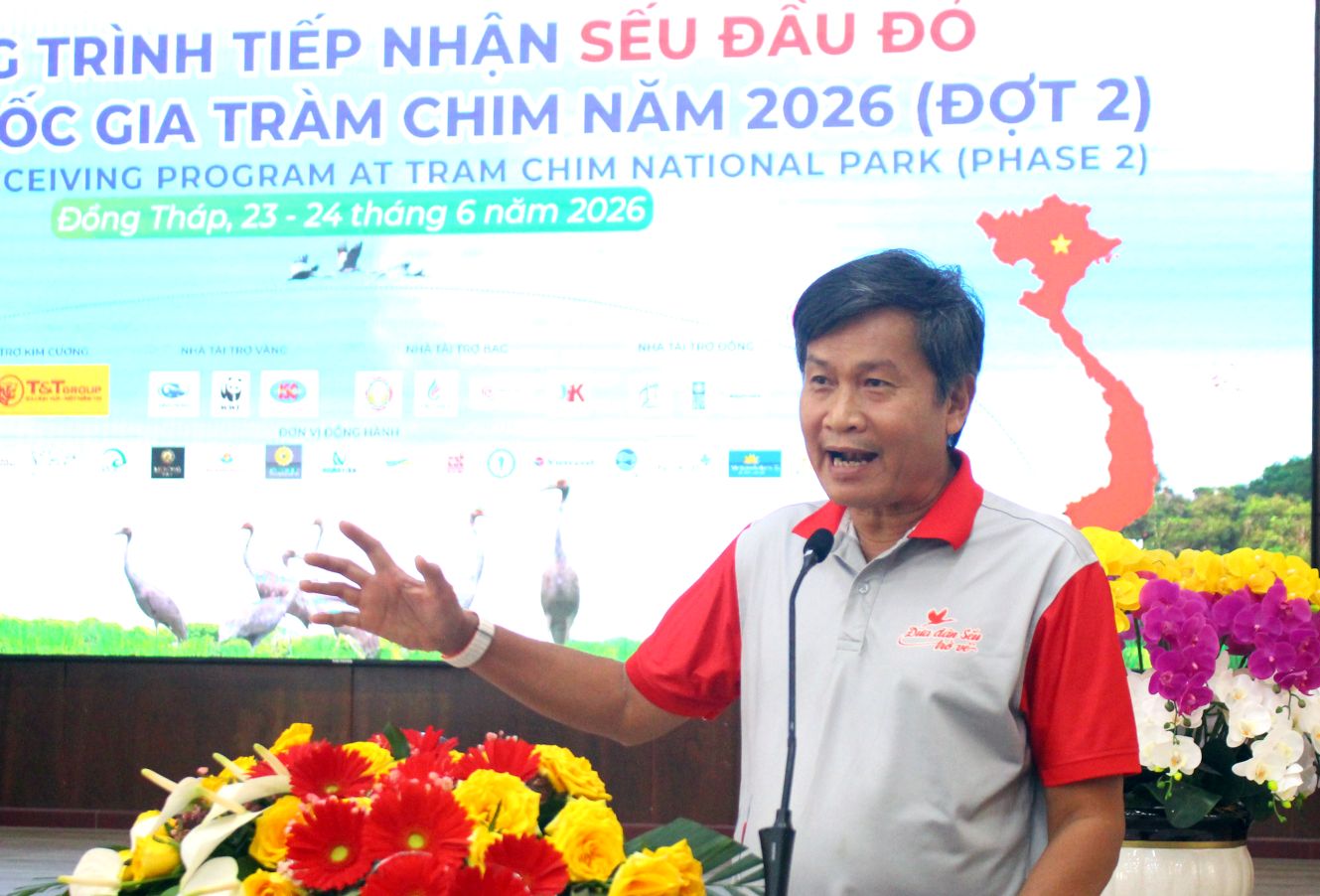
According to Dr. Tran Triet, direct transportation shows the trust of international partners in the capacity to receive, care for and manage red-crowned cranes of the Tram Chim National Park team. At the same time, it shows that the locality has gradually mastered technical procedures, facilities and care experience after one year of implementing the Project.
Not just protecting one bird species
Speaking at the program, Vice Chairman of Dong Thap Provincial People's Committee Nguyen Phuoc Thien said that the reception of 6 more red-crowned crane individuals is not only an additional source of breeds for the Conservation Project but also affirms the province's determination to preserve and restore the values of the Tram Chim wetland ecosystem.
According to Mr. Nguyen Phuoc Thien, after the initial results of the 2025 reception, Dong Thap has more grounds to continue to realize the goal of restoring the red-crowned crane population at Tram Chim National Park. He emphasized that the journey "Bringing the crane back" is not only to conserve a rare bird species but also a process of restoring the wetland ecosystem, contributing to preserving biodiversity, developing sustainable livelihoods for people in buffer zones and building a harmonious relationship between humans and nature.
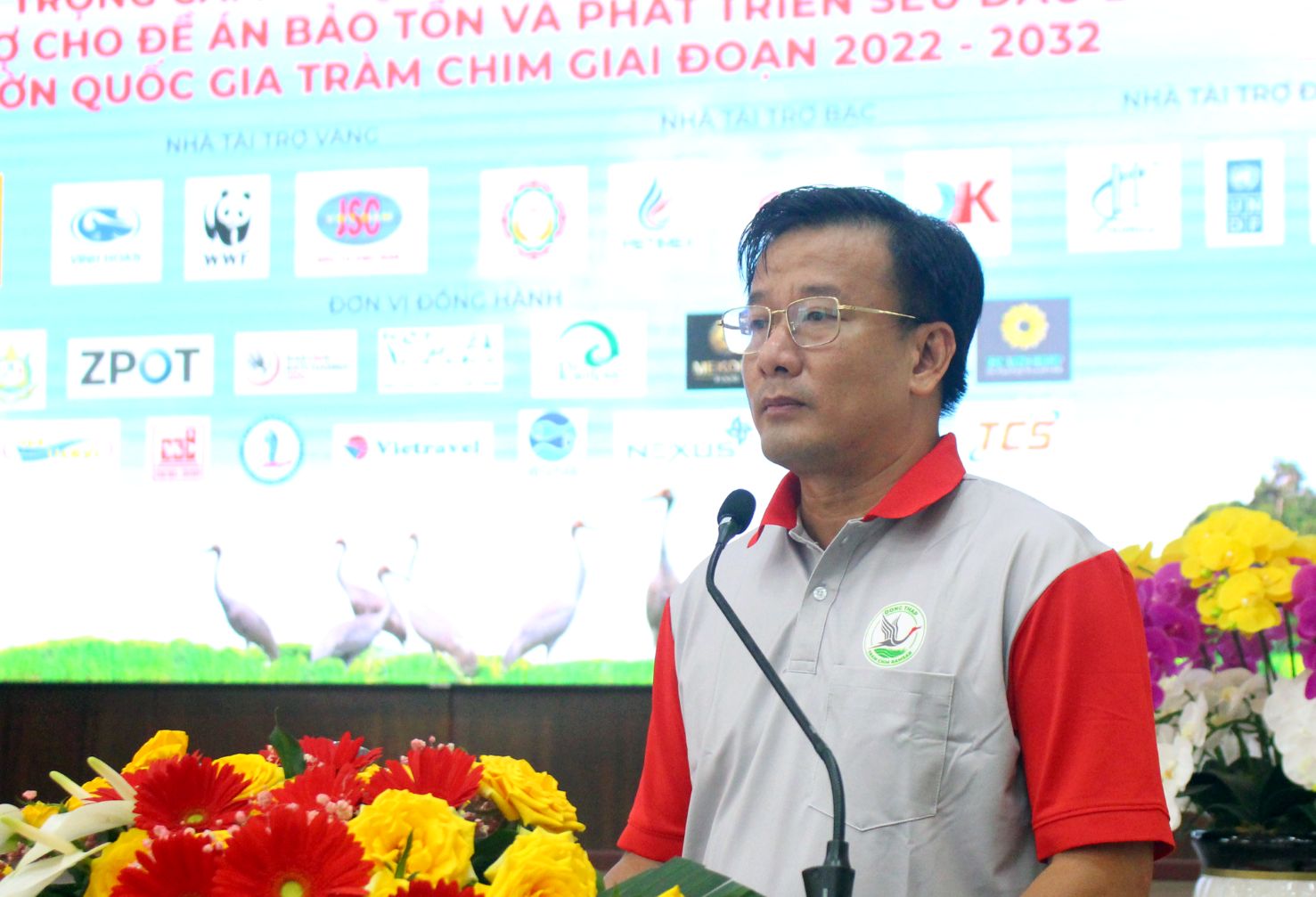
To achieve that goal, Dong Thap will continue to expand international cooperation, promote the role of scientists, businesses and the community in conservation work. "Each companionship, each contribution is precious bricks contributing to creating a safe and prosperous common home for red-crowned cranes," Mr. Nguyen Phuoc Thien shared.
To make Tram Chim the home of cranes again
According to Mr. Nguyen Van Lam, Tram Chim used to be a place where hundreds of red-crowned cranes returned every dry season. However, changes in ecological conditions have gradually made this symbolic bird disappear from the Dong Thap Muoi wetlands. Therefore, the goal of the Project is not only to bring more cranes from Thailand to raise.
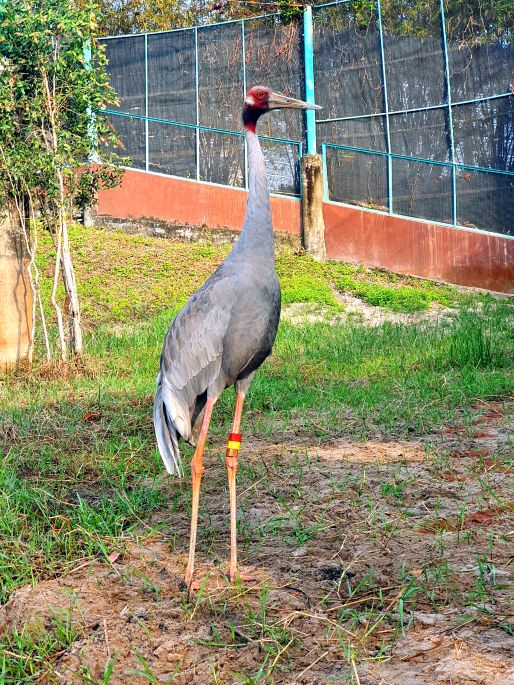
Dong Thap's goal is to restore the entire Tram Chim ecosystem, from green meadows, food sources, hydrological regimes to a suitable living environment so that cranes can grow, reproduce and gradually return to nature. The reception of 6 more red-crowned cranes this time not only extends the conservation cooperation program between Vietnam and Thailand but also opens up more hope for the day Tram Chim will once again become the home of the symbolic bird.


