
At the press conference in April 2026 held on April 24, representatives of the Department of Agriculture and Environment of Dong Thap province said that in 2026, saltwater intrusion in the area will be about 15 days later than the multi-year average and about 20 days later than in 2025. According to monitoring data, the salinity on the Tien River after reaching a peak of 0.45 g/l in mid-February 2026 has gradually decreased, then increased again according to the high tide period at the beginning of March of the lunar calendar.
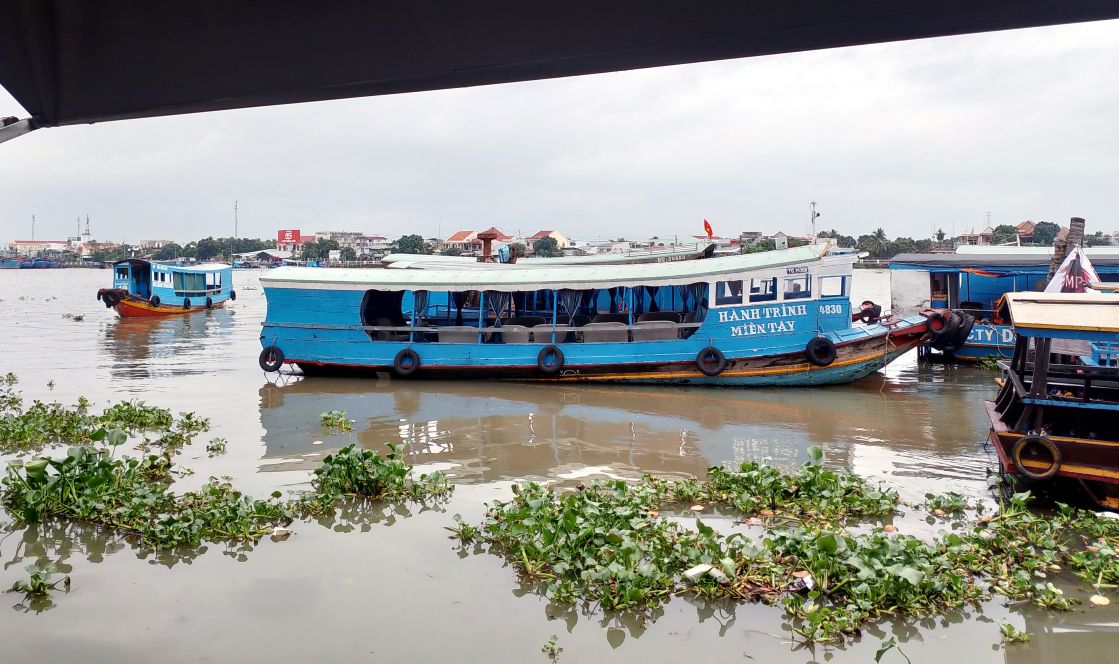
By April 21, 2026, the highest salinity measured in the area 49 km from the estuary is 0.50 g/l - equivalent to the same period in 2025 but much lower than severe drought and salinity years such as 2020 and 2016. Faced with this development, the agricultural sector has proactively advised the Provincial People's Committee to issue many directing documents, and at the same time coordinated with localities to inspect and implement response solutions in key areas.
Construction solutions are operated flexibly, including a system of drainage culverts to prevent saltwater intrusion, dredge and store water for production.
For domestic water, the sector has opened 9 free water taps in difficult areas, and at the same time operated 10 backup wells, providing hundreds of thousands of cubic meters of water to people. The Department also maintains close monitoring of saltwater levels on main river routes, promptly informing people to proactively produce.
Up to now, saltwater intrusion in Dong Thap province is assessed at a level lower than the multi-year average, and has not affected agricultural production and people's lives. Key areas such as the freshwater area of Go Cong, Phu Thanh - Phu Dong are still safely protected, ensuring water resources according to plan.


