Burning copper after harvest and the consequences of dense red spots on satellite maps

Thanh Mai |

Burning fields or burning straw immediately after harvesting not only causes waste of resources but also causes loss of soil nutrients.

Risk of recurrence of old customs

In recent days, many agricultural experts in the Mekong Delta region have expressed concern about the risk of outbreaks of field burning. M.A. Nguyen Phuoc Tuyen, former Director of the Dong Thap Provincial Agricultural Extension Center, shared that data from the fire monitoring system in late March and early April 2026 of NASA (US National Aeronautics and Space Administration) sent a warning signal: thousands of fire points appear densely in Southeast Asia.
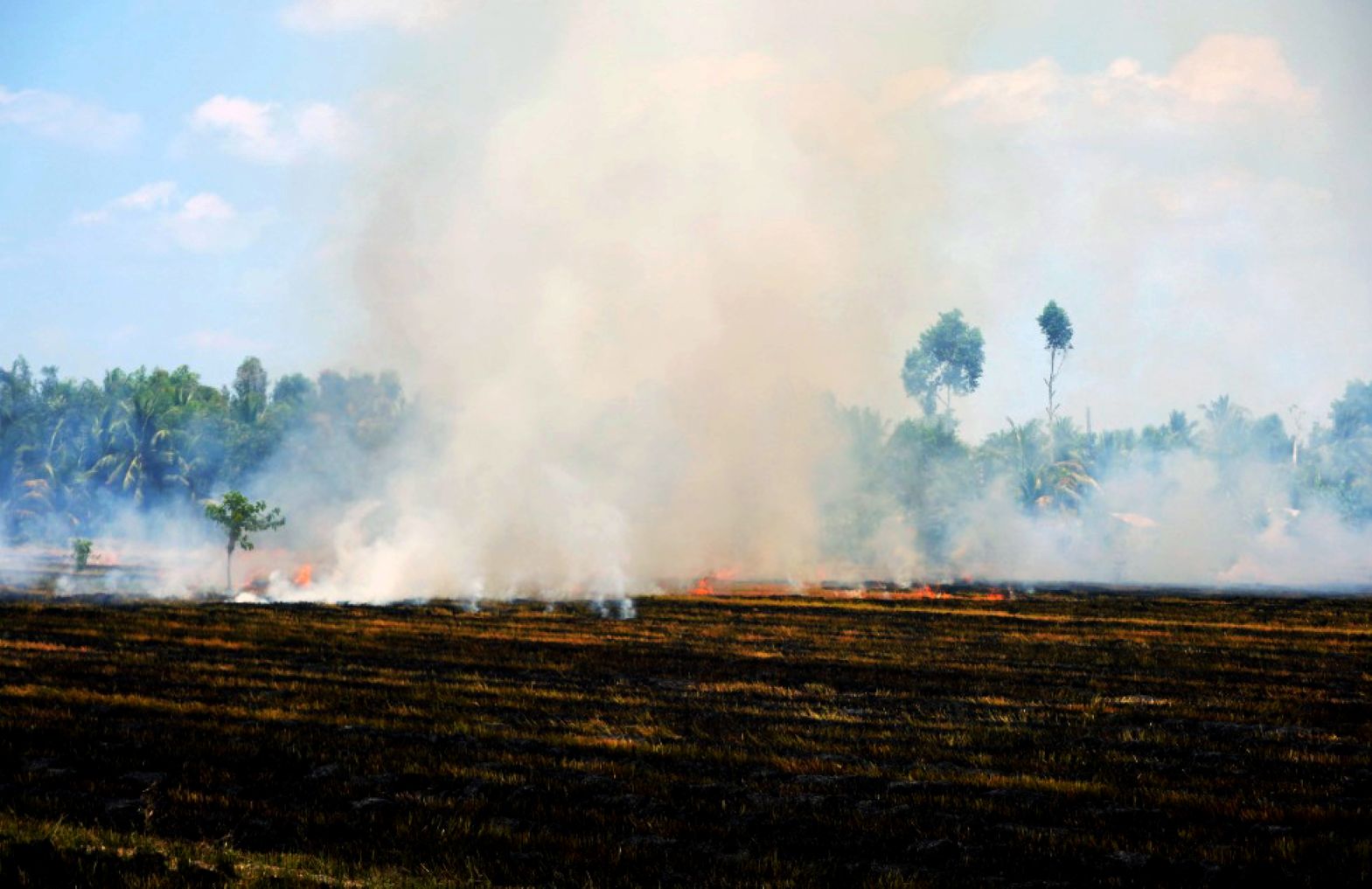
Thời điểm này, việc đốt đồng đang xảy ra phổ biến tại nhiều địa phương. Ảnh: Tạ Quang
At this time, burning copper is common in many localities. Photo: Ta Quang

Especially in the Mekong Delta region - the rice granary of the whole country - dense red spots on satellite maps show that the practice of burning straw after harvest is booming. Many farmers see this as a quick way to clean up fields and "burn ash" for the soil. However, according to agricultural experts, this is synonymous with "burning money" because of the huge waste of resources.
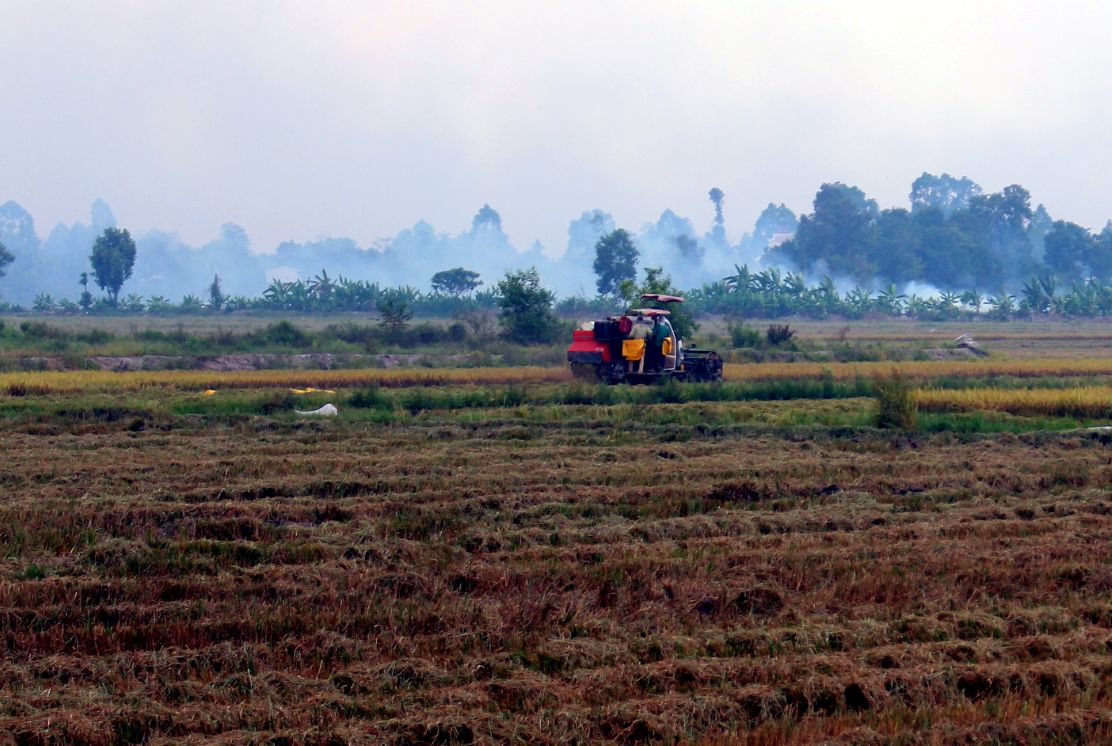
Thậm chí, việc đốt đồng còn được thực hiện đan xen quanh các thửa ruộng đang thu hoạch. Ảnh: Thanh Mai
Field burning is also carried out interspersed around the rice fields being harvested. Photo: Thanh Mai

According to MSc Tuyen, straw is inherently a rich organic source, containing many nutrients necessary for the soil. When burned, the entire amount of nutrients turns into ash that cannot return to nurture crops, but also releases toxic gases into the environment. In other words, each field burning season is a time when farmers personally lose a source of "free fertilizer" worth millions of VND on their own fields.

Moreover, the high temperature from burning also destroys beneficial microbial ecosystems in the soil. This is the "living machine" that helps to break down organic matter, maintain porosity and natural fertility. When the microbial system is broken, the soil becomes stiff and decayed - leading to a decrease in yield and increasing costs of chemical fertilizers. A vicious circle is formed, making farmers increasingly dependent on input materials.
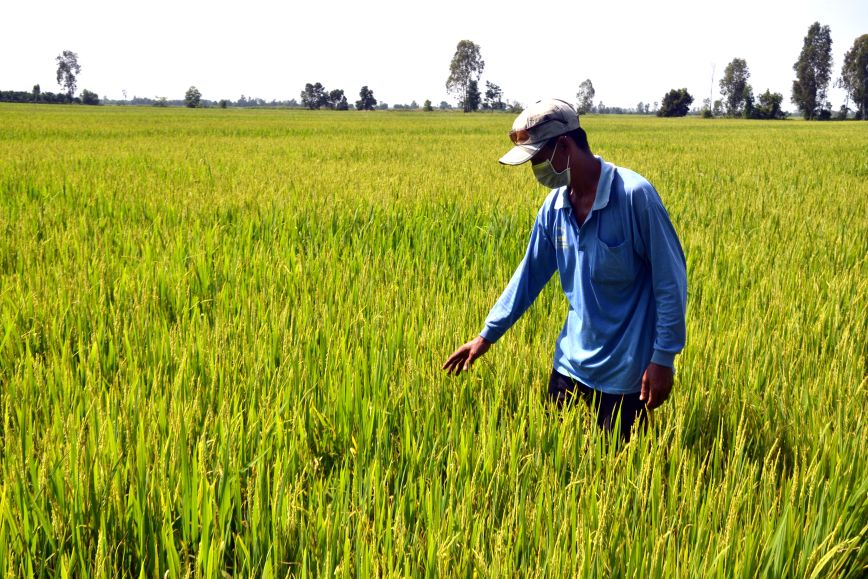
Nếu được điều chỉnh kịp thời nạn đốt đồng, sẽ là cơ hội để nhà nông biến phế phẩm thành cơ hội bù đắp lợi nhuận từ áp lực giá nhiều mặt hàng vật tư nông nghiệp tăng vọt. Ảnh: Thanh Mai
If the burning of fields is adjusted in time, it will be an opportunity for farmers to turn waste products into opportunities to compensate for profits from the price pressure of many agricultural supplies. Photo: Thanh Mai

From an environmental perspective, the consequences are even more obvious. Smoke from burning copper contains a large amount of PM2.5 fine dust and toxic gases, directly affecting human health, especially respiratory diseases. This amount of emissions also contributes to increasing the greenhouse effect, promoting climate change - an issue that the Mekong Delta itself is facing fiercely.

Lessons from Thailand

Many countries in the region have soon changed their approach to post-harvest straw. M.A. Nguyen Phuoc Tuyen said that in Thailand, the agricultural extension agency has implemented a series of solutions to turn straw into an economically valuable resource. Instead of burning it, straw is plowed to return nutrients to the soil, composted into organic microbial fertilizer, used as animal feed or as a moisture-retaining coating material.
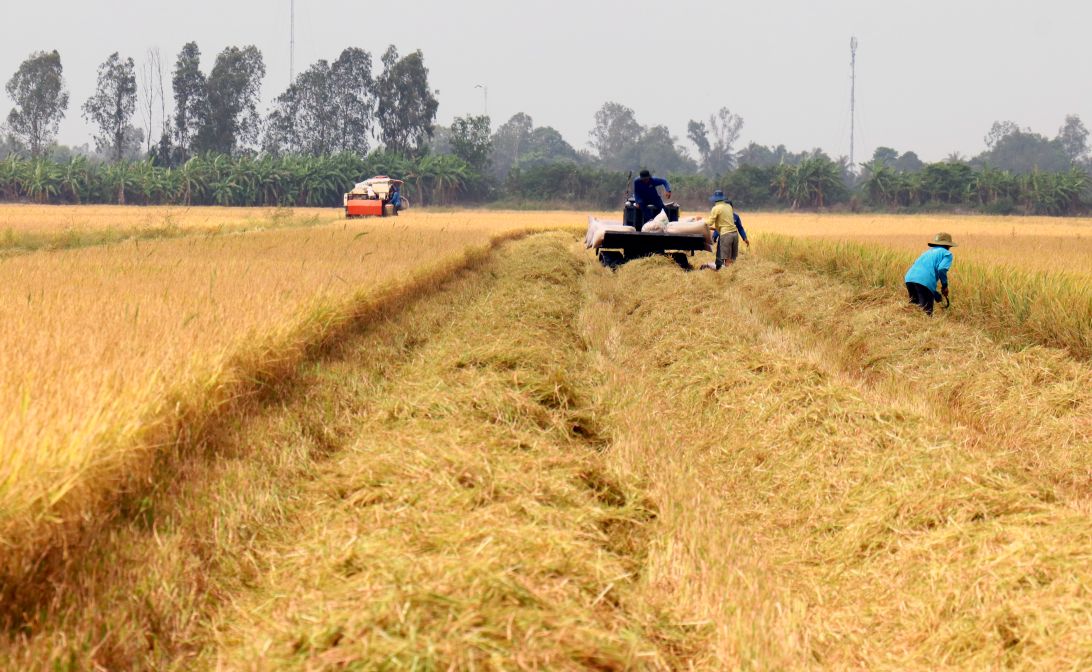
Đồng bằng sông Cửu Long đang vào cao điểm thu hoạch lúa. Ảnh: Thanh Mai
The Mekong Delta is entering the peak rice harvest season. Photo: Thanh Mai

Many innovative models have brought clear results: producing biochargen (biochargen) to help improve barren soil; growing straw mushrooms to create additional stable income; collecting and pressing straw into bundles for commercialization; or processing it into environmentally friendly products such as plant pots, handicrafts, and building materials. These directions not only reduce production costs but also open up new value chains for agriculture.

The Mekong Delta is entering the peak harvest season, farmers can completely take advantage of this opportunity to transform the "burden" of increasing input costs into an "opportunity" to consolidate and expand profits.
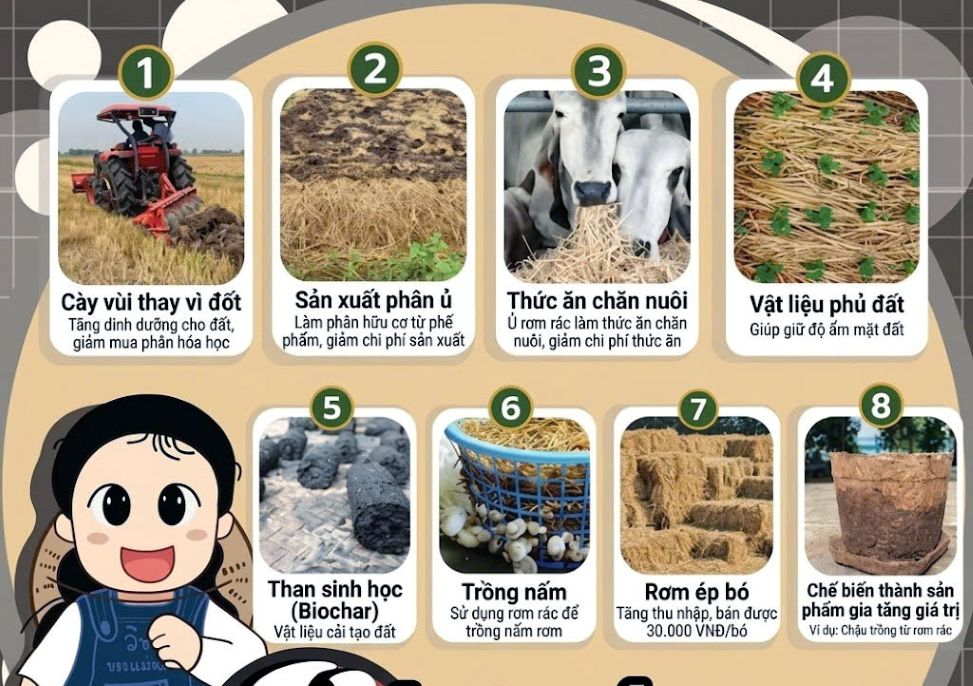
8 cách biến tấu rơm rạ thành vật có giá trị kinh tế ở Thái Lan. Ảnh: Tư liệu Nguyễn Phước Tuyên
8 ways to turn straw into economically valuable items in Thailand. Photo: Materials Master Nguyen Phuoc Tuyen

It is not only selling straw and growing mushrooms, but also improving the natural soil, directly reducing fertilizer costs and making the living environment healthier. Looking at the "hot spots" on today's satellite map, it is not difficult to recognize that it is not only a sign of straw fire, but also a warning about an unsustainable agriculture. It is time to change thinking: straw is not something to be discarded, but a precious resource.

Don't let the fields after harvest season only have tearful white smoke left. Let straw return to nurture the motherland, or become valuable products - thereby creating a green, clean and sustainable agriculture for the future.

Thanh Mai
RELATED NEWS

Rampant burning of copper, threatening traffic safety and people's health

|

Can Tho - The rampant burning of copper causes thick smoke, obscuring visibility, threatening traffic safety and people's lives.

Male student's body found right where the accident occurred at Quy Nhon beach

|

Gia Lai - After more than 1 day of mobilizing many forces to search unsuccessfully, the body of a male student missing while swimming in Quy Nhon beach was found in the exact location of the accident.

Removing land bottlenecks, Hung Luan foam project awaits launch day

|

Nghe An - The removal of land obstacles at the Hung Luan foam factory project has positive signals when the locality issued an additional conclusion on the origin of land.

Serbia identifies suspect in plot to bomb gas pipeline to Hungary

|

Serbia identifies a foreign citizen plotting to bomb a gas pipeline connecting to Hungary.

Woman in Da Nang crosses barrier, assaults 2 railway workers

|

Da Nang - A woman intentionally crossed a barrier while a train was rushing in. When reminded, this person also assaulted 2 female barrier guards.

Non-specialized commune-level workers seek new directions before May 31st

|

Before the deadline of May 31, many non-specialized commune-level workers left their positions and began their journey to find new jobs.

Stock market seeks balance when VN-Index adjusts

|

VN-Index adjusts, market is strongly differentiated. However, analysts assess that the market still has many bright spots and positive prospects in the long term.

Ambiguous confirmation of whether teachers of Song Hong Intermediate School are civil servants or laborers

|

Phu Tho - According to a report by Phu Tho Vocational College, one of the difficulties in merging Song Hong Intermediate School is the difficulty in identifying whether the 29 officials of this school are civil servants or employees.

Rampant burning of copper, threatening traffic safety and people's health

Tạ Quang |

Can Tho - The rampant burning of copper causes thick smoke, obscuring visibility, threatening traffic safety and people's lives.

Không còn đốt đồng, nông dân miền Tây tận dụng rơm rạ kiếm ra tiền

MỸ LY |

Sau thu hoạch vụ lúa hè thu, thay vì đốt đồng, nhiều bà con nông dân miền Tây tận dụng nguồn rơm rạ sẵn có kiếm thêm thu nhập bằng việc bán rơm cuộn hoặc phục vụ sản xuất.

Đốt đồng gây khói mù mịt, phủ trắng cả tuyến đường ở Cần Thơ

YẾN PHƯƠNG - TẠ QUANG |

Cần Thơ - Người dân đốt đồng hai bên Đường tỉnh 922 gây khói mù mịt, ảnh hưởng đến việc di chuyển của các phương tiện tham gia giao thông. Đây là tuyến đường có mật độ giao thông cao, nhiều xe trọng tải lớn qua lại.