
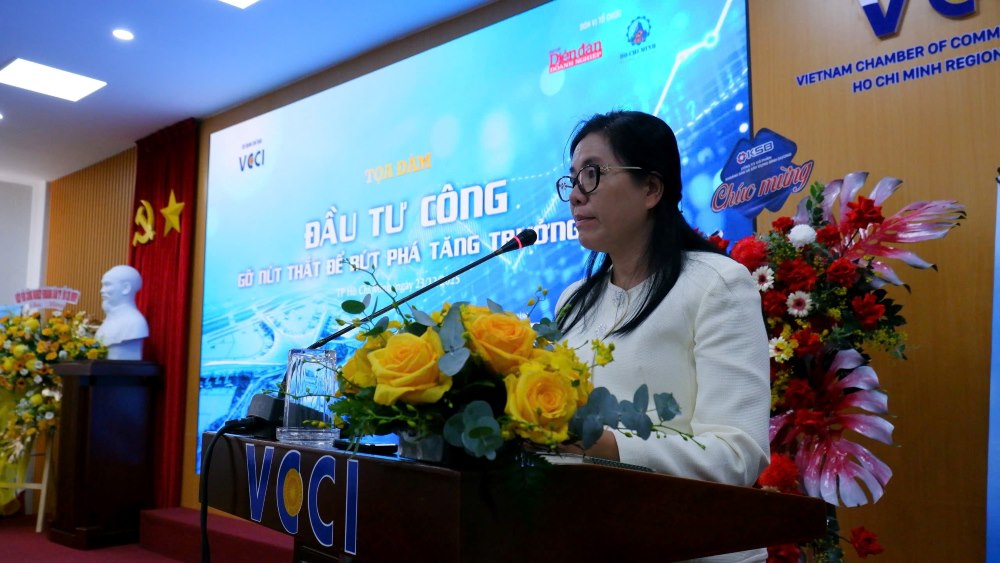
At the seminar "public investment - removing bottlenecks to break through growth in 2026" held on December 23 in Ho Chi Minh City, many leaders, experts, and business representatives shared about removing public investment bottlenecks to develop the economy by 2026.
HCMC strives to solve the problem of supply-demand imbalance
At the seminar, the picture of the supply of construction materials was carefully analyzed by Mr. Phan Tan Dat - Chairman of the Ho Chi Minh City Mineral Industry Association. He pointed out a notable shortcoming in the key economic region of the South, although the planned reserves of construction stone resources are very large, the actual exploitation capacity is not commensurate with the potential.

Specifically, according to Mr. Dat, while the actual demand of Ho Chi Minh City each year ranges from 25 - 28 million m3 of construction stone, the total licensed capacity is currently only about 17 million m3. This large gap between supply and demand is creating a lot of pressure on the market.
The pressure on materials becomes even more urgent as we move into the 2026-2030 period. Ms. Nguyen Ngoc Thuy - Deputy Director of the Department of Agriculture and Environment of Ho Chi Minh City said that the city is actively preparing for a series of strategic infrastructure projects such as Ring Road 4, Ho Chi Minh City - Moc Bai Expressway, expanding Ho Chi Minh City - Long Thanh, Trung Luong Expressway and metro line No. 2.
In the context of the exploitation capacity at many mines approaching the limit, the Department of Agriculture and Environment of Ho Chi Minh City has proactively implemented solutions in the spirit of Resolution 66.4 of the Government. Ms. Thuy said that instead of waiting, the Department has organized many thematic meetings, working directly with investors, contractors and mine owners to review and connect needs in each specific stage.
Thanks to this initiative, Ho Chi Minh City has promptly increased the exploitation capacity of two large quarries, Thuong Tan III and Nui Do, adding nearly 700,000 m3 of materials. This amount of material plays an important role in ensuring the progress of about 20 key projects in 2025. Ms. Thuy affirmed that in the coming time, the city will continue to closely coordinate to manage material resources associated with actual progress, ensuring sustainable growth goals.
In the Mekong Delta area, Mr. Nguyen Van Hoa - Vice Chairman of the People's Committee of Can Tho City said that the locality is also making efforts to implement nearly 200 large and small projects. To remove difficulties in landfill sand sources, Mr. Hoa recommended that ministries and branches soon issue specific standards for the use of sea sand and have solutions to allocate reasonable material sources between localities in the region.
Identifying implementation bottlenecks to unblock capital flows
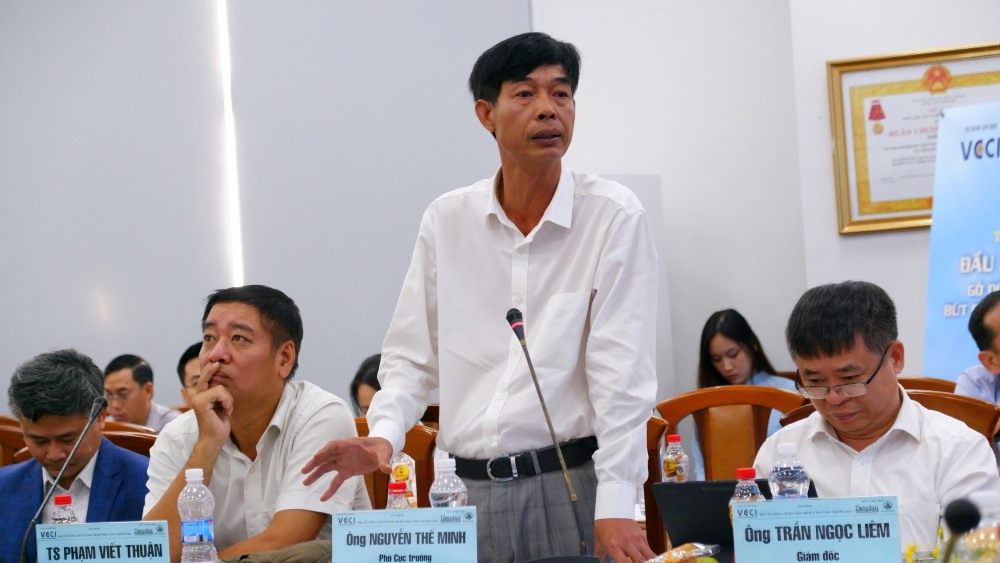
Regarding the underlying cause, Mr. Nguyen The Minh - Deputy Director of the Department of Economics - Construction Investment Management (Ministry of Construction) commented: The current bottleneck is mainly in the implementation stage. Although the amended Land Law has removed the biggest bottleneck in mine site, the lack of coordination in localities still causes many projects to slow down.
He cited that the Can Tho - Ca Mau expressway took nearly a year to have its first sand mine due to prolonged procedures. Therefore, Mr. Minh warned localities to absolutely not "ghost" additional sub-licenses or apply cumbersome procedures such as granting licenses each year, forcing contractors to extend them. These redundant procedures can "take" more valuable time for the project. To make a breakthrough in 2026, he proposed that an inter-regional resource sharing mechanism and material price announcement close to the market be needed.


