
Hardships of making a living outdoors
For direct outdoor workers, hot weather is a cause of rapid exhaustion. The nature of work requiring continuous movement makes it difficult for them to find a place to rest and avoid the sun.
With a working shift lasting from 5 am to 2 pm, Ms. Ngo Ngoc Quyen (environmental sanitation worker in Hanoi City) has to expose herself for 6-7 consecutive hours on the street to collect garbage and sweep the streets.
“Due to the nature of the work, we have to work continuously outdoors, cleaning the streets whether it's sunny or rainy. Working in the hot sun is of course much harder. The outdoor temperature can sometimes reach 40 degrees Celsius, the heat from the road surface rises, sometimes, I even feel dizzy and lightheaded,” Ms. Quyen shared.
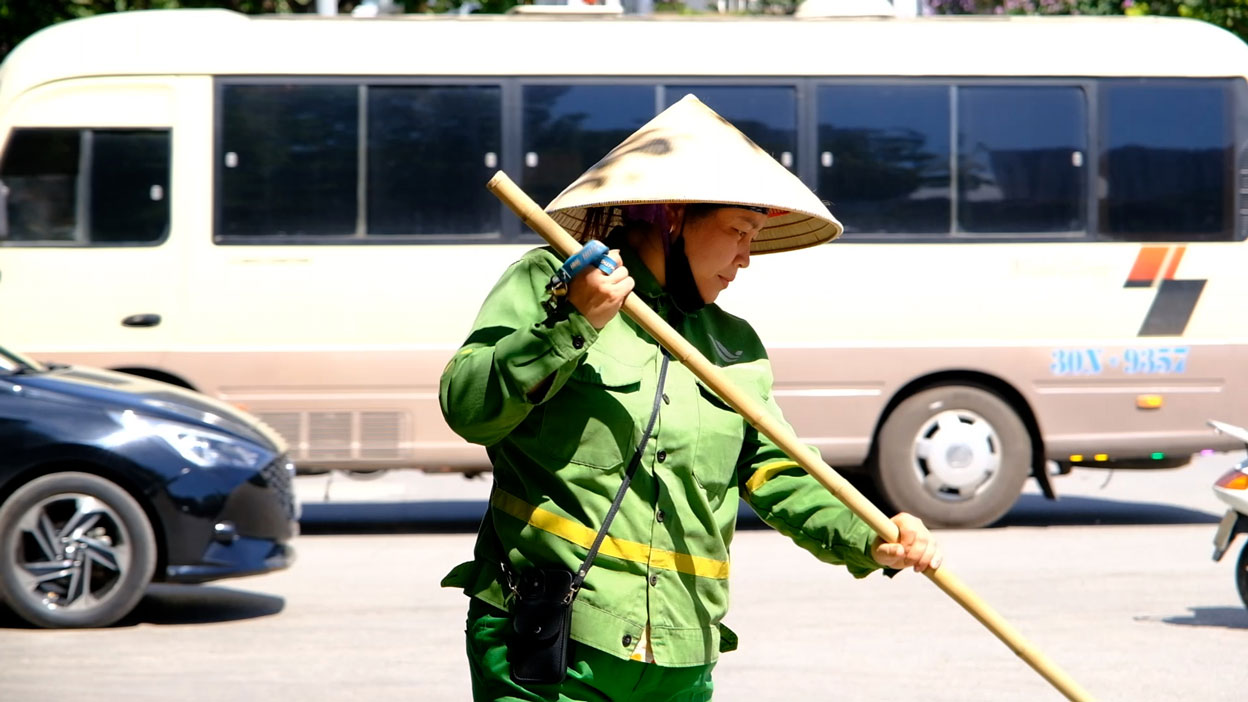
Sharing the same hardship, Ms. Nguyen Thi Mai (environmental sanitation worker in Hanoi City) confided that she has to work about 7.5 hours a day outdoors. Constantly moving in the sun makes the body inevitably tired.
Prolonged hot weather increases work pressure, even some days I once intended to take a day off to rest," Ms. Mai said.
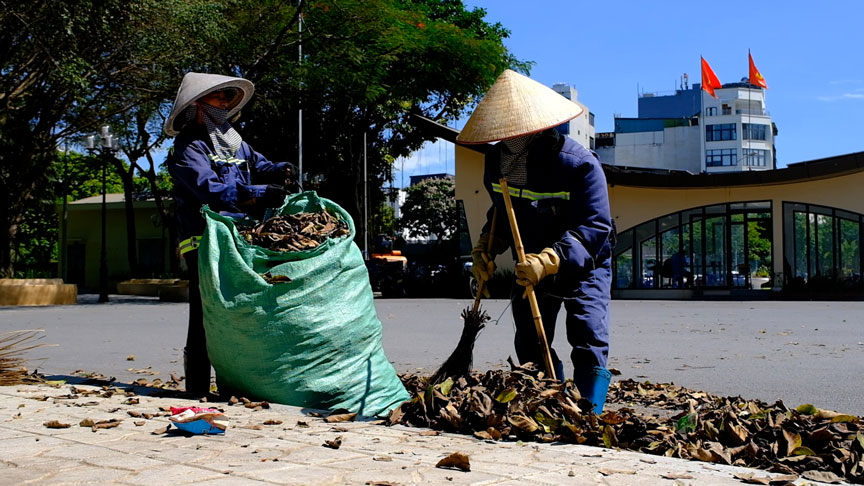
With 8 hours of working outdoors every day, Mr. Nguyen Duy Hien's (environment worker in Hanoi City) work of maintaining and caring for green trees is quite difficult when the weather is hot.
“Having done this job for many years, I am too familiar with harsh weather, so I try to resist by taking sun protection measures. However, many colleagues are tired and get sunstroke, especially new people who do not have much experience,” Mr. Hien said.
Active adaptation
To stick with the profession and protect themselves from the risk of heat shock, environmental workers have proactively sought many flexible solutions.
Ms. Quyen said that instead of starting the shift at 5 am as usual, in recent days, female workers and colleagues have taken advantage of getting up earlier. Therefore, from 3 am to 3:30 am, she has gone out to work.
Not only avoiding hot peak hours, but going to work earlier, the roads are also clearer, sweeping quickly and much less tired," Ms. Quyen said.
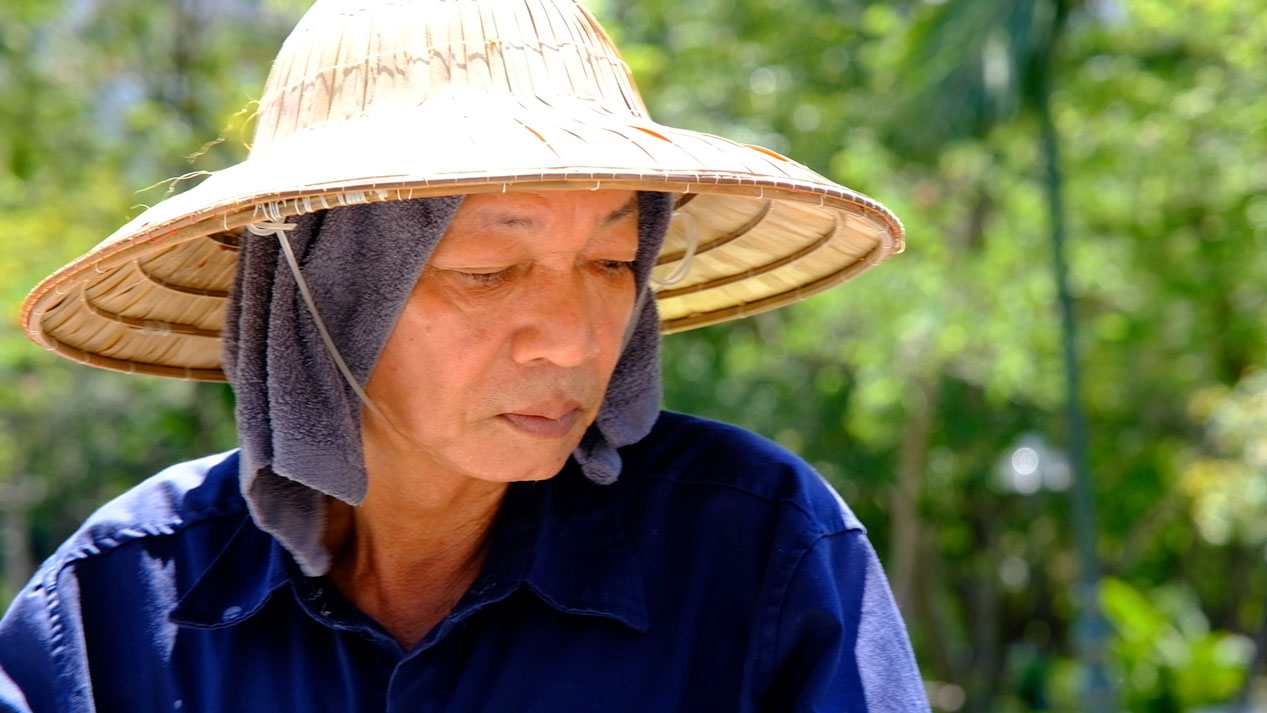
Similarly, on hot sunny days, Mr. Hien and his colleagues are also supported by the company to rearrange working hours. Accordingly, workers can go to work earlier, and return home at the end of the hour, helping to avoid hot weather, especially during peak hours.
Mr. Hien also equipped himself with a hat, jacket and wrapped a scarf to protect his body from the scorching sun. Notably, instead of expensive electrolyte drinks, this worker made drinks himself from lemon salt and sugar to quench his thirst.
Never experiencing heat shock or dehydration thanks to her proactive response experience, Ms. Mai regularly finds shade to rest and replenish water as soon as her body is tired. Her daily work clothes, besides hats and jackets, also include a wet towel to reduce the outdoor heat.
According to the National Center for Hydro-Meteorological Forecasting, hot weather in the North is likely to last until around May 27. From May 28, hot weather in the North will gradually subside. Due to the influence of hot weather, intense and especially intense hot weather combined with reduced humidity in the air, there is a high risk of fires and explosions in residential areas due to increased electricity demand and the risk of forest fires. In addition, hot weather can also cause dehydration for the human body when exposed to high temperatures for a long time.


