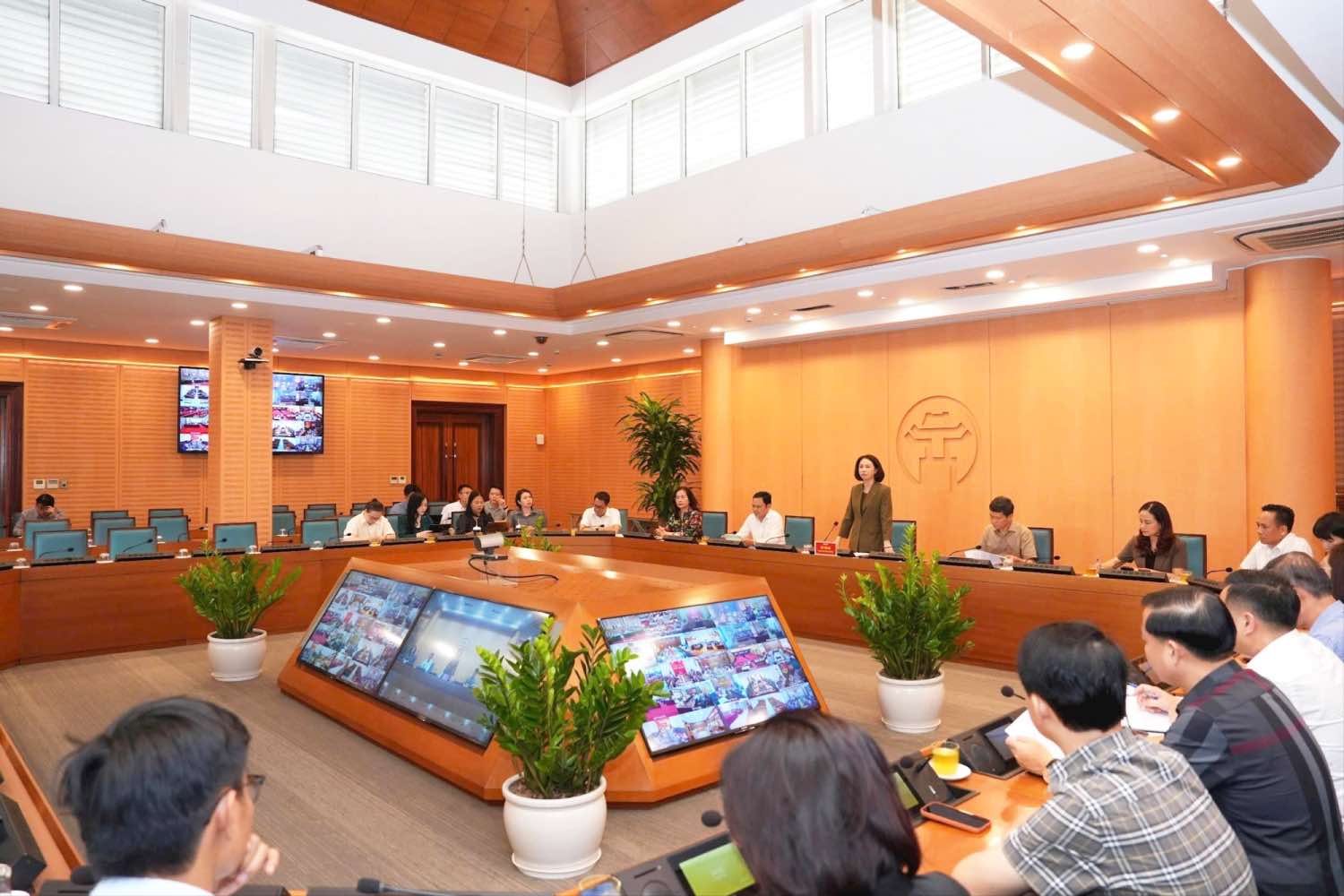
On April 15, Hanoi City People's Committee held a direct meeting combined with an online meeting, assessing the results of overcoming "bottlenecks" in food safety (ATTP) and deploying the "Mess of Action for Food Safety" in 2026. Vice Chairman of the City People's Committee Vu Thu Ha, Standing Deputy Head of the City Food Safety Work Steering Committee chaired the meeting.
Reporting at the meeting, Deputy Director of Hanoi Department of Health Vu Cao Cuong affirmed that after a drastic implementation process in the past time, food safety management in the Capital has had strong changes.
The most notable is the results in slaughter control and elimination of "makeshift markets". To date, 173/231 business locations encroaching on roads and sidewalks have been cleared (reaching a rate of 75%). In the livestock sector, the city has reduced 101 small-scale slaughterhouses that do not ensure hygiene.
The City Police have prosecuted 5 cases with 10 defendants related to the crime of producing and trading counterfeit food, creating a great deterrent against illegal business subjects.
To fundamentally solve "bottleneck points", Hanoi plans to pilot the installation of a system of 100 AI cameras at "hot spots" such as centralized slaughterhouses, wholesale markets and street food streets. This system not only monitors 24/7 but also has the ability to automatically identify violations, helping functional forces handle them accurately and promptly.
At the same time, the city will promote the scanning of static QR codes at people's market stalls and operate branch No. 8 on switchboard 1022 to receive feedback from people. In particular, the project to build an international standard food testing center in Ha Dong ward with an estimated cost of 312 billion VND is considered the "key" to improve the food quality monitoring capacity of the Capital.
Concluding at the meeting, Vice Chairman of the City People's Committee Vu Thu Ha requested departments, branches, and localities to comprehensively review from the process, content, results, participating forces to implementation dossiers; ensure that every stage has data, evidence, and can be inspected and supervised at any time. In particular, it is necessary to create conditions for interested subjects, especially parents, to access information; menus and meals must be public, clearly compared, and absolutely not to let any obscurity occur.
Food production and business establishments must proactively install camera systems, connect monitoring; be ready to provide complete dossiers when there is an inspection team. Transparency from the assigned forces to the evaluation results must be clearly shown on dossiers and digital data. "Each unit must protect itself with transparency, ready to explain responsibilities when requested" - Comrade Vu Thu Ha emphasized.
The Vice Chairman of the City People's Committee requested to promote the application of information technology to ensure fairness and objectivity. All directives and inspection results, violations must be made public; cases that have been overcome and met the requirements also need to be recorded. The city will promptly commend, evaluate, and promote well-performing units; and at the same time seriously criticize localities that have committed serious violations.
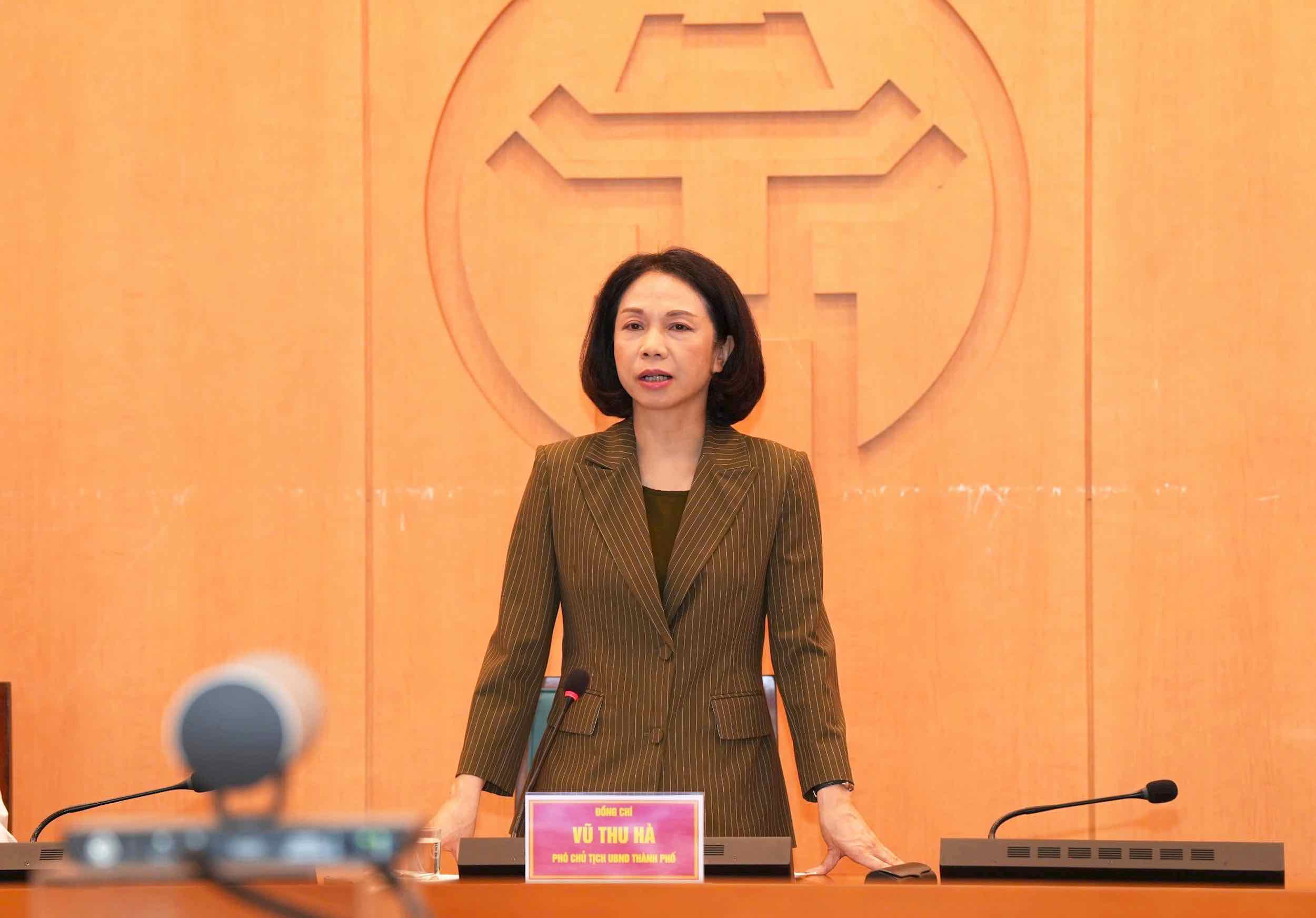
The Vice Chairman of the City People's Committee requested units to deploy food safety work in a friendly and close-to-people direction, avoiding bureaucratization, creating peace of mind for consumers.
The city will organize comprehensive inspection and evaluation, clarifying the implementation results after a month of action. On that basis, research and propose adjustments to mechanisms and policies; and at the same time replicate effective models, contributing to sustainable food safety control in the area.