
Deadlock from the "bottleneck" of waste treatment
In mid-March 2026, along Hoang Sa road (Nam Phuoc commune, Da Nang city), domestic waste is piled up in large piles along the road. When the sun rises, a strong stench creeps into each residential area. At the temporary gathering yard of My Phuoc village, garbage accumulates into "mountains", overlapping each other. It is estimated that the amount of accumulated garbage is about 250 tons, and there is no solution yet. This landfill is located next to the Thu Bon River, not only causing pollution but also threatening the water environment, directly affecting waterway tourism activities.
Mr. Tran Van Bao (My Phuoc village) said - this landfill existed before the Lunar New Year 2026. "Although it is more than 200m from the residential area, every time there is wind, the stench spreads everywhere. People are very worried about the river water being polluted," Mr. Bao said.
Not only Nam Phuoc, a similar situation occurred in a series of communes such as Duy Nghia, Duy Xuyen, Thu Bon.
According to reports from localities, the amount of remaining garbage has reached thousands of tons: Nam Phuoc about 702 tons, Thu Bon 650 tons, Duy Nghia 425 tons, Duy Xuyen 360 tons.
The main cause was identified starting from September 2025, when the Bac Quang Nam Solid Waste Treatment Plant - operated by Huy Hoang ECO Environment JSC - was forced to stop operating to serve the investigation of illegal landfilling of tens of thousands of tons of garbage.
The factory's "closure" caused all domestic waste in the area to have no place to be treated, forcing localities to set up temporary collection sites.
From October 2025, Da Nang City allows the transportation of garbage to Tam Nghia treatment area (Nui Thanh commune). However, the receiving capacity is limited, only about 42 tons are treated per day, while the actual amount of garbage generated is from 55 - 60 tons.
This difference makes accumulated waste increasingly large, especially after heavy rains at the end of 2025 and the Lunar New Year 2026.
Mr. Van Ba Quang - Vice Chairman of Nam Phuoc Commune People's Committee admitted - has promised people that after Tet, all garbage will be transferred, but so far it has not been done because there is no place to handle it. Currently, people are very upset.
Risk of widespread pollution
Not only causing unsightliness, temporary open landfills also pose a serious risk of environmental pollution.
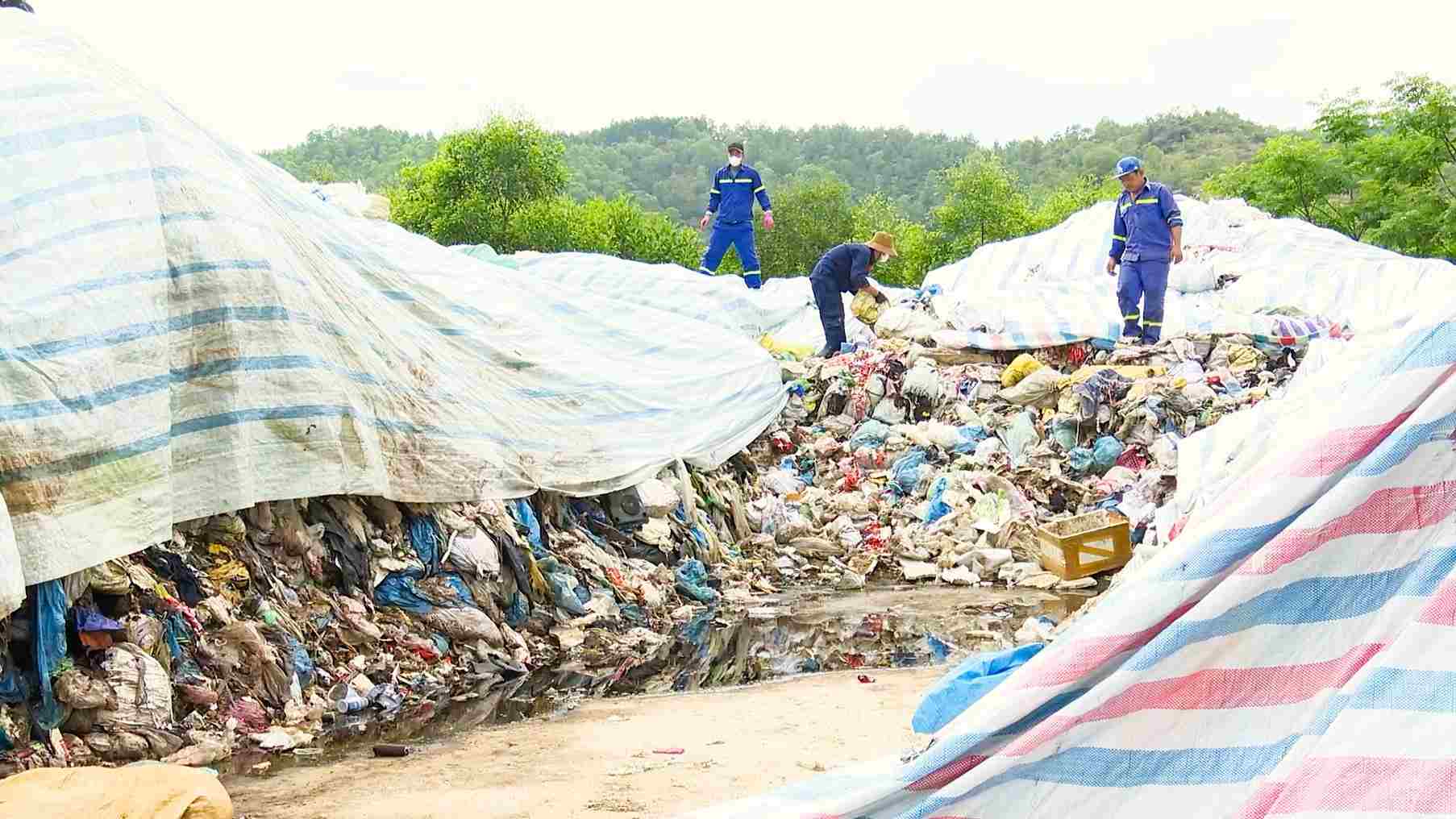
Mr. Dang Thanh Nhan - Head of the Economic Department of Duy Nghia commune - warned: "If not treated promptly, waste will directly affect water sources, air and people's health.
In Thu Bon commune, the amount of residual waste is more than 650 tons.The temporary collection points are all overloaded, generating odors and leachate.
According to Mr. Tran Minh Hai - Deputy Head of the Economic Department of Thu Bon commune, the locality has repeatedly proposed, but so far there has been no fundamental solution.
In fact, due to the overload at waste treatment plants, waste treatment currently in the southern Da Nang area is mainly still landfilling, which is both outdated and causes prolonged pollution.
From the perspective of the collection unit, Mr. Le Ba Cuong - Director of Duy Xuyen Xanh Environmental Cooperative - said that temporary landfills are open-pit landfills, so when it rains, water will seep in, combined with organic waste, creating a foul odor, widespread pollution...
After merging the boundaries, the pressure of waste pouring into Da Nang City is increasing, while the treatment infrastructure has not been expanded in time.
For decades, the problem of domestic waste has remained a "hot spot" of the city. Continuing to rely on landfilling is no longer suitable for the urban environmental orientation.
Localities have simultaneously sent documents to the Da Nang City People's Committee and the Department of Agriculture and Environment, requesting to soon have immediate solutions to clear accumulated waste, and at the same time build a sustainable waste treatment strategy.
If there are no timely solutions, the risk of environmental pollution - especially the water source of the Thu Bon River - will become increasingly present, directly affecting people's lives and the urban image.


