
The latest investigation results of the Provincial People's Committee show that soil pollution due to heavy metals is taking place on a large scale, concentrated in mineral exploitation, metallurgy and industrial production areas.
According to Decision No. 715/QD-UBND, the total surveyed area is 120.23 ha, of which 27.58 ha of land is polluted (22.94%) and 28.45 ha is near polluted. Pollution was recorded in 11/20 communes and wards, with many areas with serious levels of hazard.
Notably, major sources of pollution mainly come from mineral processing plants and mining activities and landfills. The factory area, production facilities and craft villages alone recorded 19.26 hectares of polluted land.
In which, the lead-zinc ore processing plant is the largest polluted point with 6.80 ha, the entire surveyed area is contaminated with heavy metals such as lead (Pb), cadmium (Cd), arsenic (As), zinc (Zn) and chromium (Cr).
Tay Giang ore production plant recorded 5.14 hectares of chromium-contaminated soil.
Cao Bang Iron and Steel Complex has 1.05 hectares of soil contaminated with chromium and 1.37 hectares of near-contaminated chromium, nickel (Ni); Nguyen Hue Feromanganium plant causes pollution of 0.97 hectares with lead content exceeding the threshold.
In Phuc Sen blacksmithing village, 3.81 hectares of land is near polluted with the presence of cadmium and zinc.
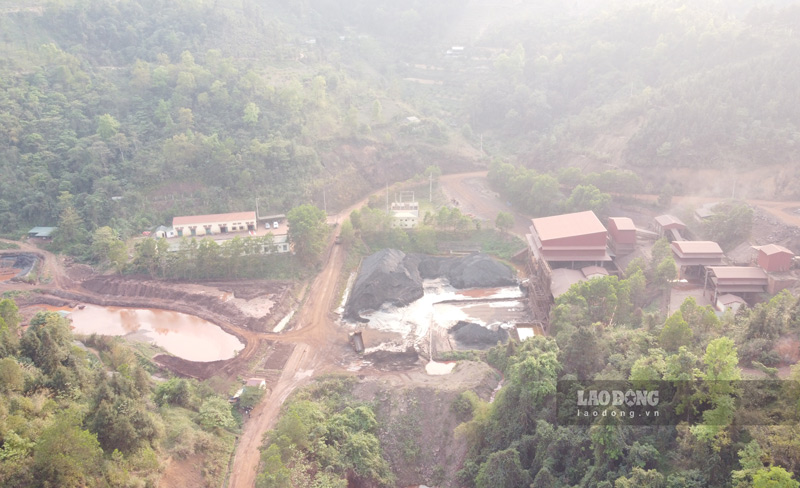
In addition, mineral exploitation activities also leave clear environmental consequences with 7.00 hectares of polluted land and 18.54 hectares of near-polluted land.
Ban Luoc - Ban Nung iron mine has 3.14 ha of soil contaminated with arsenic and chromium; Ban Bo lead-zinc mine recorded 1.98 ha of lead, arsenic and zinc contamination; Na Lung iron mine has 1.45 ha of chromium contamination; while the nickel - copper mine area (PC1 Group Joint Stock Company) has 0.77 ha of nickel-contaminated soil.
The Nuoc Hai town landfill also generated 0.98 ha of chromium-contaminated soil and 3.84 ha of near-contaminated soil.
Pollution is not only limited to industrial parks but has spread to agricultural production land.
The area of rice land polluted is up to 11.85 ha, at a serious dangerous level; other annual crop land has 9.28 ha polluted.
Some areas of production forest land and protection forests are also affected, showing the risk of widespread land environmental degradation.
Sample analysis results show that commonly occurring heavy metals include lead (Pb), cadmium (Cd), arsenic (As), copper (Cu), zinc (Zn), chromium (Cr), mercury (Hg) and nickel (Ni).
These are all highly toxic, difficult-to-decompose elements that can accumulate in the soil for a long time, penetrate the food chain and seriously affect human health as well as ecosystems.
Cao Bang Provincial People's Committee is assigning functional agencies to continue monitoring, supervising and developing plans to handle polluted areas, and at the same time requesting localities to strictly manage the affected land fund.
This reality poses an urgent requirement for controlling mining and metallurgy activities, as well as implementing environmental restoration solutions to limit long-term risks to production and people's lives.


