
When the Rong house is still there, culture will not be lost.
In recent years, weather and floods have damaged and degraded many communal houses and stilt houses of people in Gia Lai.
In July 2026, Gia Lai Provincial People's Council issued a Resolution stipulating policies to support the restoration of Gia Lai Gong Cultural Space in the period 2026-2030. Currently, the Provincial People's Committee has requested communes and wards in the area to statistically review and implement Resolution 86/2026/NQ-HĐND of the province.
Mr. Nguyen Van Anh - Secretary of the Party Committee of Ia Ly commune, Gia Lai said: "The commune government is holding a meeting to implement Resolution 86/2026/NQ-HDND of the province, reviewing and statistically analyzing damaged communal houses that need repair, new construction, and renovation in the area. The upgrading of communal houses for people's activities is both to serve tourists and to preserve traditional cultural space.
For indigenous people, Rong houses and stilt houses are cultural activity venues, places to propagate the policies and laws of the Party and the State to each household. Rong houses are also places where people perform sacred rituals such as celebrating new rice, gong festivals, xoang dance, culinary culture...
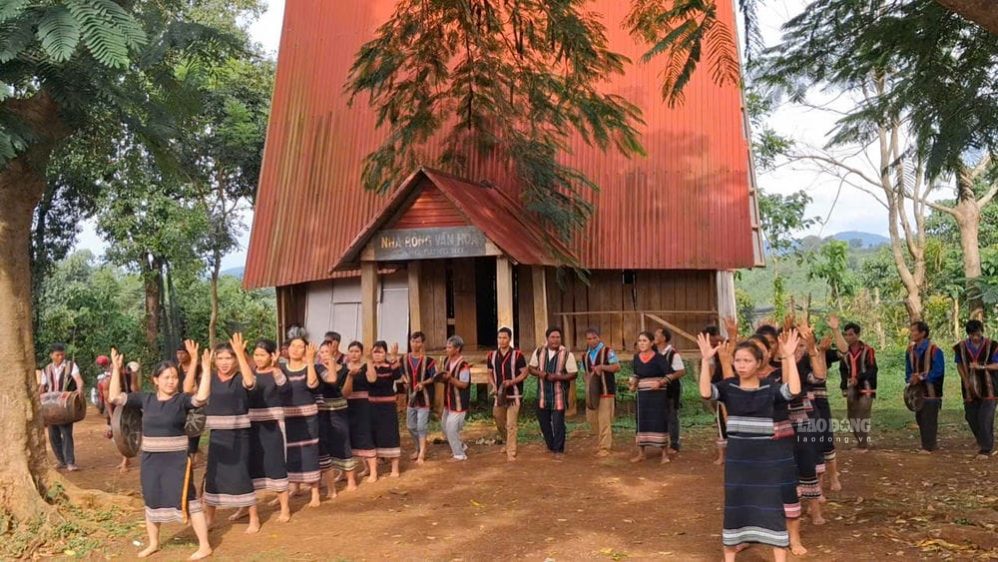
Therefore, the implementation and spread of the spirit of the Resolution helps local people to be excited, because the preservation of the Rong house means that the cultural beauty and spirit of community solidarity are preserved and not faded.
Mr. Pham Minh Chau - Deputy Secretary of the Party Committee, Chairman of Ia Khuol Commune People's Committee - said that the commune is reviewing all traditional Rong houses of the people to propose support according to Resolution 86/NQ-HDND of the province. However, Rong houses need to meet the set standards and criteria such as: being suitable for planning and land use plans; being suitable for the landscape and architecture around the area; meeting long-term conservation needs.
At the same time, the Rong house must be a frequent place to visit and participate in community activities of local people to preserve long-standing cultural features. The materials and architecture of the Rong house must be suitable for nature and tradition, meeting the criteria for appraisal and approval of the Commune People's Committee and functional sectors.
Along with the gong culture of the Central Highlands, which is an intangible cultural heritage of humanity recognized by UNESCO, the Rong house is currently an attractive tourist destination for many domestic and foreign tourists. There, human culture, land, ancient customs as well as the spirit of protecting homeland and villages of indigenous people are vividly expressed.
Sustainable tourism on a basis of diverse culture and identity
According to the content of Resolution 86/2026/NQ-HĐND of the province, the support includes the renovation and repair of traditional Rong houses of the Bahnar, Cham, Jrai ethnic groups and traditional communal stilt houses of the H're ethnic group in Gia Lai province.
For newly built projects, a maximum of 10 projects in the province will be supported each year, with a maximum support level of 70% of the project estimate value approved by competent authorities but not exceeding 1 billion VND/project/commune/ward.
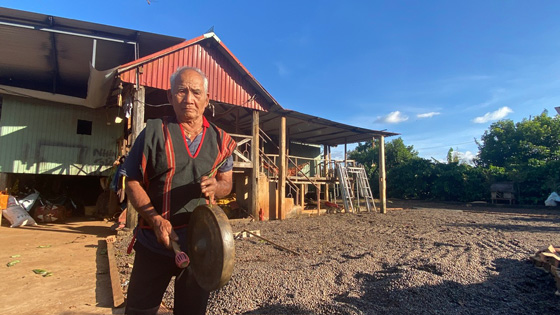
For repair projects, a maximum of 20 projects in the province will be supported each year, with a maximum support level of 500 million VND/project/commune/ward according to the estimate approved by competent authorities.
For repair works, the People's Committees of communes and wards must have a unified minutes of the residential community and the appraisal opinions of specialized cultural agencies as a basis for determining the estimate of support funds.
In case traditional communal stilt houses have received support from national target programs or other programs and projects using state budget, they are not supported according to Resolution 86.
Vice Chairman of Gia Lai Provincial People's Committee Nguyen Thi Thanh Lich affirmed: "Tourism development will truly become a key economic sector of the province, based on the advantages of the sea, mountain and forest ecology, natural lake system, Tay Nguyen cultural heritage, Champa culture, historical - revolutionary culture and unique landmarks.
The goal by 2030 is for Gia Lai to become a new tourism growth pole of the central coastal region, a green, safe, friendly and culturally rich destination”.
By 2030, Gia Lai strives to welcome 18.5 million visitors, including 1.1 million international visitors, with tourism revenue reaching about 45,500 billion VND. The province sets a target to attract investment in building 33,000 accommodation rooms, increasing the average length of stay to 3 days and training over 25,000 direct tourism workers.


