
Museum of gratitude, where memories take shape
The road leading to Nam Quat village, Phu Xuyen commune, Hanoi City is small and quiet, with houses and familiar fields of the Northern Delta region on both sides. No signs were chosen. Inside is a space containing heavy stories of the war, until the museum gate appears.
The Museum of Revolutionary Soldiers Imprisoned by the Enemy is located on a land area of more than 2,000 square meters. This is the land that Mr. Lam Van Bang's family gave gifts. Previously, this place was just a normal living garden. The change did not happen from a project plan but from the will of those who have gone through the war and carried unceasing memories.
The interior space is not like any museum according to modern symbols. Phu Quoc prison models, cages, and barriers are rebuilt with size and supervision details. Iron frames, barbed wire, rough cold walls... all create a heavy feeling, making people entering almost immediately change their pace.
In the barn simulation area, the space is cramped, light and dimly lit. The iron bars are classified enough to visualize the harsh detention conditions. Without a long explanation, the main image speaks for everything.
Mr. Lam Van Bang, the founder and current Director of the museum, directly leads visitors. His voice is not high, not emphasized, but each sentence is clear: "Independence and freedom do not come naturally. They must be exchanged for the blood and bones of many generations.
The saying is repeated many times in the lesson guide, not as a symbol, but as an essay drawn from personal experience. He was once imprisoned, endured attacks in the prison system. What is being recreated here is not imagination.
The museum was formed from a small traditional room, where veterans who were imprisoned met for five years. They carried memorabilia, recounted memories, and copied what had been experienced. It is impossible to gradually expand over time, as the number of items increases and the need to preserve them becomes clearer.
The entire land area was gifted to build a museum. Maintaining operations mainly relies on the contributions of old warriors and support from the community. There is no large investment, but the organization shows visibility and especially towards the goal: Preserving war memories directly and truthfully.
Artifacts and irreplaceable stories
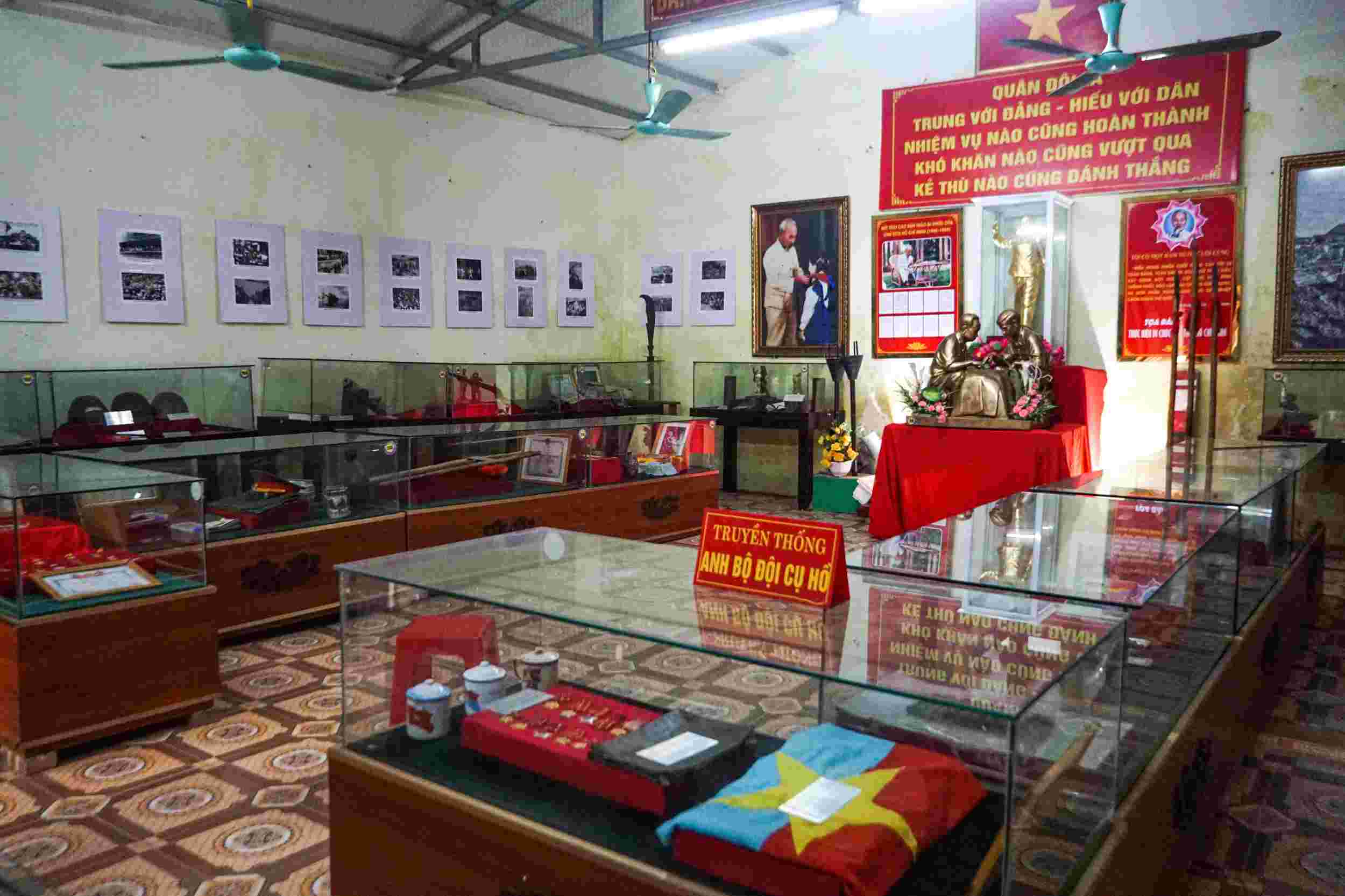
The artifacts are presented deeper inside, in a closed space, sufficiently bright.There are no glass cabinets, many items are placed at close range, enough to observe every detail.
Military uniforms, old briefcases, faded personal papers, rolled-out rubber sandals, familiar items from the war appear with high density.Their common point is not valuable materials, but a process they have gone through.
Many artifacts are found by veterans themselves from their comrades or families. There are cases where it takes many years of costumes to bring a museum keepsake. There are not few objects that are the only remains of a person who sacrificed or was lost after the war.
Display does not follow rigid classification but is associated with a specific story.Each object has a caption, but the important part lies in the direct storytelling from witnesses.
The museum's display content is arranged in 9 areas.
Before starting to visit, customers are guided to offer incense at the temple to the scholars who bravely sacrificed in Phu Quoc. The temple project symbolizes the soul of rivers and mountains, formed from the sacred land of the Phu Quoc archipelago.
In particular, the incense base in the incense bowl is also gathered from many historical sites such as Da Chong - Ba Vi, Truong Son cemetery, Dien Bien cemetery, Quang Tri ancient citadel, Ben Duoc Cu Chi... creating the convergence of the spirits. The idea of placing the god under the pointed water of an island in the middle of the ocean, while the bridge connecting to the gods can realize the harmony between yin and yang.
Room No. 2 preserves handwriting and documents about President Ho Chi Minh, the father of the nation, an outstanding leader, a world cultural figure, a revolutionary soldier who went through many years of imprisonment but still maintained his spirit. Here are displayed artifacts and documents such as the newspaper "People in Distress", "Diary in Prison", "Call for National Resistance", "Declaration of Independence", letters to the Communist International, to comrade Le Duan, to teachers of cultural supplementary education, and his thoughts on the cause of nurturing people.
Room No. 3 introduces images and artifacts associated with "Uncle Ho's Soldiers", from guard suits, backpacks, briefcases, bamboo sticks, machetes, berets, scarves, rubber sandals to images of soldiers "swinging along Truong Son to save the country", the spirit of "Determined to die for the Fatherland to live". Besides, there are also documents about the anti-American resistance war victories, images of enemy weapons such as Japanese swords, French bayonets, American helmets, bombs and bullets of all kinds. The room also displays many images of torture in the prison system, showing the brutality of the enemy, and at the same time depicting the resilience of revolutionary soldiers.
Rooms 4, 5 and 6 continue to reflect harsh forms of torture such as drilling teeth, breaking fingernails, hanging upside down, hooking eyes, burying alive, burning, imprisonment in "tiger cages" or cramped spaces in harsh conditions. Despite being brutally suppressed, the soldiers still maintained their fighting will, not succumbing to the enemy.
Room 7 introduces typical examples of revolutionary soldiers in Phu Quoc such as Truong Ba Ngai, Tran Van Viem, comrade Nghi and many others. They have endured many hardships but still resolutely refused to confess, even having sacrifices to protect their integrity. These images show the indomitable spirit, ready to fight to the end of revolutionary prisoners.
Room No. 8 displays documents related to the leadership activities of the Party Cell in prison, from Party flags, self-made Youth Union flags, living utensils, escape tools to improved items serving struggle and communication. There are also poetry collections and documents created by prisoners, reflecting the rich spiritual life and leadership role of the Party organization even in imprisonment conditions.
Room 9 introduces the noble qualities of revolutionary soldiers, showing the spirit of "dead but not useless" according to President Ho Chi Minh's teachings. This place records stories of solidarity, mutual help in difficult circumstances, as well as the efforts to rise up in life after the war of veterans. Many examples have participated in labor, production, contributing to the community and society, continuing to promote the tradition of "Uncle Ho's soldiers" in peacetime.
The Museum of Revolutionary Soldiers Captured and Imprisoned by the Enemy has welcomed many delegations of Party and State leaders, delegations from home and abroad, students and visitors to learn and research, contributing to educating patriotism and national pride.


