
Plan No. 56/KH-UBND dated March 30, 2022 of the People's Committee of Hoa Binh province sets a goal: 100% of extremely disadvantaged villages have access to legal information, 80% of prestigious people are trained - demonstrating a commitment not to let the law be on paper.
As a mountainous district with nearly 80% of the population being Muong, Lac Son has implemented the plan in many creative and practical forms. From the law bookcases located at the cultural house, to mobile broadcasting or propaganda by the fire, the law is conveyed in familiar language, making it easy for people to understand and follow.
In Ngoc Lau commune, instead of dry propaganda, the law is integrated into the cultural contest. The teams performed skits in Muong language, conveying the content of the Land Law, the Marriage and Family Law, and the Law on Prevention of Domestic Violence vividly and easily remembered.
In communes such as Tu Do and Van Nghia, the model of "Highland Law Day" is maintained periodically in the form of a combination of: distributing documents, oral propaganda and direct consultation. Participating in the propaganda are not only law enforcement officers, but also village chiefs, village elders, and prestigious people - those who, after being trained, become a bridge between the government and the people.
The whole district currently maintains 106 law bookcases in communes, schools, health stations, neighborhood cultural houses... The content of the document revolves around urgent topics: land, marriage, prevention of violence, children's rights... to help people easily access when needed.
Some localities also take advantage of social networks to spread legal content to young people, organize legal knowledge competitions at the market, and broadcast legal news in Muong language through the loudspeaker system. These methods are making the law available in daily life.
Not stopping at formative propaganda, legal education dissemination activities in Lac Son have created a clear change in awareness and behavior. People have begun to proactively apply the law to protect their rights, mediate conflicts, and limit prolonged disputes.
In Van Nghia commune, in 2024, the grassroots mediation team successfully handled more than 90% of arising cases, many cases were resolved thanks to the mobilization of prestigious people, based on specific legal regulations.
Youth have also become an active force in legal dissemination. The model "Youth Club with Law" at Tu Do Secondary School for Ethnic Minorities attracts dozens of students to participate, contributing to raising awareness of preventing school violence, child abuse and child abuse.
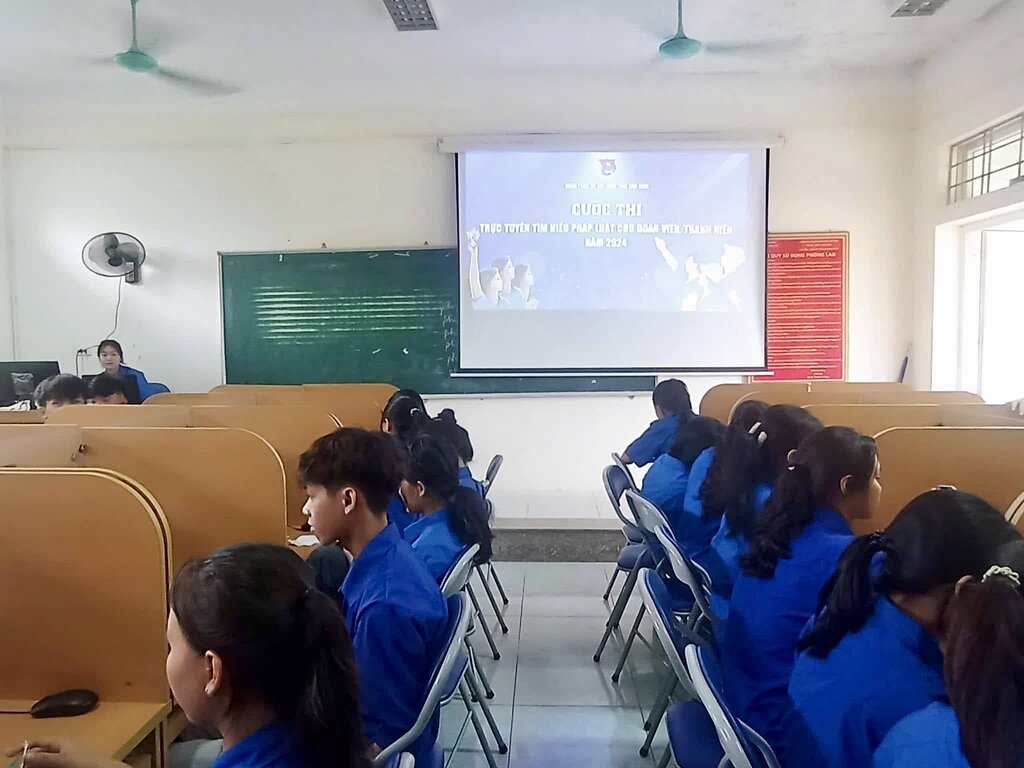
According to the assessment of the Lac Son District Justice Department, more and more people in remote areas are proactively coming to the Commune People's Committee to ask about land procedures, loans, property transfers... showing that legal awareness has improved significantly. The law is no longer a strange thing, but is becoming a part of the community life.
The most obvious effect is the change in behavior: instead of " following village rules", many villages have taken the law as the standard. The voice of the law does not only come from the government, but also from the people themselves.
From Lac Son's way of doing things, it can be seen that legal propaganda cannot be the sole responsibility of the judicial sector, but requires the participation of the entire political system. When every village chief, village chief, every union member, and teacher becomes an extension of the law, anywhere, even in the deep forest - discipline can be built with consensus and voluntariness.


