
The seller is masked, customers can only meet the shipper
In the days leading up to the Binh Ngo Lunar New Year 2026, when food consumption demand increases, the food market also enters the most complex phase of the year.
Inspection and sweeps by functional forces are continuously deployed, many batches of dirty food are detected, seized and destroyed.
However, behind those penalties figures, a worrying reality still silently exists when frozen food of unknown origin still finds its way into people's meals in more sophisticated ways.
On social networking platforms, a series of groups specializing in trading frozen food are operating rampantly, creating vibrant online markets as Tet approaches.
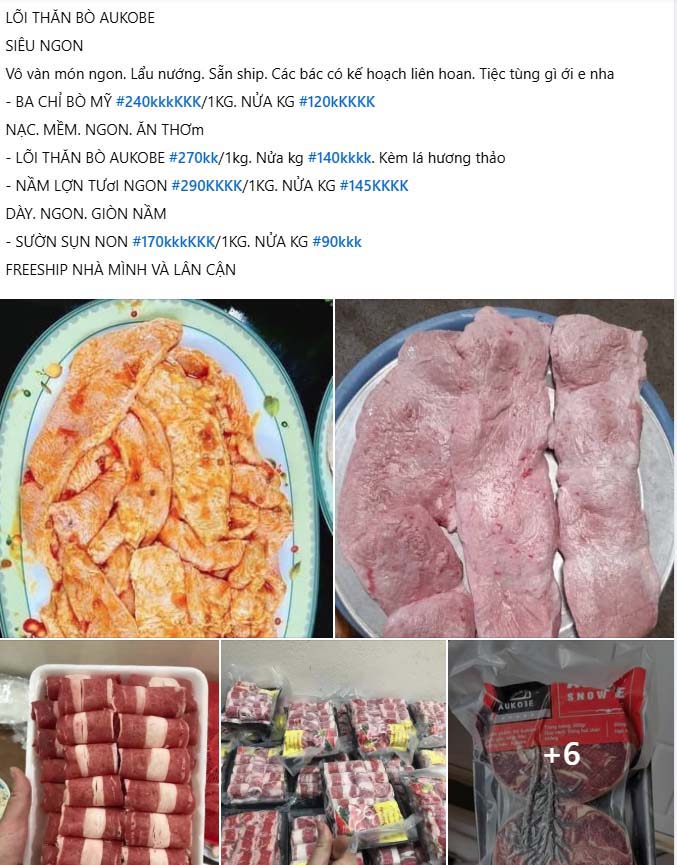
With just a few clicks, consumers can easily encounter attractive advertisements such as American beef sausage, Aukobe beef shank, fresh pork udders, imported young eggs... with surprisingly cheap prices.
American beef sausage is advertised for sale from only 240,000 VND/kg, Aukobe beef shank is about 270,000 VND/kg, "fresh" pork udder is priced at 290,000 VND/kg. These figures startle many people, because this price is significantly lower than the general level of the standard fresh meat market.
In the role of a consumer, Lao Dong Newspaper reporters contacted many business outlets through introductions. The common point easily noticeable is that all transactions take place completely online. Sellers do not have fixed stores, no clear and special addresses, and do not accept customers to see goods directly.
Our goods ensure quality, don't vacuum thoroughly, customers eat a lot and respond very well. But we don't welcome customers to see the goods, we only deliver through a shipper," an account holder selling frozen food frankly refused when reporters suggested going to the place to choose the goods.
When asked about quarantine papers and origin, this person admitted: "Not every batch has enough papers. Regular customers still take them normally." The answer is brief, but enough to reveal why sellers always hide their faces.
Continuing to contact many other accounts, reporters received similar feedback. All stages from ordering, payment, and checking are through the shipper. Sellers absolutely do not appear, and are not directly responsible if problems arise.
In that trading world, the identity of the seller is erased, and the risk is completely pushed to the consumer.
Confined meat and organs sold publicly in wholesale markets
In contrast to the tightness on online markets, at traditional markets, especially the Southern wholesale market on Tan Mai street (Hoang Mai ward, Hanoi), frozen food without papers is sold publicly, even inviting customers without hesitation.
Early in the morning, this market was already crowded with people. In the role of customers looking for suppliers of meat and frozen organs, reporters sneaked through each stall, where the meat pieces were placed directly on damp cardboard, organs piled up in pots and even spilled on the dirty table surface.
At a stall, a woman named Sang (character name has been changed) excitedly introduced a "freshly baked" heart pot, gaudy red and eye-catching. According to the advertisement, this is the best-selling item in the morning, cheap, and regular customers take it a lot.
However, when reporters raised the issue of buying large quantities of frozen hearts and organs, the truth was revealed. The seller named Sang admitted that all the "fresh" hearts were actually frozen hearts that had just been thawed, then applied live blood to the surface to create attractive colors, deceiving consumers.
Opening the cabinets behind the damp stall, each block of frozen hearts placed in pre-arranged boxes, just waiting for customers to finalize.
Refrigeration ration costs 500,000 VND/bag of 10kg. Refrigeration clams are priced from 140,000 VND/kg, much cheaper than fresh goods and look no different," said small trader Sang.
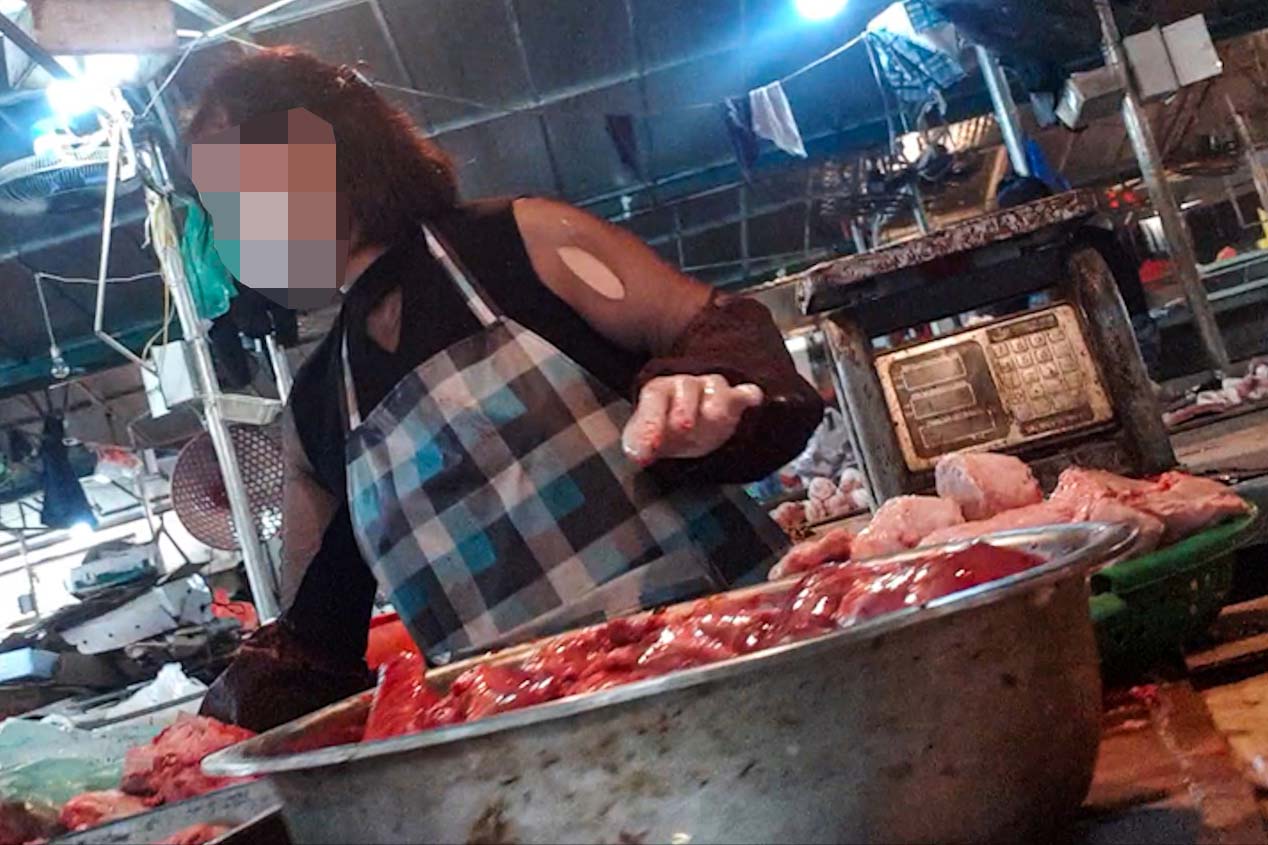
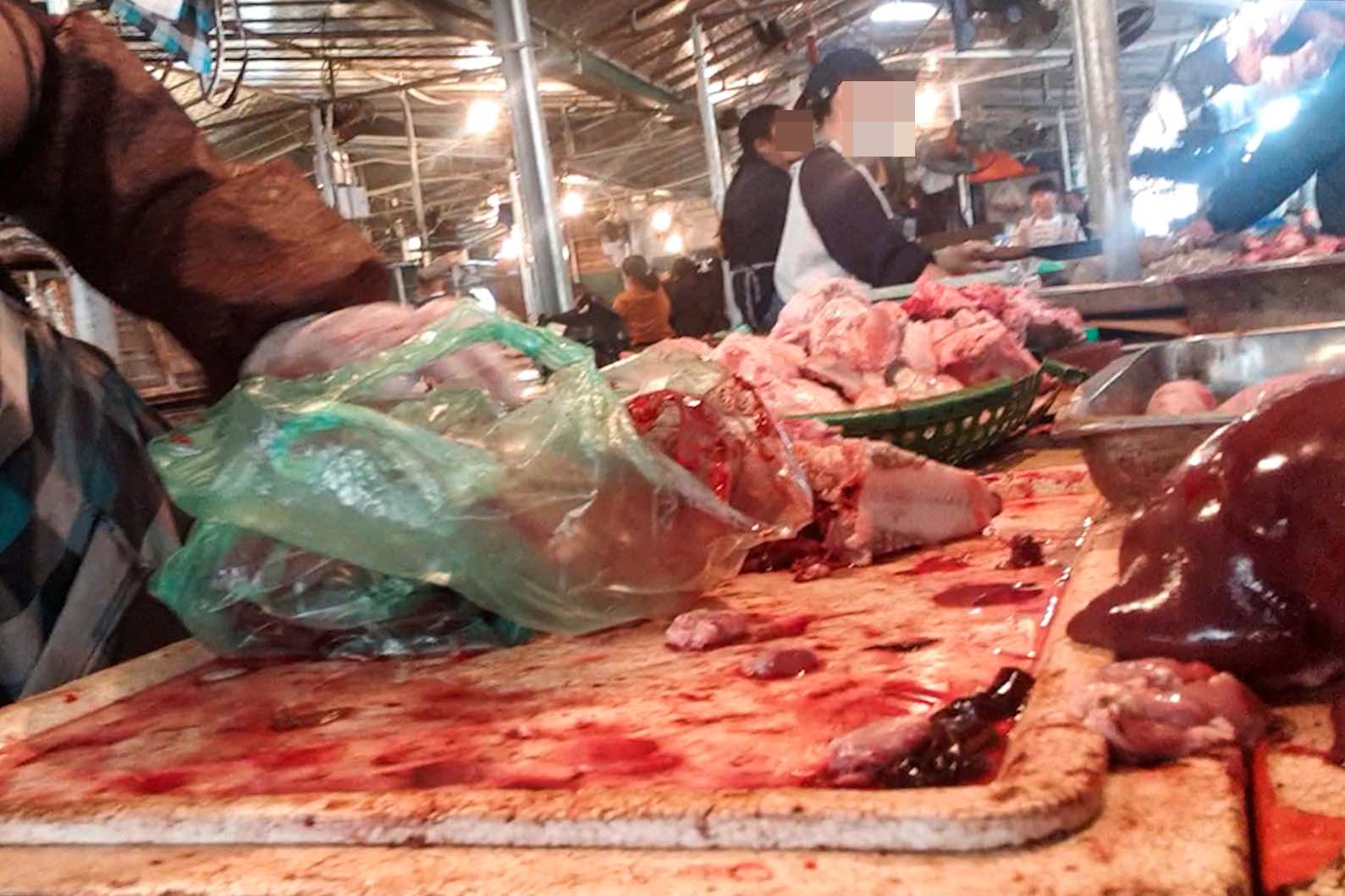
After many persuasions, Sang reluctantly opened a box of frozen hearts for reporters to see and quickly pushed them deep into the cabinet. If you hadn't witnessed it with your own eyes, it would have been difficult to recognize this person selling frozen hearts, completely opposite to the advertisement "fresh hearts just released".
Not far from this stall, another small trader is quickly cutting down frozen pork right on the dirty table. This person said that he also accepts wholesale of frozen buffalo and cow meat for restaurants and eateries if needed.
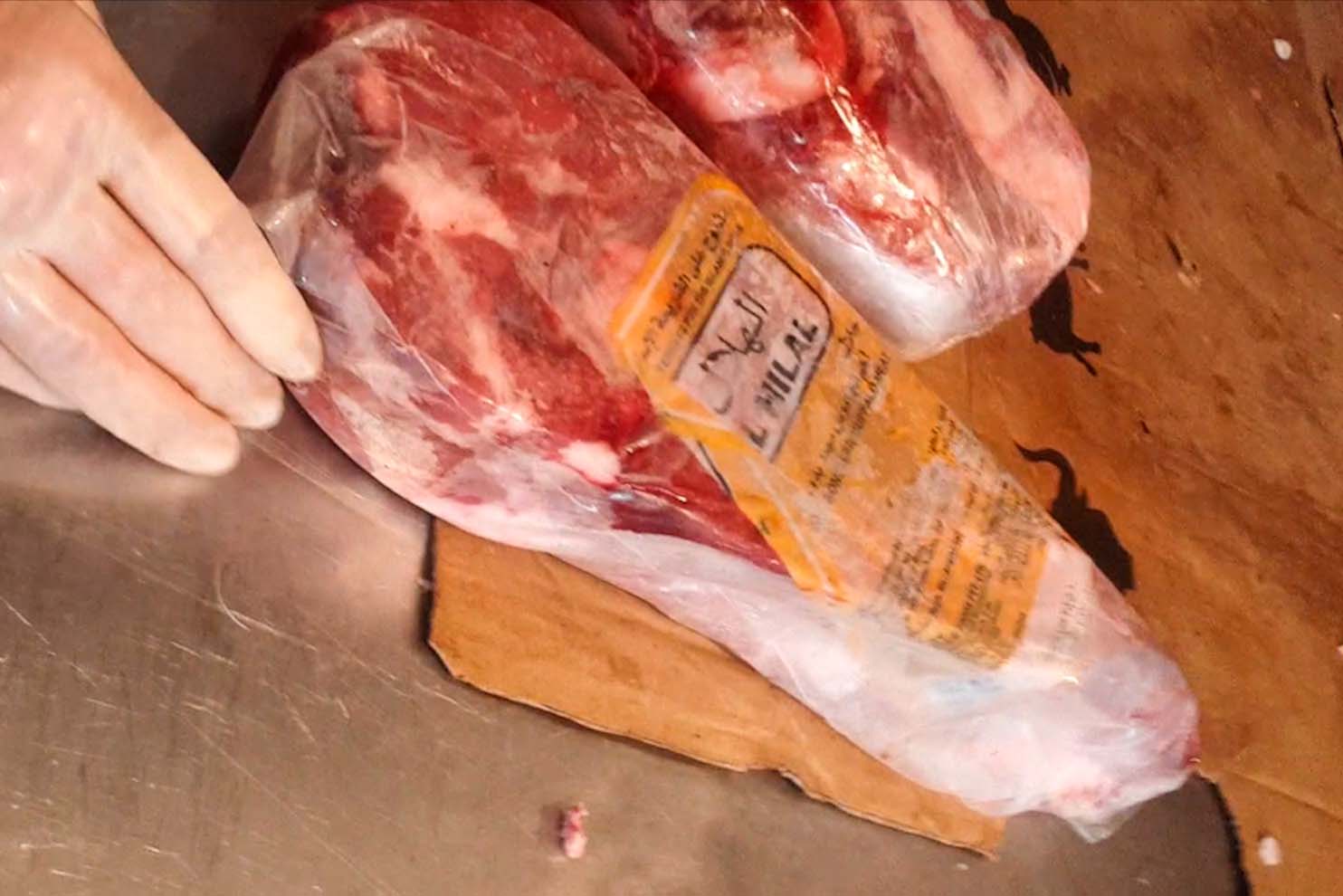
This item looks just white, as far as it thaws, it's red and fresh, all Indian goods," the seller affirmed, then led reporters to the warehouse to see the goods. The frozen meat pieces are pre-divided into nylon bags filled with foreign letters, without labels, without quarantine papers, but are still traded every day.
When asked about the origin and papers, small traders admitted that only a few items were issued VAT invoices, and most were "familiar goods", sold for a long time, so no one asked.
In the midst of reporters being surrounded and invited by brokers, a small trader selling dry goods nearby pulled his hand and loudly warned: "Buy and eat, don't take these things. They are all floating frozen goods, mainly sold to popular eateries, no one dares to be sure of the quality.
According to this person, from the Southern wholesale market, a large amount of meat and frozen organs are distributed throughout the inner city, into cheap eateries and even embedded in family meals. Meat is "refreshed" by freezing, mixed with fresh meat, and smeared to deceive the senses, making it difficult for buyers to distinguish with the naked eye.
Although it has been reported by the press many times, the situation of trading frozen food of unknown origin at this wholesale market has persisted for many years, almost not being inspected and thoroughly handled.
Sharing with reporters, Ms. Bich Ngoc, a resident of Vinh Hung ward, could not hide her insecurity when mentioning food at the market: "The press has said a lot, but just go to the wholesale market and you will see all kinds of frozen chickens, pigs, and cows sold rampant. They frozen them, remade them with all kinds of tricks such as smearing blood, mixing them with fresh meat, normal consumers cannot recognize it.
According to Ms. Ngoc, most urban people like her family do not have many choices other than buying food at traditional markets. “My husband and I were both born and raised in Hanoi, our grandparents are also here. We are used to going to the market, many times we only know how to buy by habit, blindly watching over. Our safety is actually placing full trust in the seller and the management of functional agencies,” she said.
That reality shows that when sellers hide their faces in online markets, while floating goods are publicly displayed at wholesale markets, the risk is being completely pushed towards consumers. In this game, just a loose management link, blocks of frozen meat of unknown origin will still continue to go straight from cold storage to each family's meal tray, threatening both the health and trust of consumers.


